
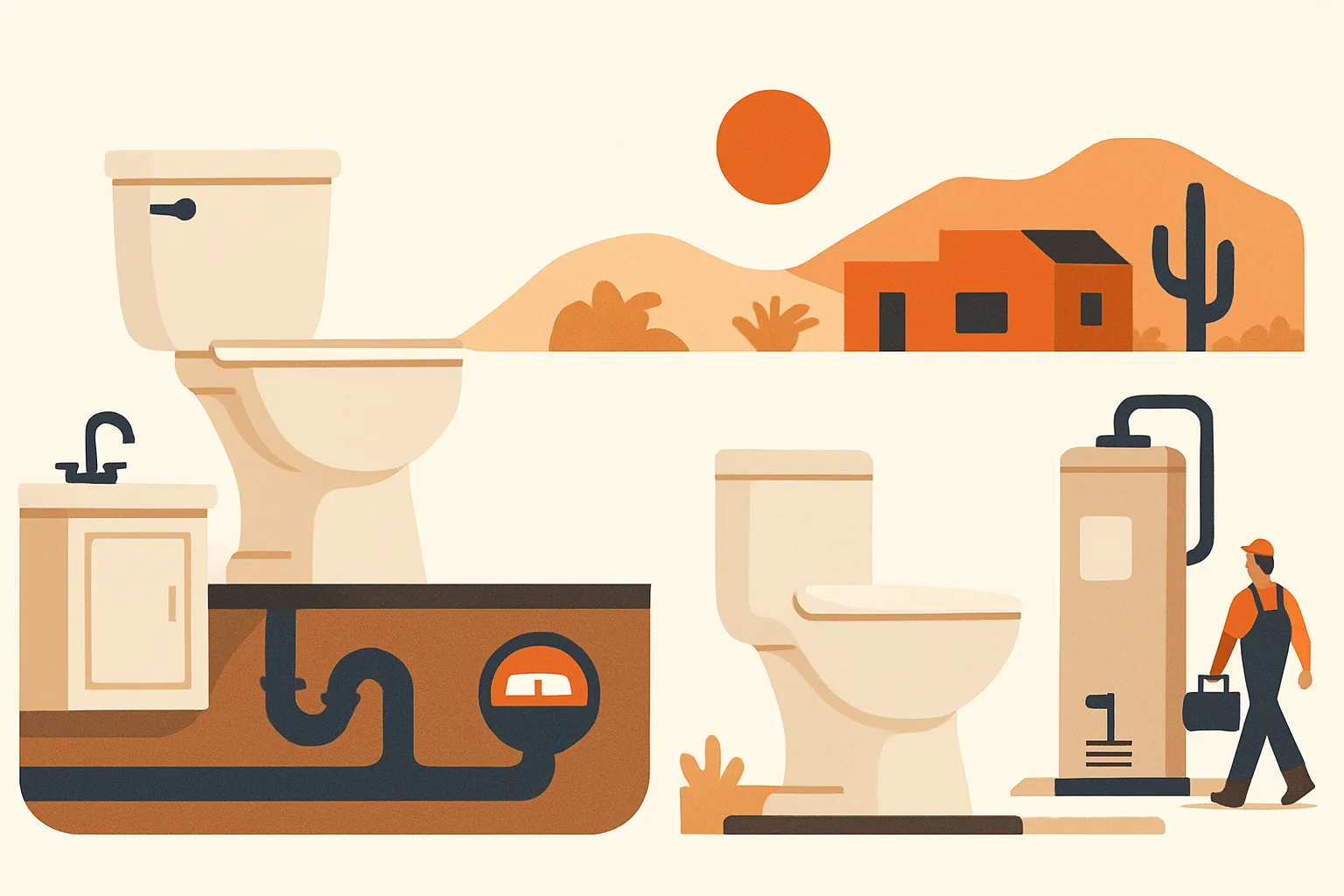
Las Vegas homeowners often ask whether a traditional tank toilet or a newer tankless-style option is the better long-term choice. Here is how to compare cost, comfort, water use, and installation needs so you can match the right toilet to each bathroom in your home.
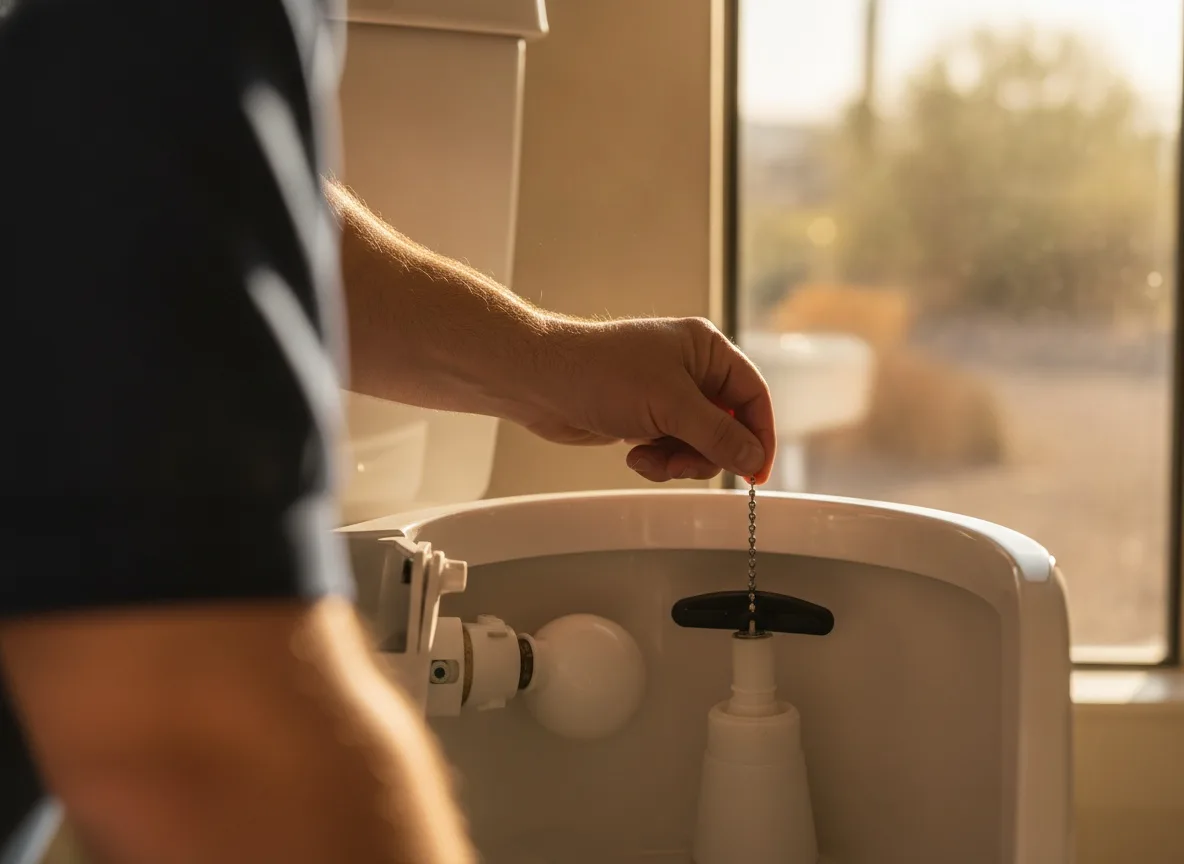
How do tank and tankless toilets differ for a Las Vegas home?
For a Las Vegas homeowner deciding on toilet repair and installation, the first choice is usually between a traditional tank toilet and a tankless-style or pressure-assisted model. Tank toilets store water in a visible tank behind the bowl. When you flush, gravity sends that stored water into the bowl. Tankless-style toilets do not rely on a large tank. They use higher water pressure, and in some cases built-in pressure assistance, to flush directly from the supply line, which frees up wall and floor space.
Functionally, both styles can work well in a typical valley home if they are sized and installed correctly. The difference is mostly about how they deliver the flush, how they look, and what they demand from your plumbing system. Tank toilets are more forgiving of average water pressure and older piping. Tankless-style or pressure-assisted toilets usually require stronger supply pressure and more careful rough-in planning. Since most Las Vegas homes sit on slab-on-grade foundations, mistakes with rough-in, flange height, or supply line placement are harder to fix later, so getting the style right from the start matters.
- Tank toilets store water in a visible reservoir behind the bowl.
- Tankless-style toilets rely on higher supply pressure or pressure assistance.
- Tank models are usually easier to retrofit into existing bathrooms.
- Tankless-style models can save space and offer a sleeker look.
What does it really cost to install a tank vs a tankless-style toilet?
Budget is often the deciding factor. Across the United States, several cost guides report that professional toilet installation typically ranges from about $224 to $533, with an average around $374, when you are swapping one standard toilet for another in the same location. That figure includes labor but not the cost of the fixture itself and comes from national data summarized by services like Angi and HomeAdvisor. Another plumbing cost guide puts typical toilet installation between $215 and $650 when you include basic materials and minor variables. These numbers give a realistic starting point for a Las Vegas homeowner planning any toilet upgrade.
The style you choose affects how far you might drift from those averages. Tank toilets tend to be the least expensive to purchase and to set into an existing rough-in, since they match what most homes already have. The fixture itself commonly ranges from about $100 to a few hundred dollars according to national guidance, which means a tank toilet plus labor usually stays close to those average installation ranges unless your floor or flange is damaged. Tankless-style or pressure-assisted units cost more for the bowl and operating system, and they can add labor if your supply line or framing must be modified. Removal of an old toilet may add roughly $50-$200, and any needed floor repair can add more per square foot, according to national cost guides. This is why it is important to have a licensed plumber inspect the bathroom before you fall in love with a particular model.
- Plan for roughly $224-$533 in professional installation cost for typical jobs.
- Expect tank toilets to stay closer to the national average ranges.
- Budget more for tankless-style or pressure-assisted fixtures and labor.
- Add removal and any floor repair costs when comparing total project price.
How does Las Vegas hard water affect tank and tankless toilet choices?
Las Vegas water is classified as very hard. The Las Vegas Valley Water District reports hardness around 280 parts per million, which works out to about 16 grains per gallon of calcium carbonate. That level of hardness does not usually make or break a toilet decision, but it does shorten the life of some moving parts and can leave more mineral buildup in tanks, bowls, and inlet valves over time. Any toilet in the valley has to live with that reality, which is why quality internal components and regular maintenance matter more here than in softer water parts of the country.
On a tank toilet, hard water tends to leave scale on the inside of the tank and on small openings that feed water into the bowl. That can slowly weaken the flush or cause noisy refills. On tankless-style or pressure-assisted units, mineral buildup can affect the pressure-assist cartridge or the direct-feed passageways. These parts are often more specialized and can be pricier to service or replace. For both styles, a professional toilet repair and installation visit is a good chance to use components that handle hard water better, set proper pressure regulation, and make sure your supply shutoff valves and lines are in strong shape. This keeps either choice working as designed for more years.
When is a standard tank toilet the better choice in Las Vegas?
For most Las Vegas homes, a good quality tank toilet remains the workhorse option. It is usually the best fit if you are replacing an older model in the exact same spot and you want to keep total project cost reasonable. National data shows a standard replacement with existing rough-in typically takes a pro under an hour and falls in that $224-$533 labor window when no major surprises appear. Tank toilets pair well with typical residential water pressure and do not demand as much from the supply system as some tankless-style setups might.
Tank toilets are also forgiving in busy households and rentals. Parts like fill valves, flappers, and supply lines are widely available when something eventually wears out. That matters with our very hard local water, which can be tough on rubber and plastic parts no matter what you buy. In many cases, it makes financial sense to put simple, reliable tank toilets in kids’ bathrooms, guest baths, and secondary spaces, then reserve any premium or space-saving style for a master suite or powder room where you especially care about look and feel. A licensed plumber can match rough-in, height, and bowl shape so you do not run into clearance issues around doors, vanities, or tub fronts.
- You are replacing an existing toilet without moving plumbing.
- You want to keep both fixture and labor costs in a moderate range.
- Your home has average residential water pressure levels.
- You value easy access to common replacement parts over specialty hardware.
When does a tankless-style or pressure-assisted toilet make more sense?
Tankless-style or pressure-assisted toilets shine in more specific scenarios. If you are tight on space, such as a powder room tucked under stairs or a bathroom in a finished basement area, losing the tank can make a noticeable difference in how open the room feels. Some wall-hung and tankless-style designs also create easier-to-clean floor space under and around the bowl, which appeals to many homeowners planning higher-end remodels. In high-traffic bathrooms where clogs are a concern, a strong pressure-assisted flush can offer peace of mind that a standard gravity tank may not match.
These units are more sensitive to the details of your plumbing system. They normally need reliable, adequate supply pressure and a clean, properly sized drain path to perform well. Because most valley homes have slab foundations, upgrading to this style after walls are finished can mean more invasive work than a simple swap, depending on the model you choose. Factor in not only the cost of the toilet and the national labor ranges, but also whether walls, floors, or supply lines must be opened or relocated. A professional toilet repair and installation visit is the place to ask whether your home’s rough-in, water pressure, and venting are a good match for the specific tankless-style unit you are considering.
How long does toilet installation usually take and what can go wrong?
Time is another piece of the comparison. For a straightforward tank toilet swap where the rough-in, flange, and shutoff valve are in good condition, a licensed plumber often completes the work in under an hour once the old toilet is removed. National guides suggest that same kind of job typically takes a homeowner 1-3 hours if they attempt it themselves. More complex projects, like installing a pressure-assisted or tankless-style toilet with changed rough-in or new supply routing, can take longer and may require coordination with tile or drywall work.
The big risk is hidden problems below or around the toilet. Common issues include a damaged or incorrectly set flange, subfloor rot from an old slow leak, or an out-of-level slab that makes the bowl rock. Mistakes like reusing old wax rings, not leveling the bowl, or fully sealing around the base before checking for leaks are frequently cited in professional installation guides as reasons toilets fail early. These problems can affect either tank or tankless-style toilets. For Las Vegas homes, where many bathrooms sit directly on concrete, it is especially important to address flange height and stability correctly the first time, since cutting or patching slab after the fact is more involved.
How should a Las Vegas homeowner decide between tank and tankless toilets?
The right answer is rarely one style for the whole house. A practical approach is to think bathroom by bathroom. For hall baths, kids’ rooms, and guest spaces, a sturdy tank toilet with modern water efficiency usually checks every box. It pairs easily with existing plumbing, fits within typical installation cost ranges from sources like Angi and HomeAdvisor, and is straightforward to service in our very hard water conditions. For a master bath or a highly visible powder room, you might justify the higher fixture and labor cost of a tankless-style or pressure-assisted toilet if you value the cleaner lines and stronger flush.
In any case, start with a professional inspection before purchasing fixtures. A plumber familiar with Las Vegas slab-on-grade construction, local water hardness, and common rough-in dimensions can tell you whether your walls, supply lines, and drains are ready for the option you prefer or whether small adjustments would make a big difference in performance. That same visit is also a chance to evaluate your other toilets, supply valves, and shutoffs so you can prevent future leaks or failures. When you bundle smart planning with careful toilet repair and installation, you end up with a mix of tank and tankless-style fixtures that fits your budget and the way your household really lives.
- Measure your existing rough-in distance from the finished wall to the toilet flange bolts so you know what sizes of tank or tankless-style toilets will fit without relocating plumbing.
- Check your bathroom clearances around doors, vanities, and tubs to see whether a standard tank makes sense or if a more compact tankless-style design would solve a space problem.
- Review recent water and sewer bills to understand how many flushes your household likely uses and whether more efficient modern toilets could meaningfully cut usage.
- Inspect the floor around the toilet for soft spots, staining, or movement that might signal past leaks and potential added cost, then plan that into your budget.
- Ask a licensed plumber to test your water pressure so you know if your supply lines can reliably support a tankless-style or pressure-assisted model.
- Set a realistic total project budget that includes the fixture, professional labor in the $224-$533 range for typical jobs, plus potential removal and floor repair costs.
- Decide which bathrooms matter most for appearance or clog resistance so you can prioritize premium or pressure-assisted toilets there and use standard tank models elsewhere.
- Schedule a professional toilet repair and installation consultation so a pro can confirm flange condition, venting, and shutoff valve quality before you purchase any fixtures.
Frequently asked questions
- Is a tank or tankless-style toilet better for most Las Vegas homes?
- For most Las Vegas homes, a quality tank toilet is the most practical choice because it fits existing rough-in plumbing, works well with typical residential water pressure, and usually costs less to buy and install. Tankless-style or pressure-assisted toilets are better when you have tight spaces, high-traffic bathrooms, or a premium remodel where looks and flush strength justify the higher cost.
- How much should I budget to replace a toilet in Las Vegas?
- National cost guides report that professional toilet installation generally runs around $224-$533 for a standard replacement, with an average near $374. You should also budget for the cost of the toilet itself, removal of the old unit, and any needed floor or flange repair. A written estimate from a licensed plumber will give you a clearer number for your specific bathroom.
- Does Las Vegas hard water affect which toilet I should buy?
- Las Vegas water is very hard at roughly 16 grains per gallon, so it can create mineral buildup in any toilet over time. This affects small parts like fill valves, cartridges, and flush mechanisms in both tank and tankless-style toilets. Instead of choosing only by style, focus on quality internal components and professional installation so you have parts that can stand up better to local water conditions.
- Are tankless-style toilets more likely to clog than tank toilets?
- A properly installed tankless-style or pressure-assisted toilet is not automatically more likely to clog. In fact, some pressure-assisted models are chosen specifically for stronger flush performance. However, they rely more on adequate water pressure and correct drain design, so they need careful planning. A licensed plumber can evaluate your lines and vents to see which style is likely to perform best in your home.
- Can I install a tankless toilet where a tank toilet used to be?
- In some cases you can, but it depends on your bathroom layout, water pressure, and rough-in location. Swapping a tank toilet for another tank unit is usually straightforward, while moving to a tankless-style or pressure-assisted model may require adjustments to the supply line or wall framing. Having a plumber inspect the area before you buy the new toilet is the safest way to avoid surprise costs.
- How long does professional toilet installation usually take?
- For a simple replacement of one tank toilet in the same location with a sound flange and shutoff, a licensed plumber can often complete the work in under an hour once on site. More complex projects, such as adding a tankless-style unit, relocating plumbing, or repairing damaged flooring, can take longer. A reputable plumber should explain the expected time frame before work begins.
- Should I replace all my toilets at once or one at a time?
- If your toilets are all the same age and style, replacing them together can reduce repeat trips and sometimes simplify planning for water use and rough-in compatibility. On the other hand, you can absolutely do them one at a time, prioritizing the worst performer or the bathroom you plan to remodel first. A consultation focused on toilet repair and installation can help you weigh short-term cost versus long-term convenience.
- When should I call a plumber instead of just buying a new toilet myself?
- You should call a plumber if you see signs of floor damage, a wobbly toilet, persistent clogs, or evidence of leaks around the base or in the ceiling below. Those issues may point to flange, vent, or drain problems that a new toilet alone will not fix. A licensed plumber can diagnose what is really going on and then recommend the right tank or tankless-style replacement along with proper installation.
Talk to Kingdom Plumbing about toilet repair and installation, or call (702) 840-5037. Family-owned, NV Contractors License #0085422, upfront flat-rate pricing.
Kingdom Plumbing is a family-owned, licensed Las Vegas plumber (NV NV Contractors License #0085422) serving the valley since 2018. Questions about how this affects your home? Call (702) 840-5037. Dealing with a burst pipe or flooding right now? Our emergency plumbers in Las Vegas answer 24/7.