
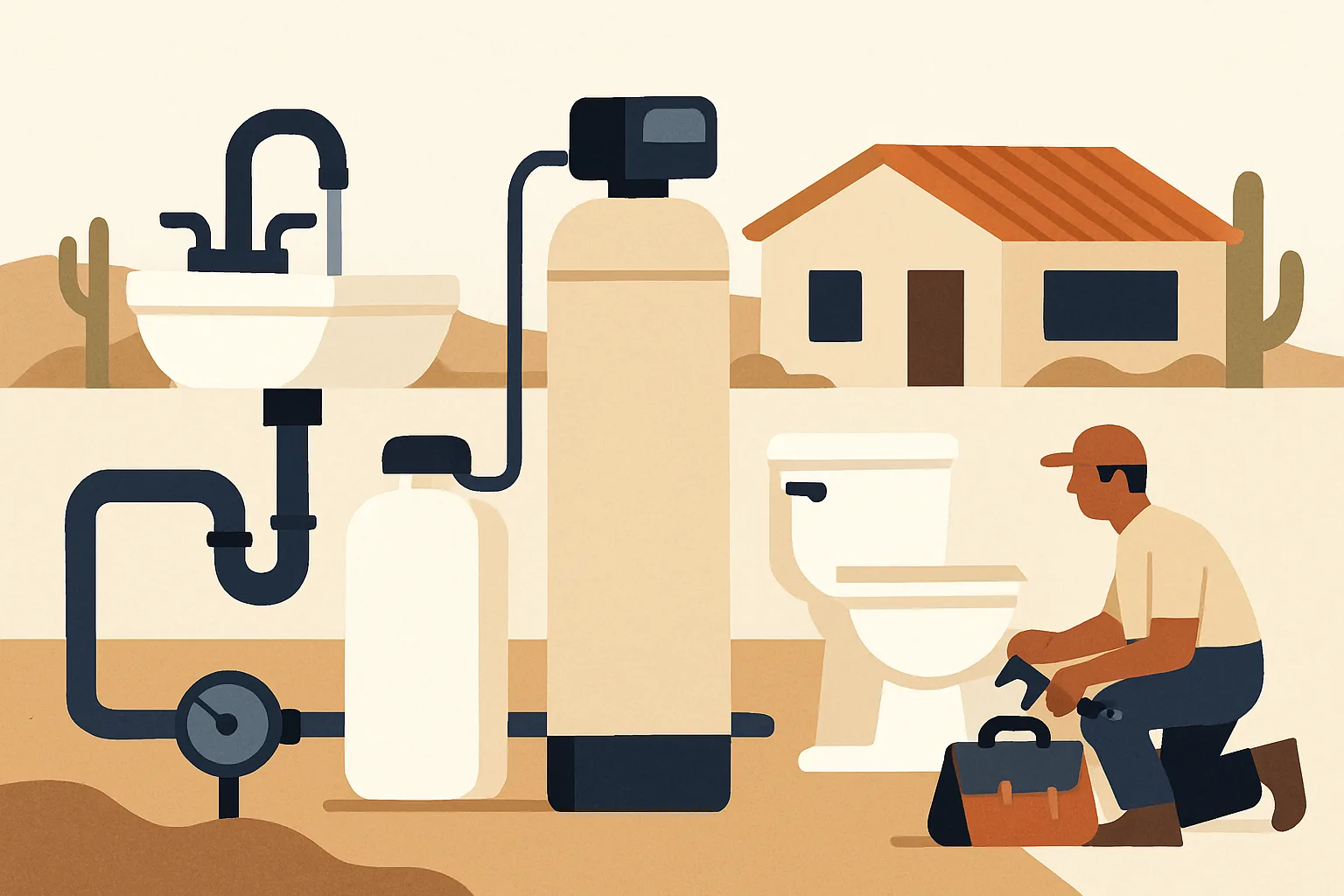
Las Vegas tap water is safe to drink but very hard, which is tough on pipes, fixtures, and appliances. This 2026 guide walks Las Vegas homeowners through how to choose the right water treatment and softener setup, what it costs, and what to expect from a professional install.
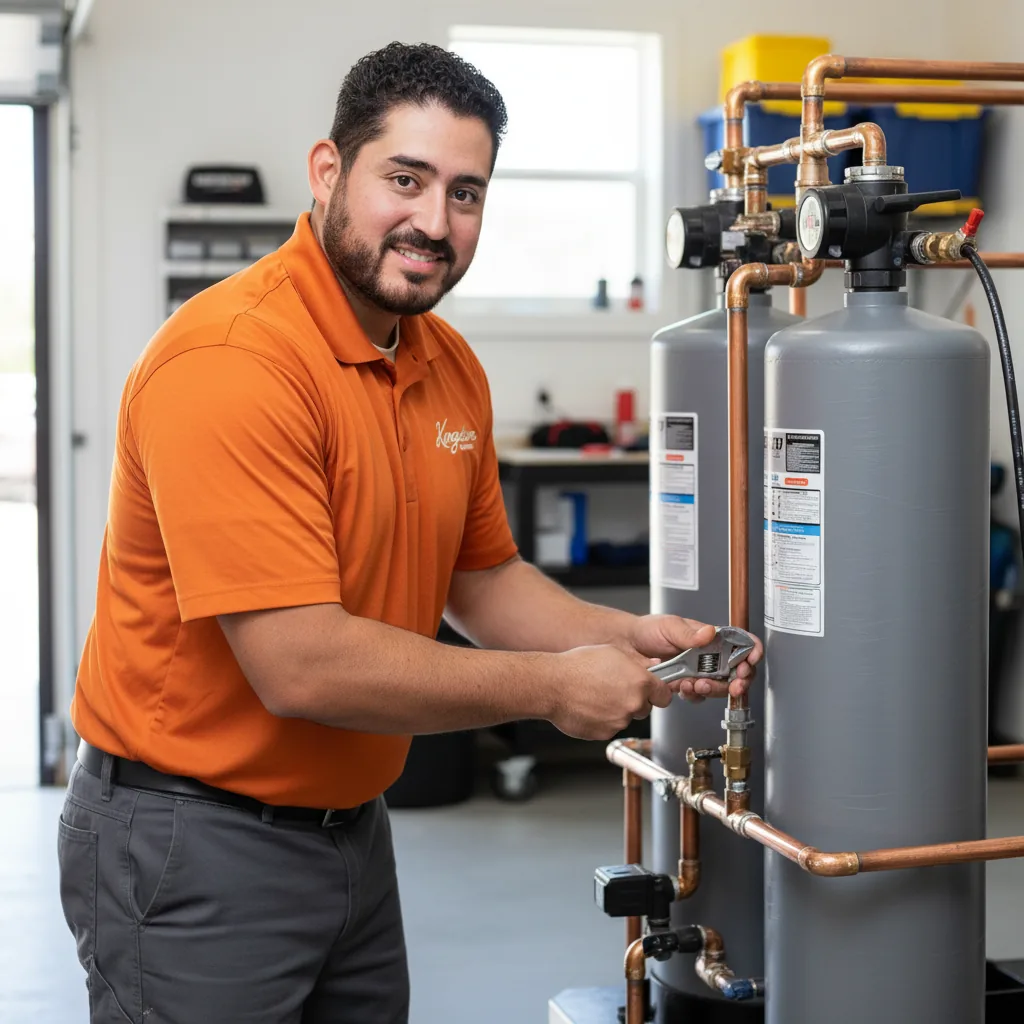
Why Las Vegas homeowners look at water treatment and softeners in 2026
If you live anywhere in the Las Vegas valley, you already know the story: clean, safe tap water that is tough on everything it touches. The Las Vegas Valley Water District reports hardness around 280 ppm, which is roughly 16 grains per gallon, with 280 ppm or 16 grains per gallon used as the recommended setting for softeners. That puts our water squarely in the “very hard” category, which shows up as spots on fixtures, scale on shower doors, and shortened life for water heaters and dishwashers.
By 2026 more homeowners are asking whether a water treatment and softeners setup is worth it, and which type actually fits a Las Vegas home. The answer is not one-size-fits-all. It depends on whether you care most about protecting plumbing and appliances, improving taste and odor, or both. This guide walks through the major choices, what they cost based on recent national and local ranges, how long installation takes in a typical valley home, and what you should expect from a licensed plumber before you commit.
- Very hard Las Vegas water leaves scale on fixtures and glass.
- Hardness is about 16 grains per gallon per local water reports.
- Water treatment can protect water heaters and appliances.
- The right system depends on goals like protection or taste.
How hard is Las Vegas water and what does that mean for your home
Per the Las Vegas Valley Water District, our municipal supply typically measures around 280 ppm of hardness, which translates to roughly 16 grains per gallon. On most hardness scales, that counts as very hard water. The minerals themselves are not a health concern for most people, but they are rough on plumbing systems, water heaters, and anything that heats or sprays water. Mineral deposits form inside pipes and fixtures, which can reduce pressure and efficiency over time.
In practical terms, this hardness level often means soap scum in showers, spotted dishes even after a dishwasher cycle, and white crust around faucets and showerheads. Gas and electric water heaters can lose efficiency as scale builds on heating surfaces, which can also shorten their service life. Because these are long term effects, many Las Vegas homeowners do not notice the damage until a heater or fixture fails earlier than expected. A correctly sized water treatment and softeners system is one of the few ways to slow that wear down in our local conditions.
- Hardness is typically 280 ppm in the Las Vegas valley.
- This equals about 16 grains per gallon of hardness.
- Mineral scale collects inside pipes and water heaters.
- Symptoms include spots, soap scum, and clogged aerators.
What types of water treatment and softeners systems can Las Vegas homeowners choose
When you hear “water treatment” it can mean several different pieces of equipment working together. A traditional salt-based water softener is designed to swap hardness minerals like calcium and magnesium for sodium or another ion. That helps prevent new scale from forming inside plumbing and appliances. It does not clean up everything in the water though. Many homes also benefit from filtration for sediment, chlorine taste and odor, and sometimes dissolved metals like iron if present.
Authoritative treatment guides describe a typical order for a full home system: start with sediment filtration to catch sand and grit, then treat iron or balance pH if needed, then send the water through the softener, and finally through carbon filtration for taste and odor before it reaches taps. For drinking water at the kitchen sink, some households add point-of-use systems like reverse osmosis or ultraviolet disinfection. Not every Las Vegas home needs every step, but a professional design should respect this general sequence so the softener resin is protected and you get the most benefit from your investment.
- Salt-based softeners address hardness minerals.
- Sediment filters remove sand, grit, and larger particles.
- Carbon filters improve taste and reduce chlorine odors.
- Reverse osmosis is often used just at the kitchen sink.
What water softeners cost in 2026 and what drives the price in Las Vegas
Recent cost guides built on HomeAdvisor data show that installed water softener systems typically range from about $200 on the very low end to as much as $6,000 on the high end, with a national average near $1,500. Whole home systems sized for hardness levels around the 16 grains per gallon we see in Las Vegas usually land in the middle of that range. Where you fall depends on system size, brand, control valve features, and how much plumbing work or additional filtration is needed at your property.
Salt-based softeners, salt-free conditioners, and electronic descalers all sit at different price points and have different long term operating costs. A salt-free unit can reduce visible scale on fixtures but does not actually remove hardness minerals in the same way as a traditional softener, so it is not always the right fit for every home. When you compare quotes, ask what is included beyond the tank and valve, such as sediment prefilters, drain connections with an air gap, and any concrete or wall work. For a realistic budget in Las Vegas, it is wise to plan somewhere around the center of the published national range, then refine that once a licensed plumber has evaluated your home’s plumbing layout and water use.
- Installed systems can range from roughly $200-$6,000.
- National averages for softeners are around $1,500 installed.
- Las Vegas hardness often requires mid-range whole home units.
- System type and capacity strongly influence your final cost.
How long installation takes and what permits mean for a Las Vegas softener project
In Clark County and the surrounding cities, installing or replacing a water softener is treated as a plumbing project that requires a permit. For homes in unincorporated areas, Clark County Building and Fire Prevention handles that permit; for properties inside the City of Las Vegas or nearby jurisdictions, the local building and safety department does. Many areas now use simplified online permit portals for single appliance work, which can streamline approval as long as the application is complete. A final inspection is required to close the permit after work is done.
Once permits are approved, an experienced plumber can usually complete a straightforward water softener installation in a few hours, not counting any complex rerouting or added filtration stages. Commissioning the system is more than just turning it on. It should include setting the hardness value to match local guidance, which is typically 16 grains per gallon in our valley, filling the brine tank properly, checking for leaks under pressure, and running an initial manual regeneration cycle. Skipping these steps is a common cause of performance issues, so it is worth confirming with your installer that they will handle full programming and startup as part of the water treatment and softeners service.
- Clark County requires permits for water softener installs.
- Cities like Las Vegas use their own building departments.
- Online simple permits are available for some single fixtures.
- Basic installs often finish in a few working hours.
Common installation mistakes and how a professional plumber avoids them
Water treatment references highlight a handful of mistakes that show up again and again on softener jobs. One of the most serious is skipping a proper air gap on the drain line, which is a simple fitting that prevents wastewater from backing into the softener during a backup. Another frequent problem is reversing the inlet and outlet ports on the valve, which can leave you with untreated hard water throughout the home even though the system appears to be running. Failing to include a bypass valve at the plumbing connection is also a concern, since it makes any future service or replacement much more disruptive.
Other issues happen on the programming and sequence side. If your water contains any iron, letting it flow directly into the softener without pretreatment can foul the resin bed and shorten its life. Programming factory default hardness instead of the local 16 grain per gallon figure can lead to frequent regenerations or water that still feels hard. A professional water treatment and softeners installer should check the orientation of piping, provide an accessible bypass, respect the recommended order of sediment, iron or pH, softener, and downstream filtration, then walk you through how to add salt and what regeneration schedule to expect.
- Missing air gaps at the drain can risk contamination.
- Reversed inlet and outlet piping leaves water untreated.
- No bypass valve makes future service difficult.
- Incorrect hardness programming wastes salt and water.
How to decide which water treatment and softeners setup fits your Las Vegas home
Choosing the right approach for your home is not just a matter of picking a tank size from a chart. You want to start with a clear picture of your water chemistry, including hardness and any other concerns such as chlorine taste, sediment from older neighborhood mains, or iron in rare cases. Guides from neutral water organizations stress that a proper design begins with testing, then follows a logical sequence of filtration and softening steps. In Las Vegas that usually means planning around the known 16 grain per gallon hardness baseline, while tailoring filtration to your specific plumbing layout and goals.
Think about what you care about most: are you trying to extend the life of a tank or tankless water heater, protect decorative fixtures from scale, improve how your showers feel, or focus mainly on better tasting drinking water. A licensed plumber who does water treatment and softeners work routinely can translate those goals into a system plan. They can also walk you through operating costs, salt handling if you choose a traditional softener, where equipment will sit in a slab-on-grade garage or side yard, and how the install will tie into your existing main and drain. The result should be a clear, written scope of work and pricing so you can make a confident decision.
- undefined
- undefined
- undefined
- undefined
- undefined
- undefined
- undefined
- undefined
Frequently asked questions
- Do I really need a water softener with Las Vegas water hardness
- The Las Vegas Valley Water District reports hardness around 280 ppm, or about 16 grains per gallon, which is considered very hard. You do not have to install a softener, but many homeowners choose one to reduce scale on fixtures, help water heaters last longer, and make showers and cleaning easier.
- How much does a whole home water softener cost in Las Vegas in 2026
- Recent cost guides show installed water softeners ranging from roughly $200 to $6,000 nationwide, with a typical average near $1,500. In Las Vegas, where most homes need a system sized for about 16 grains per gallon, many projects land toward the middle of that spread once you factor in permits and proper installation.
- What kind of water treatment system is best for Las Vegas homes
- There is no single best system, but many homes see the most benefit from a traditional salt-based softener combined with sediment and carbon filtration. This format protects plumbing from hardness, while improving taste and odor, and it can be adjusted based on your specific water chemistry and household usage.
- Do I need a permit to install or replace a water softener in Las Vegas
- Yes, in Clark County and surrounding cities, water softener installation is treated as permitted plumbing work. The county or city building department issues the permit and inspects the finished job to confirm that piping, drains, and backflow protection meet local code requirements.
- How long does it take a plumber to install a water softener
- Once permits are in place, a straightforward installation in a typical Las Vegas home often takes a few working hours. Complex jobs that require rerouting plumbing, adding multiple filtration stages, or working around tight spaces can take longer, and the plumber should include this in your written estimate.
- What should I ask a plumber before I hire them for water treatment and softeners
- Ask if they are licensed, bonded, and insured in Nevada, and confirm their experience with water treatment and softeners specifically. It is also wise to ask who handles permits, how they will set the hardness level for our local 16 grain conditions, whether an air gap and bypass valve are included, and what is covered under their workmanship warranty.
Talk to Kingdom Plumbing about water treatment and softeners, or call (702) 840-5037. Family-owned, NV Contractors License #0085422, upfront flat-rate pricing.
Kingdom Plumbing is a family-owned, licensed Las Vegas plumber (NV NV Contractors License #0085422) serving the valley since 2018. Questions about how this affects your home? Call (702) 840-5037. Dealing with a burst pipe or flooding right now? Our emergency plumbers in Las Vegas answer 24/7.