
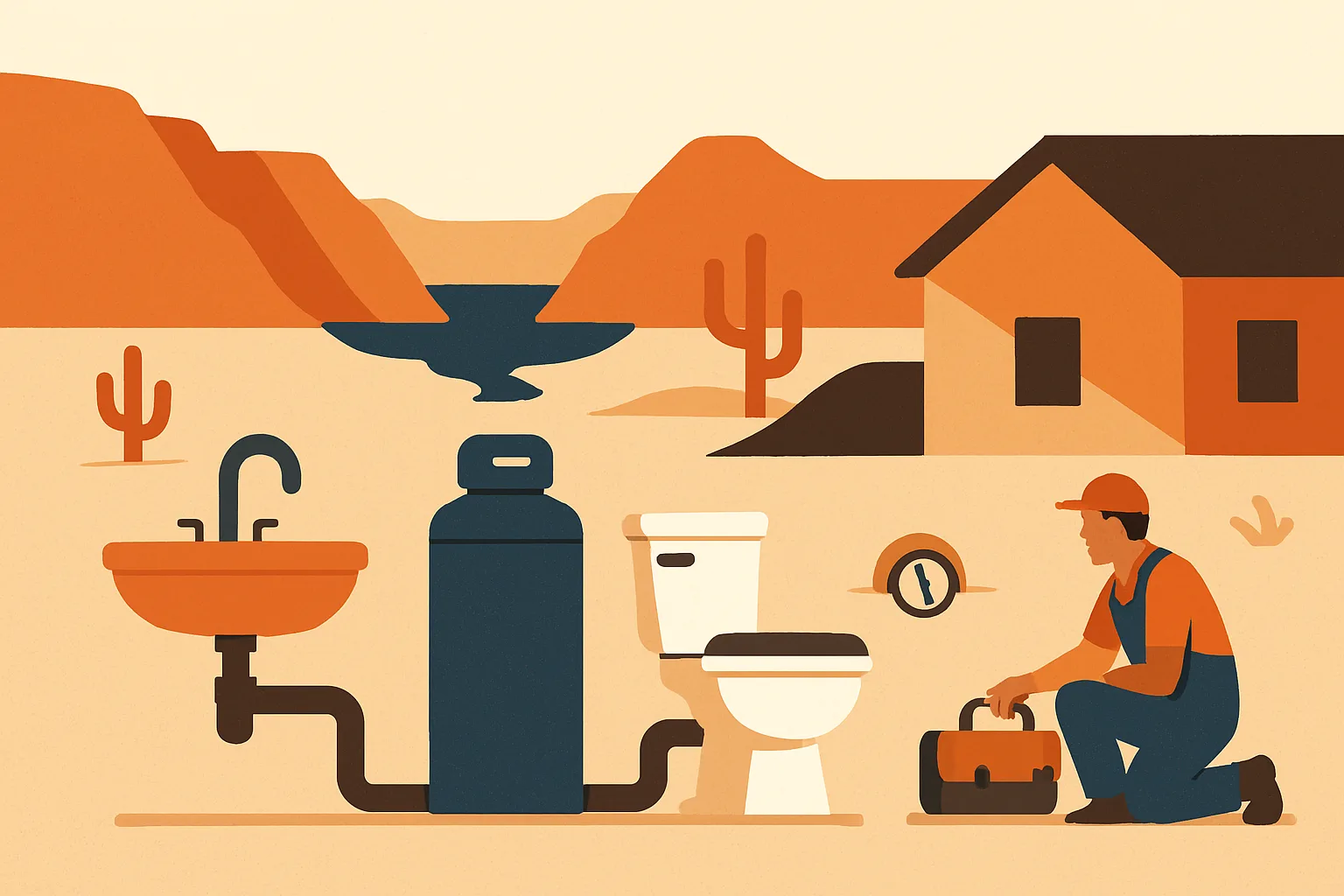
Lake Mead has hit new record low levels again in October 2026 and Southern Nevada remains in an official Tier 1 shortage. Here is what that big-picture water news means for choosing or upgrading water treatment and softeners in a Las Vegas home.
What did the October 2026 Lake Mead and shortage updates actually say?
In mid October 2026, reports highlighted that Lake Mead is still trending in the wrong direction. Coverage drawing on Colorado River monitoring data noted the reservoir sitting around 1,037.53 feet above sea level and holding about 26 percent of its full capacity, or roughly 6.8 million acre feet of water. That is another record low in a string of them, even after some help from Pacific storms. For Southern Nevada, this is not just a number. Those elevation lines trigger the legal shortage tiers that control how much Colorado River water our region is allowed to use.
According to the Southern Nevada Water Authority, the valley is now officially operating under a Tier 1 shortage status because Lake Mead is below 1,075 feet. Under the Colorado River Interim Guidelines, that tier means Nevada’s consumptive use from the river must drop by 21,000 acre feet per year compared with normal allocations. SNWA has said our community is currently using less water than even the reduced cap, largely due to years of conservation and turf removal programs. Still, the rules and the reservoir level are a warning that tight supplies are the new normal, not a short term blip.
At the same time, local reporting has been taking a close look at SNWA’s finances and how much of its budget comes from customer fees compared with borrowed funds or grants. While that analysis is more about policy and rate design, it underlines a key point for homeowners. The infrastructure that treats, delivers, and meters water to your home is under long term financial and physical pressure. That context is important when you think about adding water treatment and softeners inside your house. You want equipment that works with regional conservation goals, not against them.
- Lake Mead is around 1,037.53 feet above sea level as of mid October 2026.
- The reservoir holds about 26 percent of its total capacity or 6.8 million acre feet.
- Tier 1 shortage rules require Nevada to cut consumptive use by 21,000 acre feet.
- SNWA reports current community use is still under the reduced allocation.
- Regional drought and shortage rules are expected to continue into 2027 and beyond.
How does a Tier 1 shortage affect water quality and hardness in your home?
A common question we hear is whether shortage declarations mean your tap water is less safe. According to SNWA’s own communications, the Tier 1 shortage is about how much water the region can take from the Colorado River, not about lowering treatment standards. The water that reaches your home still has to meet federal and state drinking water requirements, just as it did before the elevation dropped. What does change over time is how the mix of source water and treatment strategies may evolve as drought conditions persist.
For daily life inside a Las Vegas home, the bigger constant is hardness. The Las Vegas Valley is known for very hard water, around 16 grains per gallon per the Las Vegas Valley Water District. That hardness comes from dissolved calcium and magnesium picked up as Colorado River water moves through rock and soil before being treated and delivered. A Tier 1 shortage does not suddenly make the water harder, but it keeps the region tied closely to the same hard source and reduces the margin for waste. Every gallon that runs through your softener, water heater, and fixtures is under more scrutiny than it was twenty years ago.
What this means for water treatment and softeners is that you want to focus on efficiency along with comfort. Older or improperly sized softeners can use more water and salt than necessary when they regenerate. In a shortage environment with more attention on outdoor watering, pools, and leaks, indoor equipment that wastes water will likely face more criticism too. A well designed modern water treatment setup can actually support conservation by keeping pipes and water heaters clean so they run efficiently and last longer.
- Tier 1 shortage rules limit how much water the region can take, not treatment quality.
- Las Vegas tap water still must meet federal and state safety standards.
- Hardness around 16 grains per gallon remains a daily issue valley wide.
- Hard water impacts water heaters, fixtures, laundry, and dishes.
- Efficient softeners and treatment systems help reduce waste and extend equipment life.
Why are local experts warning about hard water and water heaters this fall?
Alongside the big picture shortage news, a recent local advisory pointed to a more immediate concern inside Las Vegas homes. The notice warned that as cooler weather comes in, water heaters across the valley are at higher risk of problems because of our very hard water. The advisory covered Las Vegas, Henderson, North Las Vegas, and Boulder City, and emphasized that scale buildup from untreated water can reduce water heater efficiency and lead to early failures, especially when demand peaks during the colder months.
Hardness minerals collect on the bottom of tank style water heaters and on heat exchangers in tankless units. Over time, that buildup forces the heater to work harder to deliver the same hot water, which raises energy use and stresses components. In slab on grade homes that are common in our area, water heater leaks can be especially frustrating because they often sit in garages, closets, or attics without floor drains. Any leak has to be caught quickly to avoid damage. Linking this advisory back to Lake Mead and the Tier 1 shortage, it becomes clear that treating hard water is not just about comfort or cosmetics. It is also about protecting your plumbing assets so you do not need to replace big ticket items as often.
Professional water treatment and softeners can be part of the solution. When set up correctly, a softener can keep most hardness from reaching your water heater and interior plumbing. That does not eliminate the need for periodic flushing or maintenance, but it reduces the pace of buildup and the wear on valves, elements, and heat exchangers. For many Las Vegas homeowners, the right combination of water treatment and water heater maintenance is cheaper over a 10 year window than repeatedly replacing equipment that has been fighting untreated hard water.
- Hard water scale collects inside both tank and tankless water heaters.
- Scale buildup makes heaters use more energy to produce the same hot water.
- Cooler weather increases demand on water heaters and exposes weak units.
- Untreated hard water shortens water heater lifespan and can lead to leaks.
- Water treatment and softeners help slow down scale formation in plumbing.
What should you look for before buying or repairing a water treatment or softener system now?
If you are thinking about adding or upgrading water treatment and softeners in this shortage environment, the first step is to understand your goals. Some homeowners primarily want softer water to protect water heaters, fixtures, and glass. Others are more focused on taste and chlorine reduction, which may call for filtration in addition to softening. With Lake Mead at record lows and SNWA maintaining conservation programs, it is smart to layer in a third goal. That goal is to treat water efficiently so you do not waste water or salt while still getting the protection you want for your plumbing.
Before you buy, ask a licensed plumber to measure your actual hardness at the home and to review your existing plumbing layout. Many Las Vegas homes were built with loop locations for softeners near the main entry line and water heater, but the exact setup can vary by neighborhood and year. A professional can see whether you have room for a traditional salt based softener, a conditioning system, or a combination with filtration, and can estimate how much water and salt a given setup will use based on your household size. They can also walk you through any backwash or drain requirements so your system complies with local plumbing codes and building department rules.
If you already have a softener and you are considering repairs, the Lake Mead and Tier 1 context makes it especially important to ask whether the unit is still the right match for your home. An older system may still function, but if it regenerates more often than needed or uses outdated controls, it could be putting unnecessary strain on both your water bill and the region’s conservation efforts. A plumber who does water treatment work every day can compare the cost of targeted repairs with the long term operating costs of keeping that older equipment in place. In many cases, a modern, metered softener paired with simple filtration can pay for itself in reduced maintenance and better protection for water heaters and fixtures.
How do Las Vegas plumbing codes and regional rules shape water treatment installs?
Recent code updates in the Las Vegas Valley have received attention mainly for their effect on water heater replacements. Reporting has noted that under the 2024 Uniform Plumbing Code, which took effect locally in January 2026 with Southern Nevada amendments, non simple like for like water heater swaps can require additional permitting and inspection. While that article focused on heaters, it points to a broader reality. Local building departments are paying closer attention to how plumbing changes tie into safety, venting, drainage, and overall system design.
For water treatment and softeners, this means installation is not just about hooking up a couple of hoses. Proper installs must route discharge lines to approved drains, avoid cross connections between treated and untreated lines, and keep the main supply protected. Any time a system needs a dedicated electrical circuit, a drain tie in, or a reroute of main water lines near the meter or water heater, that work should be evaluated under the relevant plumbing codes. With Lake Mead in shortage status and SNWA closely tracking regional water use, you can also expect continued scrutiny of systems that waste water through improper backwashing or outdated controls.
This is where choosing a licensed, bonded, and insured plumbing contractor matters. A professional who understands the local code environment can design a water treatment setup that protects your home and meets city or county requirements. That includes sizing brine tanks appropriately, using approved materials, and installing bypass valves so you can service or replace equipment without shutting down the whole house. When your water treatment and water heater work together, you get better performance and fewer surprises at inspection time.
- The 2024 Uniform Plumbing Code with local amendments took effect in January 2026.
- Complex water heater changes can now trigger extra permits and inspections.
- Water treatment installs must follow rules for drainage, backflow, and materials.
- Improper discharge or backwash can waste water and draw regulatory attention.
- Licensed plumbers design systems that align with code and conservation goals.
- Schedule a professional water treatment and softeners evaluation so a licensed plumber can test your home’s hardness, review your plumbing layout, and recommend an efficient setup that matches your household size.
- Have your water heater inspected and serviced before the coldest months so any scale from hard water can be addressed and you know whether your heater is being stressed by buildup.
- Ask specifically how much water and salt a proposed softener will use each month and compare that with alternatives so you choose equipment that supports regional conservation goals.
- Confirm that any new or replacement water treatment system will be installed in line with current Las Vegas plumbing codes, including proper drain connections, electrical needs, and bypass valves.
- If you already own a softener, have a plumber check its settings, regeneration schedule, and resin condition to see whether a tune up or replacement would reduce waste and improve performance.
- Discuss pairing your softener with appropriate filtration, such as carbon filters, if taste, odor, or chlorine reduction is also a priority for your family.
- Plan for ongoing maintenance by asking your plumber what service intervals and simple homeowner checks will keep your water treatment and water heater working efficiently between visits.
- When you collect estimates, focus on clear scope, parts, and warranty details instead of just the lowest price so you understand what level of protection and long term operating cost you are actually buying.
Frequently asked questions
- Does the October 2026 Tier 1 shortage mean my Las Vegas tap water is unsafe?
- No. The Tier 1 shortage announced by the Southern Nevada Water Authority is about how much Colorado River water the region can use, not about lowering treatment standards. SNWA is still required to meet all federal and state drinking water regulations, so your tap water should remain safe to drink. Water treatment and softeners are about improving hardness, taste, and equipment protection, not fixing safety violations.
- Will Lake Mead hitting record lows make Las Vegas water even harder?
- Lake Mead’s lower level does not automatically increase hardness inside your home, but the Colorado River source itself is naturally very hard. The Las Vegas Valley Water District reports hardness around 16 grains per gallon, which is already in the very hard range. The shortage keeps us tied to that same hard source, so treating hardness inside the home remains important if you want to protect plumbing and appliances.
- Is it wasteful to install a water softener during a Tier 1 Colorado River shortage?
- A poorly sized or outdated softener can waste water and salt, but a modern, metered system set up by a professional can be quite efficient. In many cases, softening the water actually supports conservation by extending the life and efficiency of water heaters and fixtures so they do not need early replacement. The key is to choose equipment and settings that match your home and to have it installed in line with local conservation expectations.
- How does hard water affect my water heater during Las Vegas winters?
- Local advisories warn that very hard water in the Las Vegas Valley causes mineral scale to build up in water heaters, which becomes a bigger problem when demand for hot water spikes in cooler weather. That scale makes the heater work harder and can lead to noises, reduced hot water output, and even leaks or early failure. Combining periodic flushing with proper water treatment and softeners is one of the best ways to reduce that risk.
- Do I need a permit to add or replace a water softener in Las Vegas?
- Whether you need a permit can depend on the scope of the work and the jurisdiction inside the valley, since local building departments have their own rules. Recent coverage of the 2024 Uniform Plumbing Code adoption shows inspectors are paying closer attention to plumbing changes that affect safety, drainage, and system design. A licensed plumber can tell you if your specific water treatment project requires a permit and will handle any needed paperwork.
- What questions should I ask a plumber before buying a water treatment system?
- Ask the plumber to test your water hardness and explain the results, then have them show how their recommended system handles that level efficiently. Request clear information on regeneration frequency, expected water and salt use, maintenance needs, and warranty coverage. It is also smart to ask how the system will be tied into your existing plumbing, whether it aligns with current Las Vegas codes, and how it will help protect your water heater and fixtures.
- Can I just install a water softener myself to save money in Las Vegas?
- While some homeowners attempt DIY installs, water treatment systems must be tied into main supply lines, drains, and sometimes electrical circuits that are covered by plumbing and building codes. A mistake can cause leaks, backflow issues, or code violations that end up costing more than a professional job. In a shortage environment with closer scrutiny on water use, a licensed plumber is usually the better investment for sizing, installing, and setting up the system properly.
Talk to Kingdom Plumbing about water treatment and softeners, or call (702) 840-5037. Family-owned, NV Contractors License #0085422, upfront flat-rate pricing.
Kingdom Plumbing is a family-owned, licensed Las Vegas plumber (NV NV Contractors License #0085422) serving the valley since 2018. Questions about how this affects your home? Call (702) 840-5037. Dealing with a burst pipe or flooding right now? Our emergency plumbers in Las Vegas answer 24/7.