
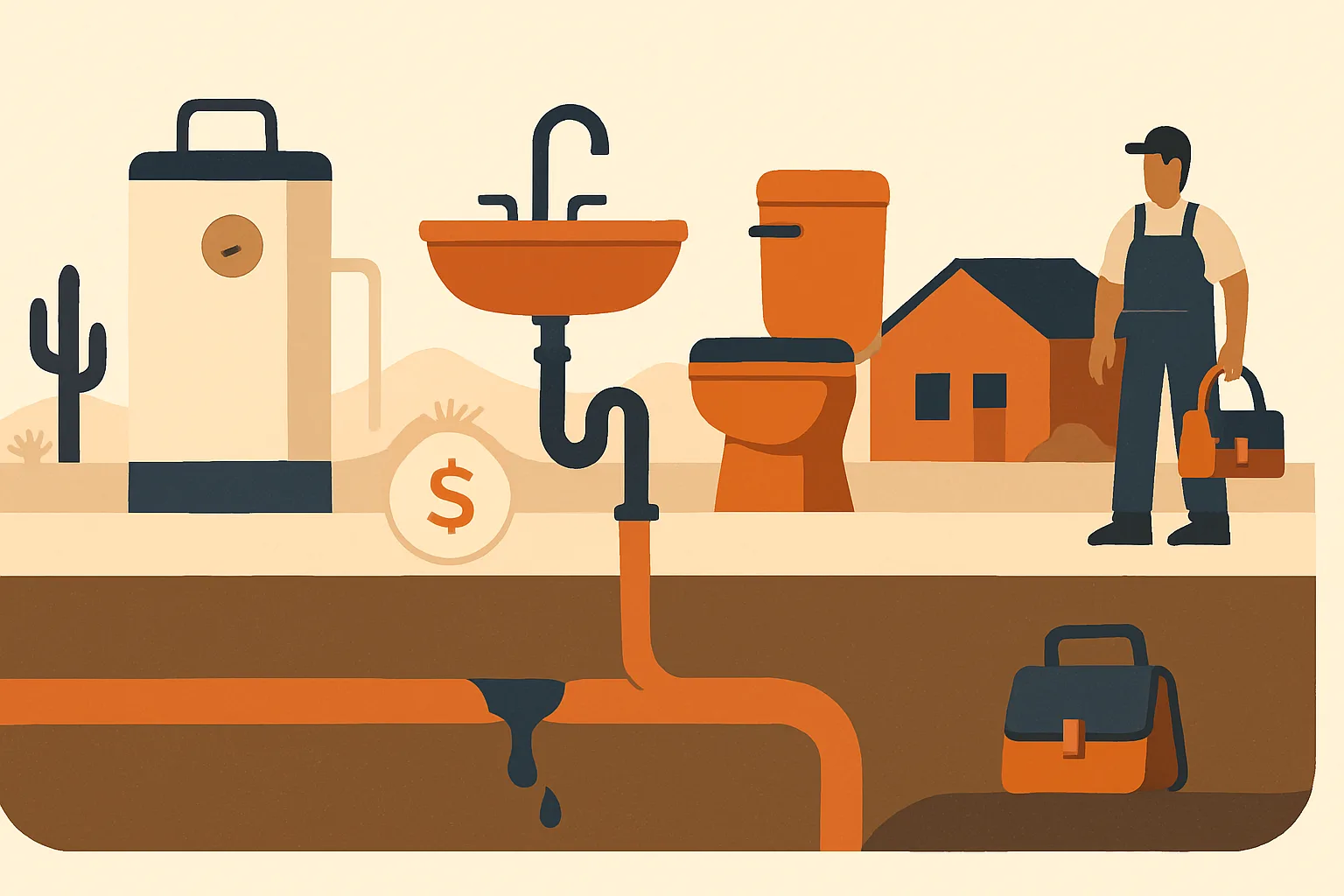
Slab leaks in Las Vegas are expensive to ignore, but it can be hard to tell if a repair or reroute will really pay off. This guide walks through the math, the risks, and the long-term value so you can choose the right leak detection and slab leak repair plan for your home.
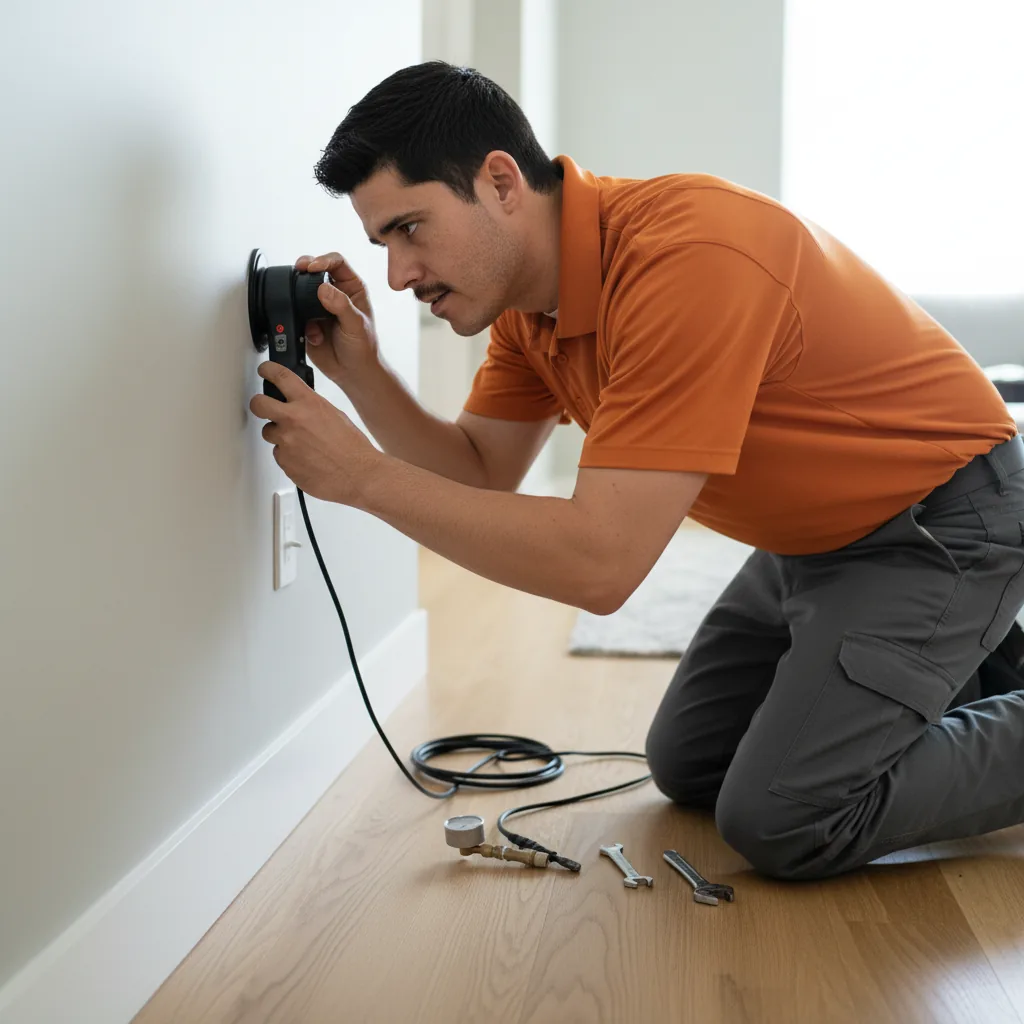
What drives the true cost and return of slab leak repair in Las Vegas?
For Las Vegas homeowners, the return on leak detection and slab leak repair is really a question of timing and scope. You pay a known amount today to avoid uncertain but often much higher costs from ongoing water loss and structural damage. Local slab leak pricing is reasonably well documented, so you can start with real numbers instead of guesses. One Las Vegas cost guide places professional slab leak detection in the neighborhood of $150-$400, with full repair options ranging roughly $630-$4,400 depending on how hard it is to access the pipe and whether a reroute is needed. These figures provide the base for any ROI discussion, because they show the typical outlay to solve the problem professionally.
The other side of the equation is what happens if you do nothing or delay. Under a concrete slab, even a small leak can run for weeks or months without obvious surface damage. While exact dollar figures for water damage vary, restoration experts warn that waiting for visible damage or for an insurance appointment before you mitigate often turns a manageable plumbing bill into a structural repair plus flooring replacement. When you weigh the cost of detection and a planned repair against the possibility of foundation movement, damaged finishes, and mold-friendly moisture conditions, the value of decisive action becomes much clearer.
- Leak detection typically costs far less than the worst-case damage it can prevent.
- Full slab leak repair pricing depends on access, depth, and whether rerouting is required.
- ROI improves when you act early instead of waiting for visible damage.
- Insurance may help, but it rarely covers every consequence of a long-running leak.
How does Las Vegas water hardness affect slab leak risk and ROI?
Las Vegas water is considered very hard. The Las Vegas Valley Water District reports total hardness around 291 parts per million, which works out to about 17 grains per gallon. That level of hardness encourages mineral buildup inside your pipes, and over time that buildup can contribute to both internal corrosion and restricted flow. When pipes expand and contract daily under a heated slab and through caliche-heavy soil, hard water and scale can be one more stress that shortens the life of your piping.
For ROI, this matters because you are not just fixing the damage you see today. You are making a decision about how the rest of your piping system will hold up in a harsh water environment. If a professional inspection during leak detection shows that you have one isolated defect in an otherwise healthy line, a targeted repair can be a cost-effective choice. If the technician finds widespread corrosion or prior repairs nearby, an approach like rerouting or even planning toward a future repipe can deliver better long-term value than repeatedly breaking concrete for new leaks as they pop up.
- Very hard water increases mineral scaling inside copper and other pipes.
- Scaling and corrosion can raise the chance of pinhole leaks under the slab.
- A slab leak can be a symptom of broader piping wear in a hard-water home.
- Choosing a repair method that accounts for hard water can extend system life.
What do you actually pay for leak detection and slab leak repair?
To figure out the return on leak detection and slab leak repair, you need a realistic picture of what the work can cost in our area. A local slab leak guide puts typical electronic detection in the $150-$400 range. That amount usually covers locating the leak with acoustic or electronic tools and mapping out where a repair would need to happen. Once the leak is located, there are two common paths. A direct repair through the slab might start in the lower end of the $630-$4,400 range, while larger reroutes and projects that involve more demolition, deeper piping, or complex finishes can sit toward the top of that range.
Some homes, particularly those that have seen multiple slab leaks or broader plumbing issues, are candidates for a more extensive solution like a whole-home repipe. The same source notes that repipes can range from about $4,000 up to around $10,000 depending on the size of the home and how accessible the piping is. While that looks like a big jump from a single slab leak repair, the math can still work in your favor if you are facing repeated leaks, multiple concrete openings, or serious disruption every time a new problem appears. Evaluating ROI here means comparing one larger, planned project to several years of repeated spot repairs, flooring disruption, and water damage risk.
How long does slab leak repair take and what is your disruption cost?
Time is another key piece of the return on leak detection and slab leak repair. A regional slab leak specialist explains that a single-spot repair where the plumber opens the slab directly over the leak typically takes about 4-6 hours once the work begins. A reroute that abandons the leaking section under the slab and runs new pipe through walls or the attic usually takes around 4-8 hours depending on the layout of the home and the complexity of the piping. In many cases, detection and repair can be done the same day if parts and access line up, which keeps disruption fairly contained.
From a homeowner ROI standpoint, this short timeline means the biggest cost is usually not days of lost use, but rather the quality of the repair and the follow-on work like patching concrete and restoring floors. A rushed or poorly planned repair might save some labor hours up front but cost more when you factor in slab patching, tile or wood replacement, and the risk of having to reopen the area if the leak was not fully addressed. A methodical approach that takes a few extra hours to confirm diagnostics, choose the right repair type, and protect surrounding finishes usually delivers a better return than simply looking for the lowest number of billable hours.
- Single-spot slab repairs usually run about 4-6 working hours once started.
- Reroutes commonly take around 4-8 hours depending on home layout.
- Same-day detection and repair is often possible when parts and access allow.
- Better planning up front can reduce repeat disruptions and rework later.
What mistakes destroy the return on slab leak repair and how do you avoid them?
Even when you spend the right amount on leak detection and slab leak repair, certain missteps can wipe out the value. Restoration and plumbing experts point to a few patterns that cause costs to snowball. One is homeowners prying up flooring or breaking concrete before the leak has been accurately located. This can mean you open the wrong area, pay twice for demolition, and still have to bring in electronic leak detection later. Another mistake is ignoring early signs like warm spots on the floor or unexplained water usage. By the time visible damage appears, the leak may have been eroding soil or soaking materials for weeks.
On the contractor side, common pitfalls include making repair choices without thorough diagnostics, using short-term patch methods on badly corroded pipe, and failing to account for secondary damage. If soil has shifted, moisture has reached walls, or there is a risk of mold-friendly conditions, focusing only on the visible pipe can leave you with ongoing problems. Good ROI depends on a full evaluation that looks at the condition of the line, surrounding structure, and finishes, then matches the repair method to that bigger picture. That might mean choosing a reroute instead of another under-slab patch, or planning for flooring restoration so you are comparing complete project costs instead of just plumbing hours.
- Document all symptoms of a possible slab leak, such as warm floor spots, unexplained water usage, or sounds of running water, so your leak detection technician starts with a clear history.
- Check your water bill for any recent spikes that you cannot explain with seasonal use, which can help justify the cost of professional leak detection as a preventative step.
- Gather information on your home’s age, slab construction, and any past plumbing repairs so the plumber can assess whether this leak is likely isolated or part of a bigger pattern.
- Ask a licensed plumber to explain the pros and cons of direct slab repair versus rerouting for your specific layout so you can compare short-term costs and long-term risk.
- Request a written estimate that separates leak detection, plumbing repair, concrete work, and flooring restoration so you can see the complete project cost instead of only pipe labor.
- Review your homeowners insurance policy and speak with your agent about what portion of slab leak-related work might be covered so you understand your true out-of-pocket cost.
- Plan for at least a half day of access by clearing furniture and belongings from the suspected leak area so the crew can work efficiently and avoid added labor time.
- Choose a licensed, bonded, and insured Nevada contractor that offers upfront flat-rate pricing and is willing to walk you through their leak detection process and repair options.
Frequently asked questions
- Is slab leak repair worth it or should I just watch my Las Vegas water bill?
- Relying only on your water bill usually is not enough to manage slab leaks, because small leaks can cause soil erosion and structural issues before they create a big billing spike. Professional leak detection in the $150-$400 range is often a modest investment compared to the cost of repairing foundations, flooring, and finishes after a long-running leak. Early detection usually improves your overall return.
- How much does it cost to find and fix a slab leak in Las Vegas?
- Local cost guides put electronic slab leak detection in the range of about $150-$400, and common repair options like direct access or rerouting around the leak roughly $630-$4,400 depending on scope. Larger solutions like a whole-home repipe can reach $4,000-$10,000 when multiple leaks or aging pipes are involved. Your exact cost will depend on access, pipe condition, and how much restoration is needed.
- How long will my house be torn up for a slab leak repair?
- Many slab leak repairs are done in a single workday once planning is complete. A single-spot repair through the slab often takes about 4-6 hours, while reroutes commonly run 4-8 hours depending on the home’s layout. Concrete patching and flooring restoration may take additional visits, but careful planning can limit how long your home is disrupted.
- Does Las Vegas hard water make slab leaks more likely?
- The Las Vegas Valley Water District reports water hardness around 291 ppm, or about 17 grains per gallon, which is considered very hard. Hard water promotes mineral scaling inside pipes and can contribute to corrosion under the slab over time. That does not guarantee a slab leak, but it does mean that when one occurs, it is worth asking if you are seeing an isolated defect or a sign of more widespread pipe wear.
- When does it make sense to pay for a repipe instead of another slab leak repair?
- A repipe in the $4,000-$10,000 range can be a better long-term investment if you are facing repeated slab leaks, extensive corrosion, or multiple prior patches in the same area. Instead of paying for several separate slab openings, reroutes, and flooring repairs, a planned repipe can reset the clock on your plumbing system. A licensed plumber can compare the expected cost of future leaks to the one-time cost of a repipe for your home.
- What mistakes should I avoid so I do not waste money on slab leak repair?
- Avoid breaking up concrete or pulling up flooring before a professional has located the leak, since guessing can mean opening the wrong area and paying twice. Do not ignore early signs like warm floor spots or musty smells, and do not choose a repair method without clear diagnostics on pipe condition. It is also important to plan for secondary damage like soil movement and moisture in walls so you are not paying for hidden problems later.
Talk to Kingdom Plumbing about leak detection and slab leak repair, or call (702) 840-5037. Family-owned, NV Contractors License #0085422, upfront flat-rate pricing.
Kingdom Plumbing is a family-owned, licensed Las Vegas plumber (NV NV Contractors License #0085422) serving the valley since 2018. Questions about how this affects your home? Call (702) 840-5037. Dealing with a burst pipe or flooding right now? Our emergency plumbers in Las Vegas answer 24/7.