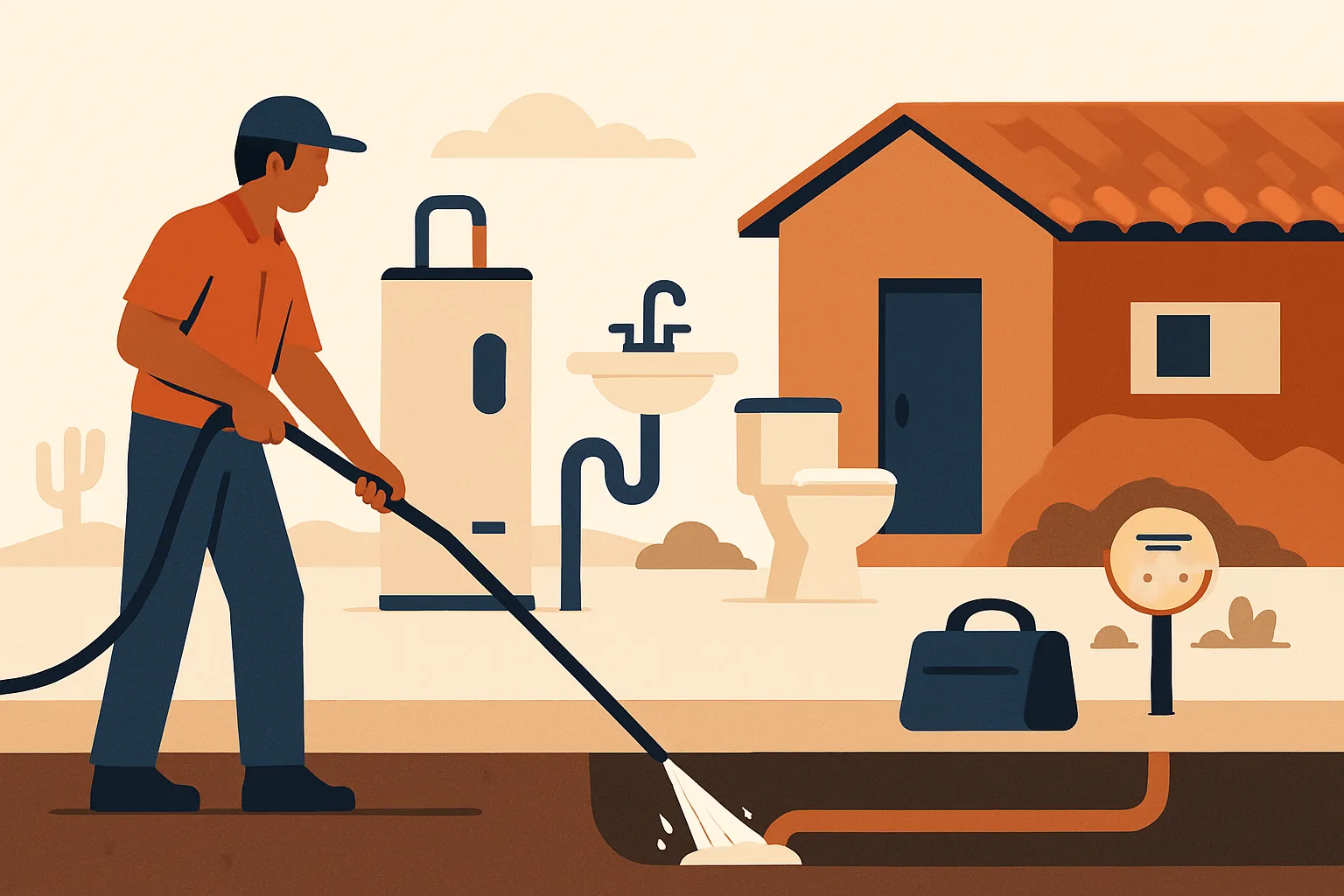
If you are booking hydro jetting for the first time, knowing the steps, timing, and costs can take the stress out of the visit. Here is how a professional Las Vegas hydro jetting appointment usually goes from the first knock on the door to the final camera check.
What is hydro jetting and why might a Las Vegas home need it?
Hydro jetting is a drain and sewer cleaning service that uses high pressure water to clear clogs and scrub the inside of your pipes. A hose with a specialized nozzle is fed into the line, then water at controlled pressure is used to cut through grease, sludge, roots, and mineral buildup. HomeGuide notes that typical working pressures run in the range of about 1,500 to 4,000 PSI, which is strong enough to scour the pipe walls when used correctly with the right nozzle and flow setup.
Hydro jetting is usually recommended when clogs keep coming back, when several drains are slow or backing up at the same time, or when there is heavy grease or scale in the line. In Las Vegas, the water itself plays a role. The Las Vegas Valley Water District reports average hardness around 291 ppm, or roughly 17 grains per gallon, which is considered very hard water. Over time that can mean more mineral deposits inside lines, particularly in older homes and long runs of pipe. Hydro jetting is designed to remove that buildup much more thoroughly than a basic cable snake, which mostly bores a hole through the blockage instead of washing the line clean.
How long does a first hydro jetting appointment usually take?
For a typical Las Vegas home, you should plan on your first hydro jetting visit taking at least part of a morning or afternoon. Industry guides that track job durations explain that many residential hydro jetting calls run about 1.5 to 3 hours on site, especially when the plumber includes camera inspection before and after the cleaning. Lighter jobs on a short branch line can be quicker, while long main lines or heavy root or scale intrusion can push toward the longer end of that range.
The time you spend with a plumber is not only the jetting itself. The tech will need time to talk with you about symptoms, locate the right cleanout or access point, set up equipment, protect the work area, and run a camera inspection when appropriate. According to consumer plumbing resources, the actual jetting portion for an average blockage often takes around 1-2 hours within that total visit window, but tougher clogs can require more passes and more verification. When you book, it is wise to set aside up to three hours so you are not rushed and the plumber has enough time to do the job carefully and test everything before packing up.
- Set aside at least a 2-3 hour window in your schedule.
- Expect extra time if your main sewer line needs inspection.
- Plan for camera inspections before and after if recommended.
- Allow time for the plumber to explain findings and options.
What does hydro jetting cost compared with snaking and what will you see on the estimate?
If this is your first hydro jetting appointment, one of the big questions is cost. National cost guides put many hydro jetting jobs in the range of about $250-$800 for residential work, depending on access, severity of the blockage, and line length. Another cost guide that compares services reports a broader range of about $350-$1,150 for hydro jetting in more complex situations, compared with roughly $160-$550 for traditional snaking. While snaking is almost always less expensive up front, it usually does not clean the pipe walls to bare material in the same way hydro jetting can.
During your estimate, the plumber should explain which line is affected, what they think is causing the problem, and why they are recommending hydro jetting instead of or in addition to snaking. You will usually see labor, use of the hydro jetter, and camera inspection time all reflected in the estimate. A good technician will also explain any factors that could add cost, such as multiple access points, heavy grease that needs extra passes, or verification runs. Kingdom Plumbing uses upfront flat-rate pricing that you approve before work starts, so you know what you are agreeing to before any hydro jetting begins.
- Expect hydro jetting to cost more than basic snaking.
- Ask whether the quote includes camera inspection footage.
- Have the plumber explain what type of blockage they expect.
- Confirm the price before any hydro jetting work starts.
What happens step by step during your first hydro jetting visit?
From the homeowner’s side, a first hydro jetting appointment follows a clear sequence. After you greet the plumber, the visit should start with a short conversation about symptoms. You might discuss gurgling toilets, multiple slow drains, sewage smells, or a particular fixture that backs up repeatedly. The plumber may ask how old the home is and whether you have had any previous drain work done, which helps them think about pipe material and layout in a Las Vegas slab-on-grade setting.
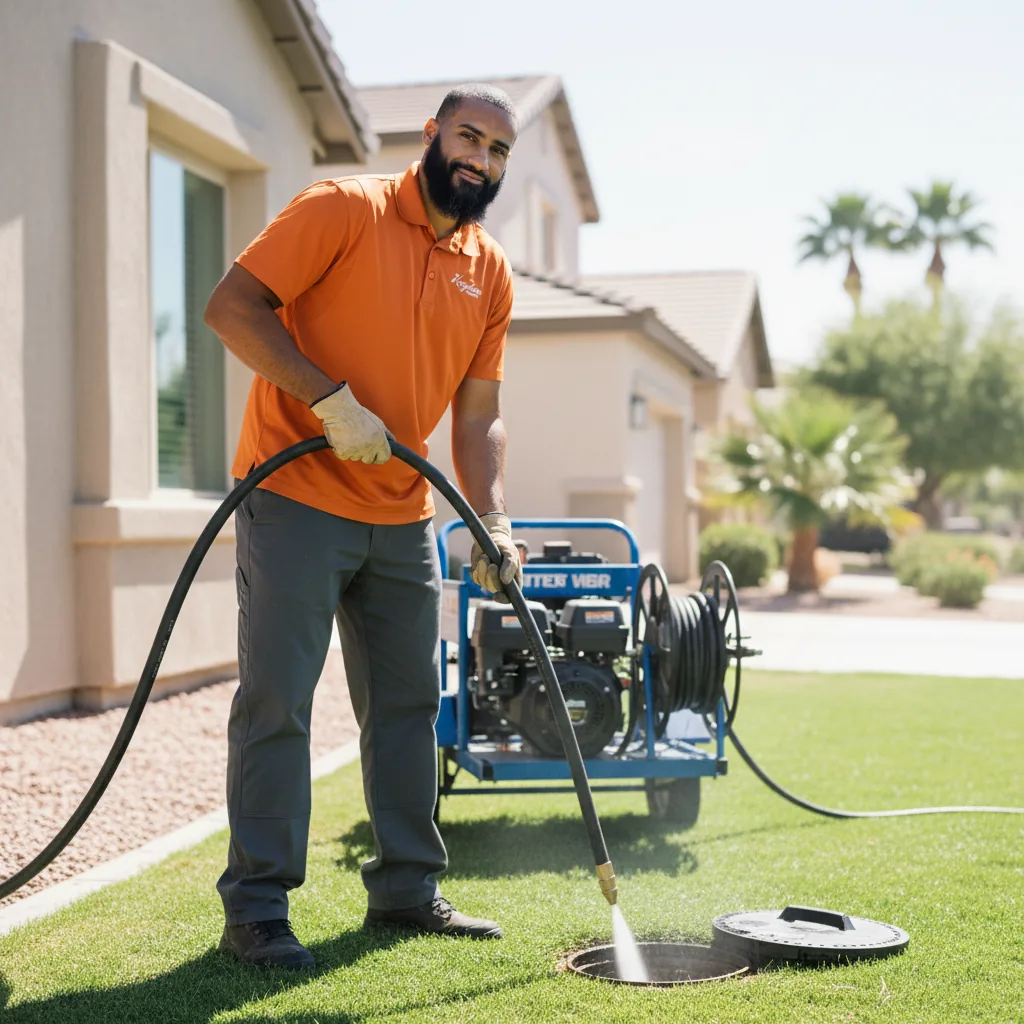
Once they have a basic history, the plumber will locate and open a cleanout or another suitable access point. Many professional hydro jetting workflows, as described in technical guides, include a camera inspection before the jetting begins. This lets them see whether they are dealing with grease, roots, or heavy mineral scale, then select the appropriate nozzle, pressure, and flow. With the plan in place, the tech will set up the jetter outside, run the hose to the access point, and protect nearby areas with drop cloths where needed. After that, they will slowly work the jetting nozzle through the line, making passes until the camera verification shows the line is clear or as clean as the existing pipe condition safely allows.
What safety checks and protections should you expect during hydro jetting?
Hydro jetting involves high pressure water inside your plumbing, so a careful approach matters. Professional training and technical guides emphasize that the right nozzle, pressure, and flow must be matched to the type of blockage and the pipe material. Before opening the jetter, your plumber should confirm which fixtures are on the affected line and may ask you not to run water or flush toilets for a short period while they are working. In some cases, especially in older homes or where previous damage is visible, they may recommend lower pressure settings or additional camera time to avoid stressing already compromised pipe.
You should also see basic safety habits around the equipment itself. The technician will typically keep the jetter unit outside or in a ventilated area, set hose routes where people are less likely to trip, and wear appropriate protective gear. Technical guides warn against using pressure alone without paying attention to flow or nozzle design, since that can leave debris further down the line instead of flushing it out. A good hydro jetting appointment ends not just with a clear line, but also with a quick rundown of the pipe’s overall condition so you know if there are cracks, offsets, or root intrusion that might need repair in the future.
What should you expect at the end of the visit and what questions should you ask?
The final part of a first hydro jetting appointment is about verification and planning. After the plumber finishes jetting, they will typically run a camera back through the cleaned section of pipe to confirm that buildup and debris have been removed. You may be able to see this on a monitor or recorded video. Consumer and technical resources both point out that this after-check is important, since it confirms that debris did not simply move downstream and that there is not a major structural issue hiding behind the original clog.
Before they pack up, you should expect a clear explanation in plain language. That includes what they did, what they saw inside the line, how the line is performing now, and whether they recommend any maintenance or follow-up. This is a good time to ask how hydro jetting compares with snaking for your specific situation, how long they expect the line to stay clear, and whether very hard Las Vegas water or grease habits in the kitchen might bring the problem back. At Kingdom Plumbing, we take those last few minutes seriously so you are comfortable with what was done and what to watch for in the future.
- Ask to see camera images or video of the cleaned line.
- Have the plumber explain any cracks, roots, or low spots found.
- Request simple maintenance tips tailored to your home.
- Clarify whether they recommend future jetting or repairs.
- Write down the specific drain and sewer symptoms you have noticed, including which fixtures back up and how often, so you can explain the history clearly during the first visit.
- Check whether the issue involves multiple drains or just one fixture, since widespread problems are a stronger sign that your main sewer line could benefit from hydro jetting.
- Look at your calendar and set aside a 2-3 hour window for the appointment so the plumber can diagnose, jet, and verify the line without rushing.
- Gather any previous plumbing paperwork or inspection reports, especially camera recordings, so your plumber can see what kind of pipe and past issues they are dealing with.
- Think through your budget and be ready to discuss the difference between a lower cost snaking service and a more thorough but higher priced hydro jetting option.
- Ask the plumber in advance whether they plan to perform a camera inspection before and after the hydro jetting, and confirm that this is included in the quoted price.
- Walk the plumber to any known cleanouts or access points in your yard or garage so they can set up efficiently and avoid unnecessary digging or searching.
- Prepare any questions about your home’s age, Las Vegas hard water, or previous sewer problems so you can get tailored advice instead of generic information.
- Plan for basic household adjustments during the work window, such as limiting toilet flushes or laundry use if the plumber asks you to keep water usage low while they jet.
- Confirm that the company providing hydro jetting is licensed, bonded, and insured in Nevada and that you will receive clear, upfront pricing before any work begins.
Frequently asked questions
- How long does a hydro jetting appointment usually take for a house in Las Vegas?
- Most residential hydro jetting visits run about 1.5 to 3 hours on site, according to plumbing industry guides that track typical job durations. That time includes diagnosis, setup, the hydro jetting itself, and camera checks before and after when recommended. Shorter branch line jobs can be quicker, while long main lines or very heavy buildup can take closer to the upper end of that range.
- How much does hydro jetting typically cost compared with snaking a drain?
- National cost guides report that many hydro jetting jobs fall in the $250-$800 range, with some sources noting $350-$1,150 for more complex work that involves long lines or tough clogs. In comparison, snaking is often in the $160-$550 range and is usually cheaper up front. The tradeoff is that hydro jetting cleans the full pipe interior more thoroughly, which can matter for recurring or severe issues.
- Is hydro jetting safe for older sewer pipes in a Las Vegas home?
- Hydro jetting can be safe for many older pipes if the plumber evaluates the line first and chooses the right pressure, flow, and nozzle. Technical guides emphasize that a camera inspection before jetting is important, since badly cracked, collapsed, or heavily corroded pipe might need repair instead of aggressive cleaning. A careful Las Vegas plumber will talk through any risks based on what they see in the line before proceeding.
- Why is hydro jetting recommended more often in areas with very hard water?
- Very hard water leaves more mineral deposits inside plumbing lines over time, which can narrow the pipe and trap grease and debris. The Las Vegas Valley Water District reports average hardness around 291 ppm, or about 17 grains per gallon, which is firmly in the very hard category. Hydro jetting is effective in these conditions because it not only breaks clogs, it also washes away much of the mineral scale stuck to the pipe walls.
- Will hydro jetting prevent my drains from ever clogging again?
- Hydro jetting can give you a much cleaner starting point by removing grease, sludge, roots, and scale from inside the line, so many homeowners see longer periods between clogs afterward. However, it cannot change habits or structural issues in the pipe, such as low spots or cracks. Your plumber should explain what they saw during the camera inspection and suggest maintenance or behavior changes to keep the line clear longer.
- What should I ask the plumber during my first hydro jetting estimate?
- It is smart to ask what they believe is causing the blockage, why they recommend hydro jetting instead of or in addition to snaking, and whether a camera inspection is included. You can also ask how long the appointment is likely to take, what the total cost will be, and if there are any risks given the age and material of your pipe. A clear, straightforward explanation is a good sign that you are getting a thorough professional service.
- Do I need to leave my house during a hydro jetting appointment?
- Most homeowners can stay home during hydro jetting and even watch parts of the process if they are interested, as long as they stay clear of work areas and hoses. Your plumber may ask you to reduce water use for a time so the line stays as empty as possible while they work. It is helpful to be available at the end of the visit to review camera footage and walk through the final results.
- How does hydro jetting help with recurring clogs in the same drain?
- Recurring clogs often happen because only the center of a blockage gets cleared and residue is left on the walls of the pipe. Hydro jetting uses high pressure water in a pattern that cleans more of the pipe’s inner surface, which can remove the grease or scale that keeps catching new debris. That is why consumer plumbing guides often recommend hydro jetting when the same line keeps clogging even after snaking.
Talk to Kingdom Plumbing about hydro jetting, or call (702) 840-5037. Family-owned, NV Contractors License #0085422, upfront flat-rate pricing.
Kingdom Plumbing is a family-owned, licensed Las Vegas plumber (NV NV Contractors License #0085422) serving the valley since 2018. Questions about how this affects your home? Call (702) 840-5037. Dealing with a burst pipe or flooding right now? Our emergency plumbers in Las Vegas answer 24/7.