
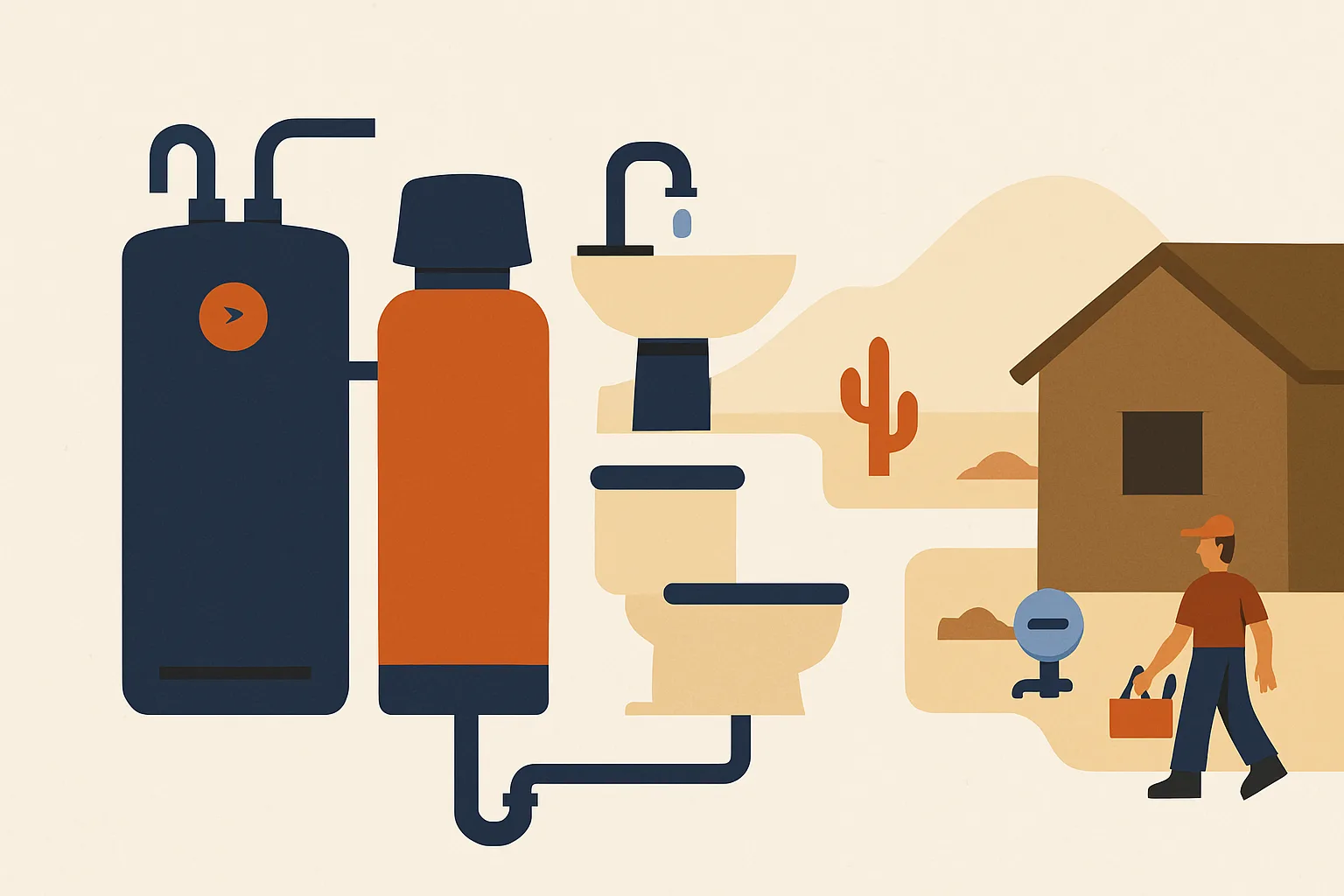
Las Vegas homes sit on very hard water, so many owners look at water softeners but are not sure what the base price really covers. Here is how to tell what is standard in a professional water treatment and softener install, and what usually costs extra.
How hard is Las Vegas water, and when is softening worth it?
Before you look at what is included in a water softener installation, it helps to know why so many Las Vegas homeowners consider water treatment in the first place. The Las Vegas Valley Water District reports that local tap water has a hardness of about 280 parts per million, which works out to roughly 16 grains per gallon. That level is in the very hard range, so many homes see scale buildup, cloudy fixtures, and extra soap use over time.
The U.S. Environmental Protection Agency notes that many supplies above roughly 180 milligrams per liter, or about 10 grains per gallon, can benefit from softening or conditioning. Las Vegas water is well above that mark, which is why buyers here talk about water treatment more than in many other cities. A properly selected water softener will reduce hardness as soon as it is brought online, while the EPA points out that improvements like less scale and easier cleaning show up over days or weeks as old buildup is flushed out.
Not every home needs the same setup, though. Smaller households, or those mainly worried about taste and odor rather than mineral spotting, may be better served with a different type of water treatment or a smaller capacity system. Others care about keeping an outdoor spigot on hard water for plants. The hard part for many owners is sorting out which parts of a quote are truly needed for our local water and which are optional upgrades.
- Las Vegas water is about 280 ppm hardness or 16 grains per gallon.
- The EPA suggests softening is useful above roughly 10 grains per gallon.
- Softening effects on water feel immediate, but scale reduction takes time.
- Different households need different sizes and styles of water treatment.
What does a basic water softener installation typically include?
Most Las Vegas homeowners who call about water treatment and softeners are first trying to understand what counts as a "standard" install. Looking at cost guides helps frame that. A Las Vegas specific breakdown from CostWhale reports that installed water softener projects here often fall around an average of about $1,836, with simpler jobs on the low side and more complex systems reaching higher totals. A national guide from TapWaterData puts typical combined unit and install pricing for traditional salt based softeners in the range of about $1,500 to $5,000, depending on size and complexity.
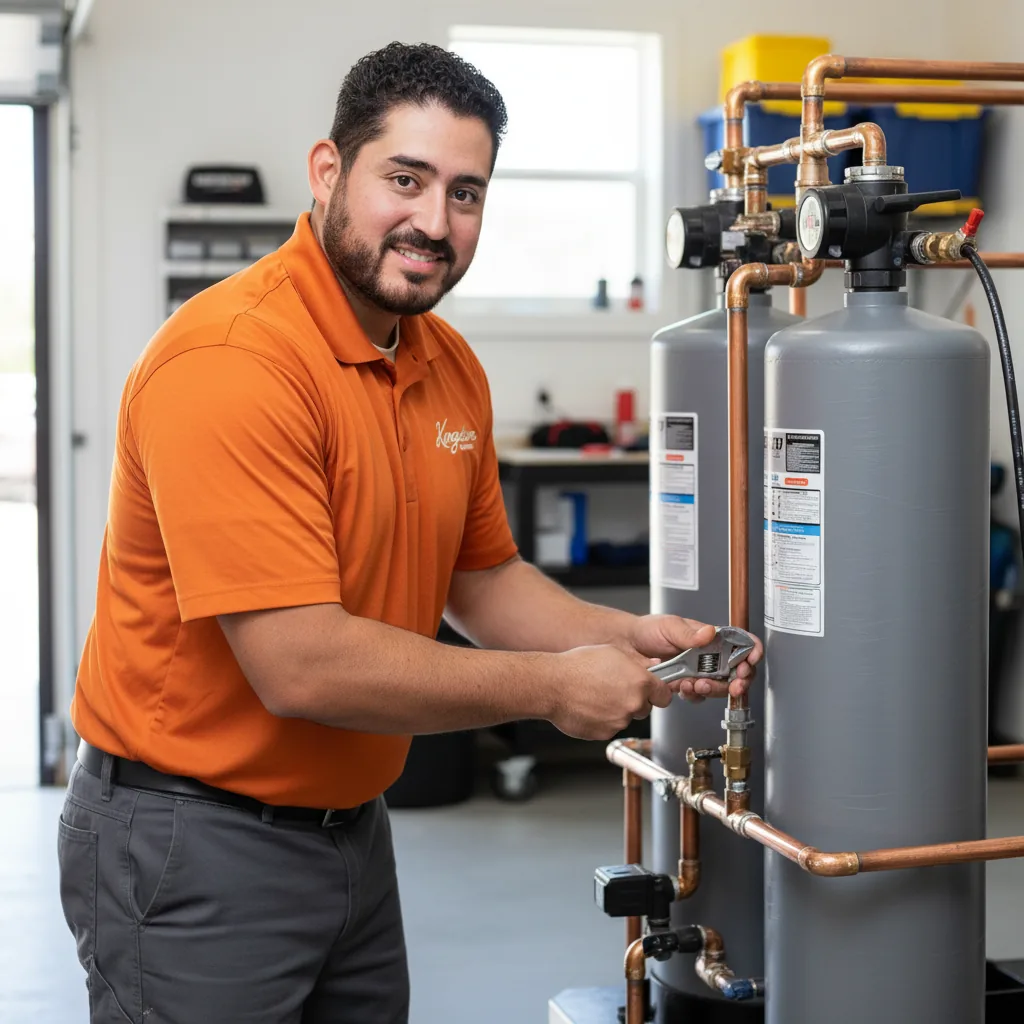
Within these ranges, a straightforward installation usually includes the main softener or conditioner tank, the control head, and the brine tank if it is a salt based system. It also normally covers tying into your existing cold water supply line where it enters the home, routing the soft water line back out to your interior plumbing, and connecting a drain line for regeneration. On a typical slab on grade Las Vegas home, this is often done in the garage near the water heater or main shutoff, which keeps the run short and helps control labor.
A proper startup is another part of what you should expect in the base price. That means the plumber sets the hardness level on the control head based on local conditions, which per the Las Vegas Valley Water District are around 16 grains per gallon, and then runs the system through an initial regeneration and flush. A walk through of the controls, basic maintenance tasks, and how to keep salt or media levels where they need to be should also be included. Those pieces make the system usable from day one and are not really optional, so they belong in the core quote, not as add-ons.
Which parts of a water softener job are usually add-ons or upgrades?
Once you move past that basic scope, you get into items that are often optional, depending on your goals. One common upgrade is adding prefiltration, such as a sediment filter, before the softener or conditioner. While this can help protect the softening media and is a smart idea in many cases, it is an additional component and takes time to install, so it typically raises the project cost. TapWaterData notes that features and configuration are key drivers of where a project lands within the national price ranges it reports.
Bypass and isolation valving is another gray area. Any professional installation should leave you with a way to shut off the softener and still have water to the home, usually through a bypass arrangement near the unit or at the main. More elaborate manifolds that allow you to pick and choose softened and unsoftened lines, or to send only certain branches through a conditioner, can move into upgrade territory. Those are helpful if you want a dedicated hard water hose bib for plants or pool fill, but they are not strictly required for the softener to function.
Other add-ons include connecting separate ice maker or fridge lines, installing dedicated laundry or kitchen treatment devices, or combining the softener with other water treatment like reverse osmosis at the sink. In many cases, you are stepping from a single service, such as water softening, into a small treatment package tailored to your home. That can be the right call for comfort and appliance protection, but it is important that your quote clearly marks each of these pieces so you can see how much you are paying for water softening itself and how much for convenience features.
- Prefiltration or sediment filters ahead of the softener.
- Advanced valve manifolds beyond a simple bypass.
- Plumbing in extra lines for ice makers or special fixtures.
- Adding other treatment like reverse osmosis or carbon filters.
How do system type and sizing affect what is included and cost?
The type of water treatment and softener you choose has a big impact on both included features and price. TapWaterData reports that traditional salt based ion exchange systems usually sit in a higher installed range than electronic descalers or simple conditioners, because they use more hardware and require brine handling and regeneration control. It also notes that salt free systems and electronic devices can have lower upfront costs, although their performance and role in full treatment can differ from a classic softener that actually exchanges hardness minerals.
Capacity is another piece that matters in Las Vegas because of our very hard incoming water. The EPA highlights that many mistakes in water softening and treatment come from undersizing equipment relative to actual hardness and usage. If a system is too small for the combination of 16 grain water and household demand, it may regenerate very frequently and waste salt and water. That can push you toward larger resin tanks, twin tank systems, or demand initiated controls, which are more complex and therefore usually priced higher than entry level models.
Those differences show up in what is in the box and what the plumber must supply. A more advanced unit may include its own bypass valve assembly and demand metering, which is counted as part of the base system cost. Higher capacity or twin tank systems can demand more floor space and more involved piping, which can shift some of what would be a simple tie-in into light reworking of nearby plumbing. When you compare quotes, make sure you are matching system type and size, not just the bottom line.
What hidden or often overlooked costs should Las Vegas homeowners ask about?
Even when the unit and basic labor are clear, some homeowners are surprised by smaller costs that were not spelled out. One is disposal or handling of the old softener or treatment equipment if you already have something in place. Removal, capping off lines, or hauling away a heavy brine tank can take time, so you want that scope addressed up front. Another is drain routing, since softeners need a place to send regeneration water. If your garage lacks a handy floor drain or nearby standpipe, there may be extra work involved in running that line properly.
Ongoing operating costs deserve attention too. Both the EPA and industry sources stress how much salt use and regeneration frequency affect the long term cost of owning a water softener. A more efficient, demand initiated system might cost more initially, but can reduce salt use compared with a simple timer model. That is not a hidden charge at install, but it is part of the real cost of ownership that should be part of your decision. If your quote mentions different control options, ask how they affect salt and water use over time.
Finally, think about future maintenance. Some homeowners assume maintenance visits are included with installation, but most basic install prices cover only the initial setup and a short warranty visit if something is not working correctly. Regular checks, resin replacement years down the line, or reconfiguring the system when you remodel are separate services. None of this is meant to steer you away from water treatment, which can be very helpful in our valley, but to encourage you to get a full picture of both upfront and ongoing costs at the proposal stage.
- undefined
- undefined
- undefined
- undefined
- undefined
- undefined
- undefined
- undefined
- undefined
- undefined
Frequently asked questions
- How hard is Las Vegas water and do I really need a softener?
- The Las Vegas Valley Water District reports local tap water hardness at about 280 parts per million, which is roughly 16 grains per gallon and considered very hard. The EPA notes that many supplies above about 10 grains per gallon can benefit from softening, so most Las Vegas homes will see reduced spotting, easier cleaning, and less scale if water treatment and softeners are properly sized and installed.
- What is normally included in a standard water softener installation cost?
- A typical installation in Las Vegas usually includes the water softener or conditioner itself, a brine tank if it is salt based, basic connections to your main water line, and a drain line for regeneration. It should also cover startup, programming for local hardness, and a brief walk through of operation, but it may not include extras like prefilters, line reworks, or removal of an old unit unless those are spelled out.
- How much does it cost to install a water softener in Las Vegas?
- Local cost data from CostWhale shows water softener installations in Las Vegas averaging around $1,836, with simpler setups at the low end and more complex systems costing more. A national guide from TapWaterData reports total costs for traditional salt based softeners in the general range of about $1,500 to $5,000, depending on system size, features, and plumbing complexity.
- What are common add-ons to water softener installation that increase the price?
- Common upgrades include sediment or carbon prefiltration, more complex valve manifolds to control which lines get softened water, and extra work to serve ice makers or specialty fixtures. Many homeowners also choose to add point of use systems like reverse osmosis at the kitchen sink, which is a separate piece of water treatment that adds to the overall project cost.
- How quickly will I notice a difference after installing a water softener?
- According to EPA guidance, a correctly installed softener will start reducing hardness as soon as it is online, so you may feel a difference in how the water lathers and feels right away. Visible improvements, such as less spotting, reduced film on glass, and slower scale buildup in fixtures, typically show over days or weeks as treated water works through your plumbing and old deposits are flushed out.
- What mistakes should I avoid when choosing a water softener or water treatment system?
- Industry guidance on water treatment warns against undersizing systems, ignoring actual hardness levels, and skipping regular maintenance, all of which can hurt performance and efficiency. It is also a mistake to choose a softener when your real concern is something like taste, odor, or specific contaminants, which may call for different treatment, so start with clear goals and a licensed plumber who can match a system to your Las Vegas water conditions.
Talk to Kingdom Plumbing about water treatment and softeners, or call (702) 840-5037. Family-owned, NV Contractors License #0085422, upfront flat-rate pricing.
Kingdom Plumbing is a family-owned, licensed Las Vegas plumber (NV NV Contractors License #0085422) serving the valley since 2018. Questions about how this affects your home? Call (702) 840-5037. Dealing with a burst pipe or flooding right now? Our emergency plumbers in Las Vegas answer 24/7.