
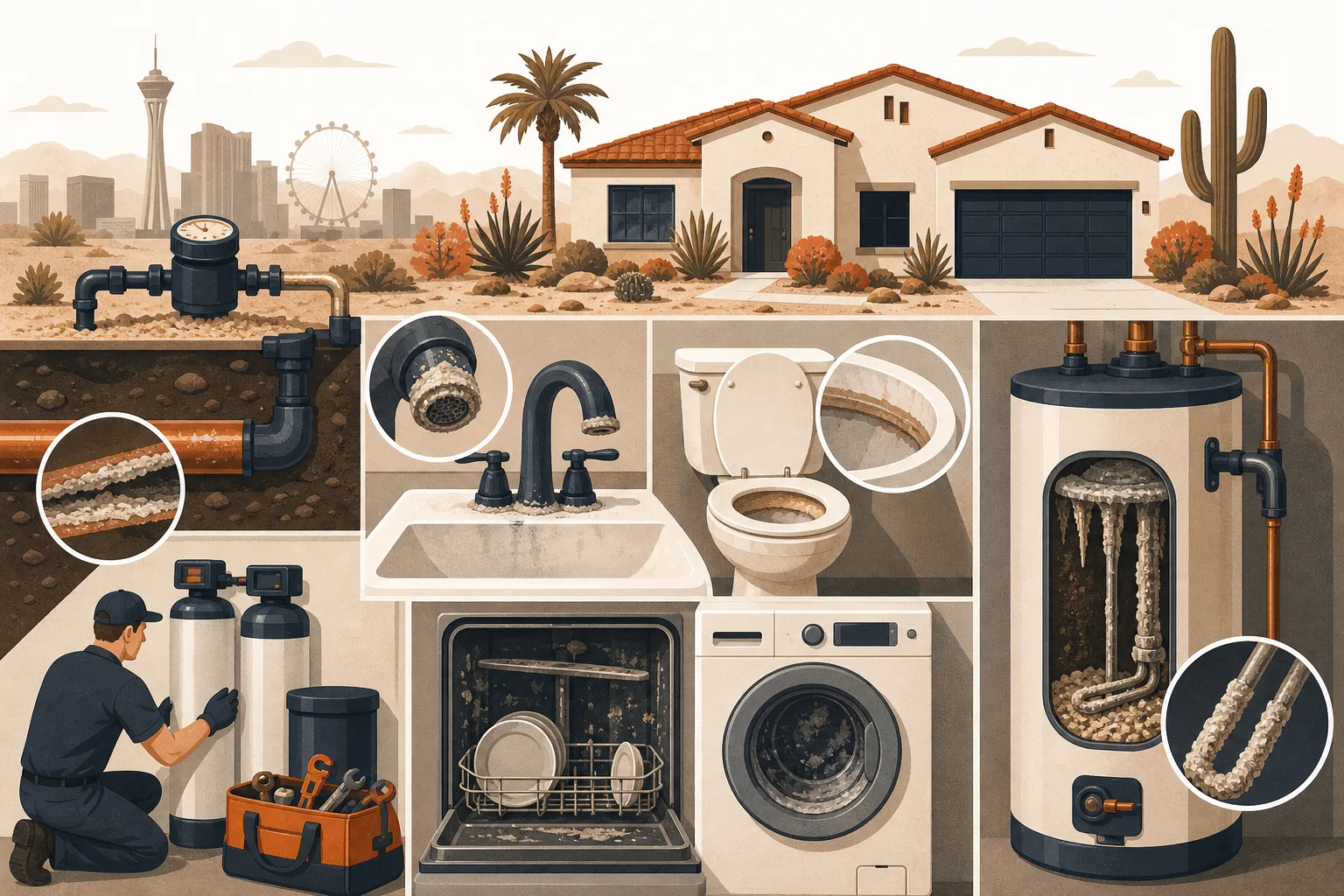
Las Vegas tap water is very hard, which slowly eats away at plumbing, fixtures, and appliances. Waiting to install or repair water treatment and softeners can raise your long-term costs and shorten the life of major equipment.
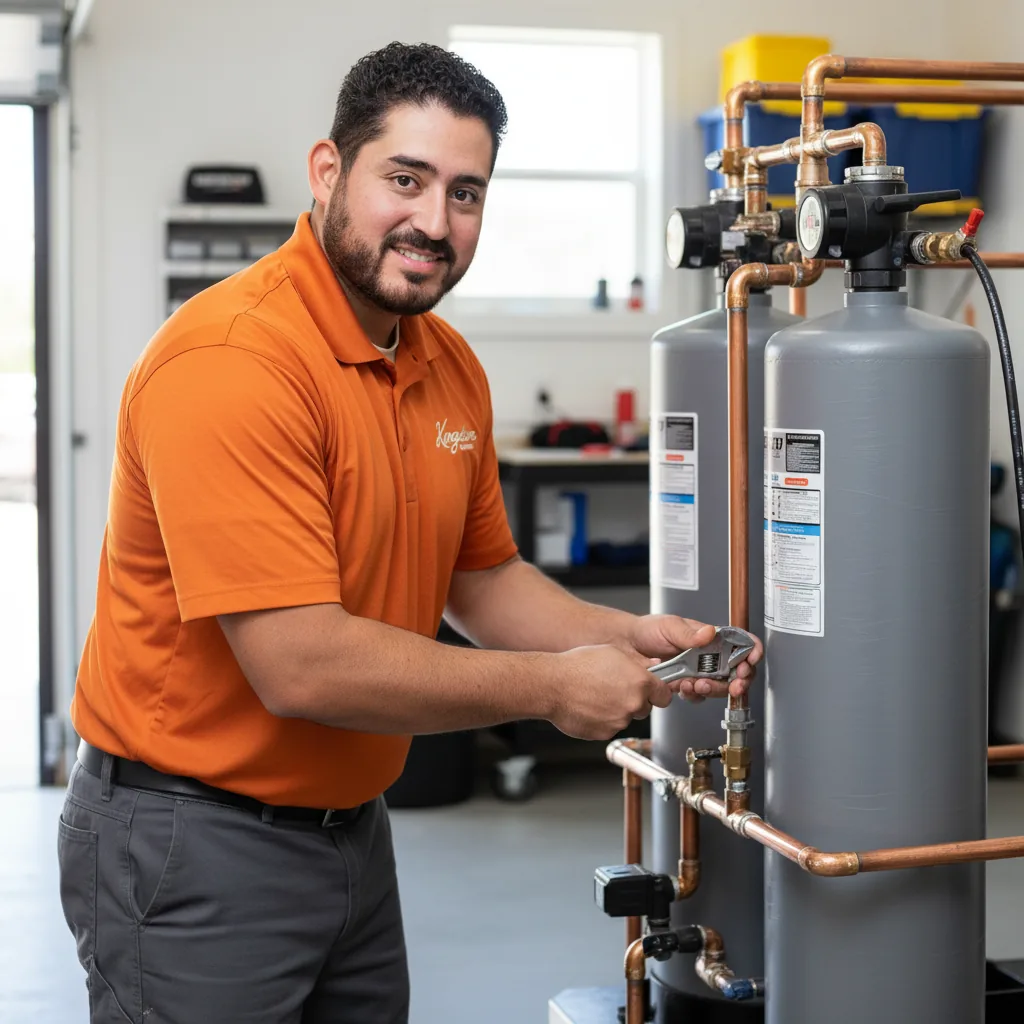
How hard is Las Vegas water and why does it matter if you wait?
In the Las Vegas Valley, the water coming out of your tap is not just a little hard. The Las Vegas Valley Water District reports hardness around 291 parts per million, or about 17 grains per gallon, which lands in the "very hard" category. That means every shower, load of laundry, and dish cycle leaves a little mineral behind inside your plumbing system. If you wait years to address it, the buildup is not just cosmetic. It changes how your water heater, fixtures, and valves age.
For a local homeowner, that hardness turns into cloudy glassware, dingy laundry, and stubborn scale around faucets long before you see what is happening inside the pipes. Scale forms a rock-like coating in supply lines and inside your water heater, forcing equipment to work harder for the same result. Over time, that can raise energy use and shorten the lifespan of appliances. Water treatment and softeners are how you push back against that reality, so deciding when to act is really deciding how much hidden wear you are comfortable with.
- Las Vegas water is about 17 grains per gallon of hardness
- Very hard water leaves mineral deposits in every hot water run
- Scale buildup worsens the longer you wait to treat it
- Delaying treatment raises long-term wear on plumbing and fixtures
What does waiting cost you in water heater life and efficiency?
Hard water and water heaters are not a friendly match. National guidance from manufacturers and trade groups often cites 8 to 12 years as a typical lifespan for a standard tank-style water heater. In the Las Vegas valley, Kingdom Plumbing commonly sees closer to about five years in real homes. One major reason is the hardness of our water, which builds thick scale on the tank bottom and on heating surfaces. That scale acts like insulation, so the burner or elements have to work longer to heat the same amount of water.
If you wait to install water treatment and softeners, each year adds more scale inside a tank that was never designed for rock layers. You may notice popping or rumbling sounds when the heater runs, longer waits for hot water, or inconsistent temperatures. On gas units, that can translate to more fuel burned for the same shower. On electric units, the elements are working harder and running hotter. When you stack a short local water heater lifespan on top of our very hard water, it becomes clear that postponing water treatment often means paying for water heater replacement sooner than you otherwise would.
How do water treatment and softeners change what you spend over time?
Installing water treatment and softeners in Las Vegas is not a small decision, but it is one of the few plumbing projects that can change costs across your entire home. Kingdom Plumbing’s flat-rate pricing for water softener installation in the Las Vegas valley ranges from $3,200 to $10,300, depending on the size of your home, whether a softener loop is already present, and how complex the tie-in is. Planning for that investment means comparing it against the slow drip of extra costs that hard water creates over the life of your home.
Without treatment, you can expect more frequent replacement of fixtures, cartridges, and shutoff valves, plus more stress on your dishwasher, washing machine, and water heater. Some homeowners also spend more on soaps and detergents because very hard water does not let them lather and rinse efficiently. The exact dollar amount of those hidden costs will vary, but the direction does not change: in a very hard water city, scale tends to win unless you actively prevent it. A good softener shifts your spending from lots of small, surprise repairs to a planned installation and straightforward ongoing maintenance.
- Water softener installation ranges from $3,200 to $10,300 flat-rate
- Very hard water increases fixture and cartridge replacement over time
- Appliances like dishwashers and washers work harder in hard water
- Softening shifts costs from frequent small repairs to planned maintenance
What changes right away once a softener is installed and what still takes time?
When a water softener is installed correctly, some improvements show up fast while others take longer. According to guidance from the EPA’s WaterSense program, softeners work through ion exchange and they start removing hardness from cold water as soon as they are in service and properly programmed. That means the cold water at your sinks and hose bibs that feed from the treated side can feel different almost immediately. Soap tends to lather more, dishes often dry with fewer spots, and skin can feel less dry after a few days of showers in softened water.
Hot water is a little different. The EPA and industry sources note that your existing water heater tank is full of pre-softened, hard water at the moment the system is turned on. Until you run that water out and replace it with softened water, the hot side will not fully reflect the change. Depending on the size of your tank and how much hot water your household uses, that transition can take from several hours to a day or more. Existing scale inside the heater or pipes will not vanish overnight. Water treatment and softeners are best at preventing new scale and slowing the progression, not erasing years of buildup in one day.
What risks do you run by putting off a needed repair or replacement of your softener?
If you already have a softener and it is not working correctly, waiting to repair or replace it is almost like going back to raw Las Vegas tap water while still thinking you are protected. A system that is not regenerating properly, is set to the wrong hardness, or has been bypassed for months will let very hard water flow through every fixture again. That restarts the clock on scale buildup and can undo some of the protection you have already paid for. In many cases, homeowners only notice an issue once spots, soap scum, and dry skin return.
From a cost perspective, putting off a softener repair or replacement is usually not saving the money you think it is. While a simple service visit or a modest part may resolve a performance issue, months of untreated water can contribute to clogged aerators, stiff or noisy valves, and faster wear inside your water heater. If a failing system leaks around valves or connections, there is also the usual Las Vegas risk of slab and wall damage because homes here are built slab-on-grade instead of having basements. Getting water treatment and softeners evaluated by a licensed plumber when you first notice problems is almost always cheaper than waiting until you have both hard water symptoms and a separate plumbing failure.
How should Las Vegas homeowners think about efficiency, salt use, and local plumbing code?
Not all softeners are the same when it comes to efficiency. The EPA’s WaterSense guidance notes that efficient systems can use around 4 gallons or less of water per 1,000 grains of hardness removed during regeneration. Less efficient setups can waste more water and salt than needed, especially if they are programmed incorrectly for your real hardness and water use. In a valley where water conservation is always in the conversation, choosing and setting up equipment correctly matters both for your bill and for our shared supply.
Local plumbing code and practical installation details matter too. Southern Nevada jurisdictions have adopted the 2024 Uniform Plumbing Code with local amendments, which means installs must meet specific requirements for drain connections, air gaps on discharge lines, electrical supply, and accessibility of shutoff valves. Common mistakes listed by technical guides include reversing inlet and outlet connections, missing air gaps on drain lines, and poor attention to O-rings and seals. Those errors can lead to inefficient performance or leaks. A licensed, bonded, and insured plumber who knows local code will size the softener to your actual hardness, program it correctly, and install it in a location with proper drainage and power so that the system works as intended and passes inspection.
- Check your latest Las Vegas Valley Water District water quality report so you know the actual hardness level you are dealing with at your address.
- Walk through your home and note all signs of hard water, including spots on fixtures, stiff laundry, soap scum, and reduced water flow at faucets.
- Look up the age of your water heater and compare it to both the national 8 to 12 year guidance and the roughly five year local lifespan that Kingdom Plumbing commonly sees.
- Gather past repair invoices for fixtures, cartridges, valves, and water-using appliances to see what hard water may already be costing you.
- Confirm whether your existing water softener, if you have one, is plugged in, has salt in the brine tank, and is set to the proper hardness for Las Vegas water.
- Make a list of priorities such as protecting a newer water heater, improving shower feel, or reducing spots on glassware so your plumber can match a system to your goals.
- Schedule a diagnostic visit with a licensed plumber who offers water treatment and softeners to evaluate your plumbing layout and any existing softener loop.
- Ask for a written, flat-rate estimate for water softener installation, water softener repair, or other water treatment options so you can compare the upfront cost with long-term wear and replacement expenses.
- Discuss salt use, regeneration frequency, and drainage locations with your plumber so you understand ongoing maintenance before you commit.
- Plan installation timing so you are home for the 2 to 4 hour window a professional typically needs to install and set up a water softener, then monitor the first few days of performance.
Frequently asked questions
- Is Las Vegas water really hard enough that I need a water softener?
- The Las Vegas Valley Water District reports hardness around 291 ppm, or about 17 grains per gallon, which falls in the very hard range. At that level, scale buildup in water heaters, fixtures, and appliances is a real concern over time, so many local homeowners choose water treatment and softeners as a preventative investment.
- What happens if I just ignore hard water and never install a softener?
- If you never install water treatment and softeners, your plumbing system stays exposed to very hard water every day. That usually means more scale in water heaters and pipes, more frequent fixture and cartridge replacements, and a higher chance that major equipment like water heaters will need to be replaced sooner than the national 8 to 12 year guideline.
- How long does it take to feel the benefits after installing a water softener?
- Cold water benefits are usually noticeable right away once a properly sized softener is installed and set up, since softened water begins flowing as soon as the system is online. Hot water can take from several hours to a day or more to fully feel different, because the existing hard water in your tank has to be used up and replaced with softened water.
- Does a water softener remove all old scale from my pipes and water heater?
- A water softener mainly prevents new hardness minerals from depositing, it does not scrub years of existing scale out of a tank or pipes overnight. Some existing deposits may slowly reduce under softer conditions, but in most cases the real benefit is stopping new buildup so your equipment does not continue to accumulate mineral layers.
- How much water does a softener use when it regenerates?
- The EPA’s WaterSense program notes that typical softener regeneration cycles can use on the order of 20 to 70 gallons of water, depending on design and settings. More efficient systems and correct programming can keep water use closer to about 4 gallons or less per 1,000 grains of hardness removed, so how the system is chosen and set up truly matters.
- What does a professional water softener installation usually cost in Las Vegas?
- Kingdom Plumbing’s flat-rate pricing for water softener installation in the Las Vegas valley ranges from $3,200 to $10,300, depending on system size and the complexity of your plumbing. Those figures are planning ranges, and you will always see and approve a specific flat rate for your project before any work starts.
- Can I delay repairing my softener if I still get water with no leaks?
- You can, but you will likely pay for that delay in other ways. If a softener is not working correctly, your home is probably receiving untreated very hard water, which increases scale formation and can shorten the life of fixtures, valves, and water heaters even if nothing is actively leaking today.
- Do I need to worry about Las Vegas plumbing code when I install a softener?
- Yes, Southern Nevada uses the 2024 Uniform Plumbing Code with local amendments, which affects how softeners are drained, where air gaps are required, and how valves must be arranged. A licensed plumber familiar with local code will install water treatment and softeners so they perform properly, protect your home, and comply with inspection standards.
Talk to Kingdom Plumbing about water treatment and softeners, or call (702) 840-5037. Family-owned, NV Contractors License #0085422, upfront flat-rate pricing.
Kingdom Plumbing is a family-owned, licensed Las Vegas plumber (NV NV Contractors License #0085422) serving the valley since 2018. Questions about how this affects your home? Call (702) 840-5037. Dealing with a burst pipe or flooding right now? Our emergency plumbers in Las Vegas answer 24/7.