
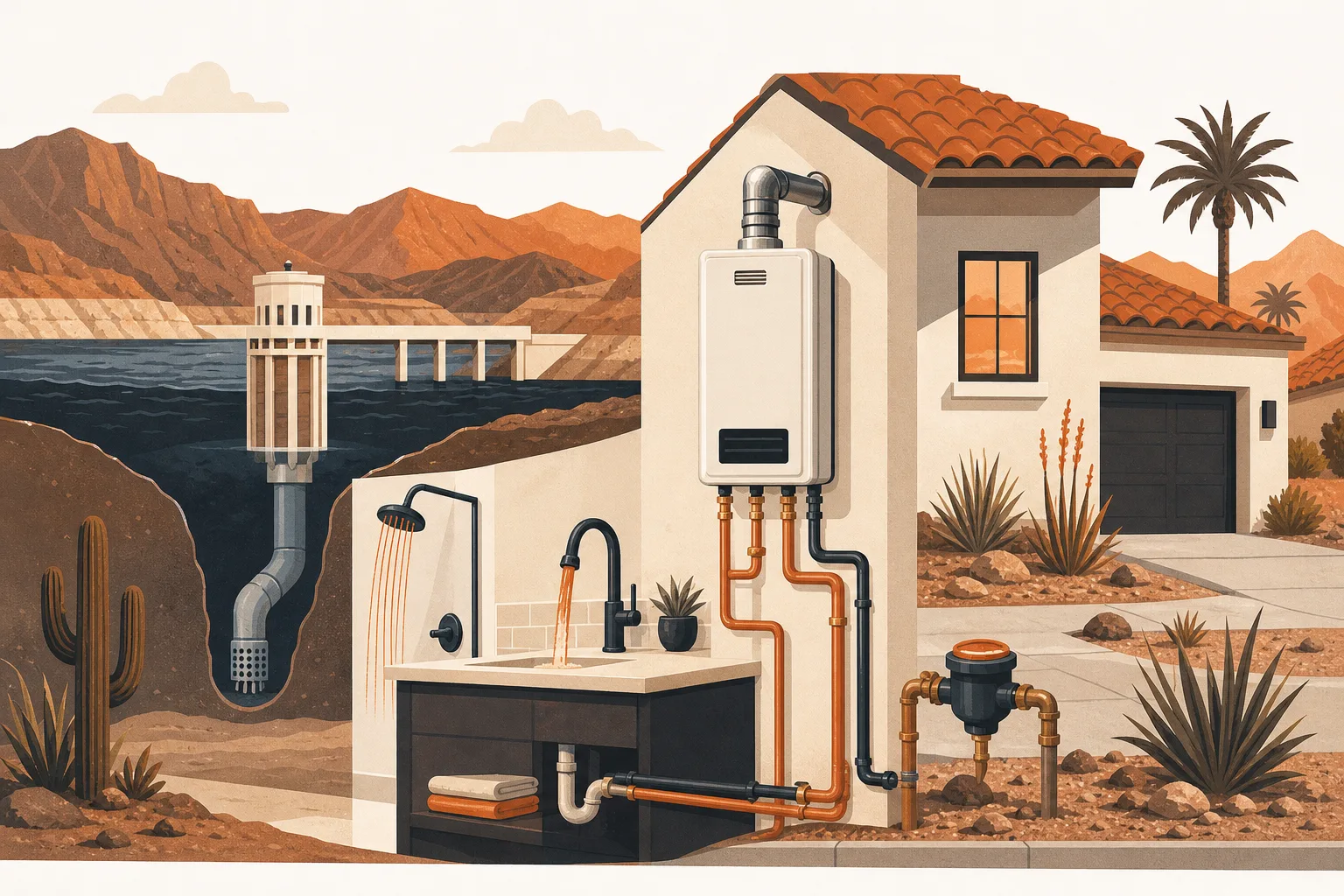
Southern Nevada is doubling down on drought planning, including a new project to lower the third Lake Mead intake for more reliable access to cleaner, colder water. For Las Vegas homeowners, that long-term supply work pairs with local conservation rebates and makes 2027 a smart deadline to upgrade to a tankless water heater before another extreme summer hits.
How Lake Mead intake work and drought planning affect your 2027 hot water decisions
According to a recent Review-Journal report, the Southern Nevada Water Authority approved a roughly $20.85 million contract on November 20, 2026 to deepen its third intake in Lake Mead by about 30 feet. The plan is to lower that intake from an elevation of 875 feet to about 845 feet, with construction expected to run from January to April 2028. The goal is to keep pulling cleaner, colder water even if lake levels continue to drop. For a Las Vegas homeowner, this is not just a big engineering project out at the lake. It is a reminder that our region is planning for a long future of tighter water conditions, and that every home system, including your water heater, needs to work with that reality.
At the same time, The Nevada Independent recently highlighted that Southern Nevada has banked about 890,000 acre-feet of Colorado River water in Lake Mead, but much of that banked supply becomes hard to access if the lake drops below about 1,000 feet. That limitation is another sign that the safety net has strings attached. Long term, the community is being asked to use water smarter, not just rely on storage and intake projects. Inside your house, hot water is one of the biggest day-to-day uses you can actually control through technology choices. A properly sized and installed tankless water heater can limit standby losses and waste from long hot water runs, which lines up with the conservation push that is shaping all of these big decisions on the river.
Why summer 2027 is a smart deadline for deciding on a tankless water heater in Las Vegas
The new intake work at Lake Mead is scheduled for early 2028, and SNWA has also postponed enforcement of nonfunctional turf fines until January 1, 2028, according to recent water news coverage. Put those dates together and you get a rough calendar for the next wave of conservation changes that will hit the Las Vegas Valley. Summer 2027 is the last full hot season before those 2028 projects and enforcement milestones, which makes it a practical planning horizon for big indoor upgrades like a tankless water heater. Instead of waiting until your old tank fails on a 115-degree day, you can line up your evaluation, budgeting, and installation work during the cooler months leading into that summer.
Local water conditions add to that timing logic. National guidance often says a standard tank water heater lasts about 8 to 12 years, but in Kingdom Plumbing’s experience serving Las Vegas homeowners since 2018, hard water that sits around 16 grains per gallon is tough enough that many tanks here struggle to make it past about 5 years. If your current tank was installed around 2021 or earlier, it is heading into the failure-prone zone right as regional drought measures keep tightening. Using the 2027 summer as your personal deadline means you can think about whether switching to tankless now, while your tank is still limping along, is smarter than gambling on one more year and ending up with an emergency replacement at the worst possible time.
- 2028 is when the deeper Lake Mead intake is scheduled to be finished.
- 2028 is also when turf fines are currently set to begin after the recent delay.
- Summer 2027 is the last hot season before those 2028 changes kick in.
- Planning tankless upgrades before summer 2027 helps avoid crisis decisions.
How Las Vegas drought planning and SNWA rebates make tankless water heaters more attractive
SNWA’s current rebate programs are focused heavily on outdoor use such as turf removal and smart irrigation, but their broader message is that every property owner should look for ways to make water use more efficient. The Water Smart Landscapes program, smart controller rebates, and home leak sensor coupons listed on SNWA.com are examples of how the region is willing to help homeowners invest in better technology. While there is not a specific residential rebate for tankless water heaters listed in the research provided, these programs show that conservation upgrades are part of a bigger culture shift that rewards early planners. If you are already talking with SNWA about landscape changes, it is an ideal time to look inside the house too.
Tankless water heaters fit well into that conservation mindset. Traditional tank systems keep 40 to 75 gallons of water hot around the clock, which leads to energy use and heat loss even when nobody is showering. A properly configured tankless system, installed with local code requirements in mind, heats water only when a hot tap is opened. In a desert climate where every gallon is pumped, treated, and often cooled before use, eliminating unnecessary reheating can reduce your overall footprint. Pairing a tankless water heater with other water-smart devices such as leak sensors supported by SNWA’s coupon program gives you more control over how and when water is used in your house or rental property.
- SNWA promotes turf removal through Water Smart Landscapes rebates.
- Smart irrigation controllers are encouraged to reduce outdoor waste.
- Leak sensor coupons help catch plumbing issues early.
- These programs show a regional push for water-smart technologies.
What a tankless water heater installation really involves under 2024 Southern Nevada plumbing code
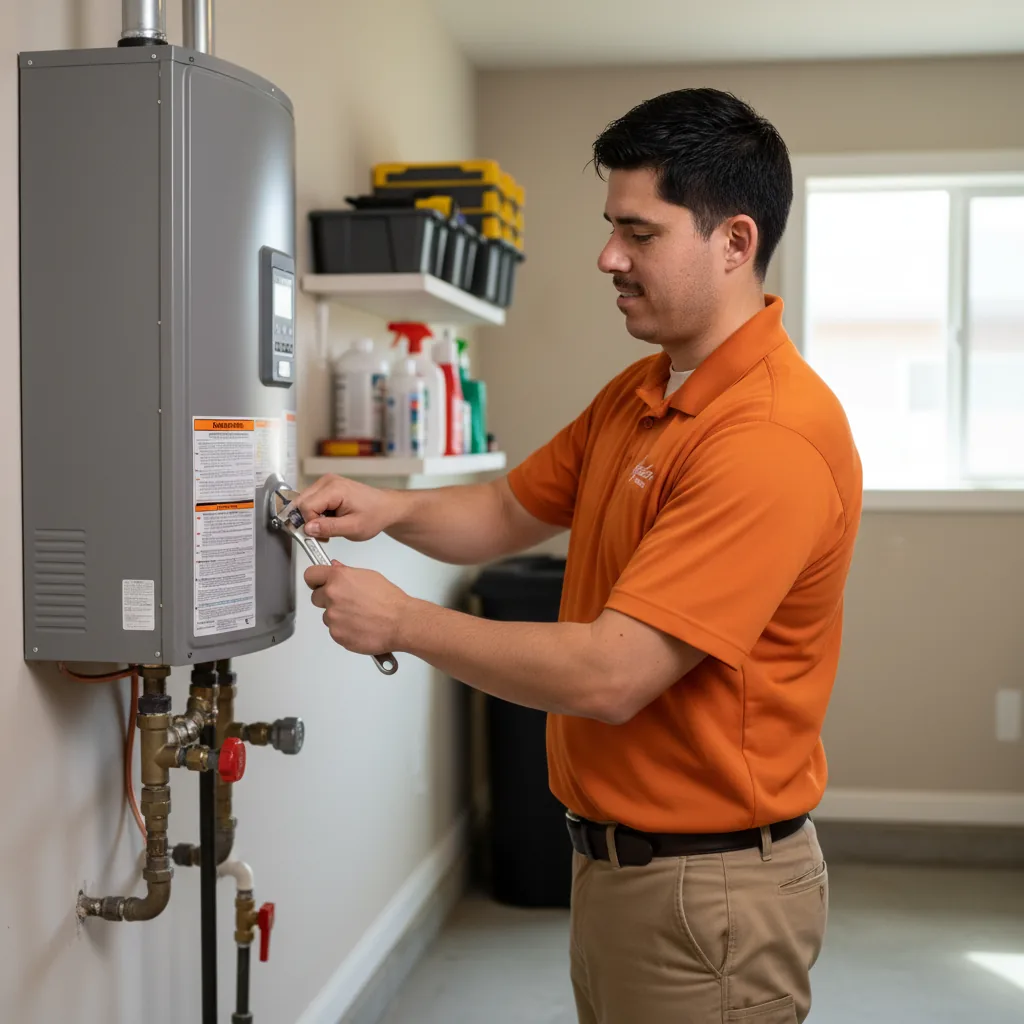
If you decide to move forward before summer 2027, it helps to know what a proper tankless water heater installation actually includes under Clark County’s adoption of the 2024 Uniform Plumbing Code with local amendments. In many cases, tankless is not a simple swap. There may be gas line sizing checks, venting requirements, electrical needs, and recirculation decisions to work through. Local code often calls for accessible gas shutoff valves ahead of the connector, proper sediment traps on gas lines, correct T and P discharge routing, and bonding of metallic systems. Although a tankless unit does not sit in a pan the same way as a tank, location and clearances still need to meet those 2024 code rules.
In garages and mechanical rooms, impact protection and elevation details can come into play for gas-fired equipment, and in any location above living space, condensate and drainage considerations matter. A good installation visit starts with a detailed review of the existing flue, combustion air, and gas supply, rather than just setting a new heater where the last one sat. For many Las Vegas homes built on slab with long hot water runs, a recirculation pump can be paired with tankless to reduce the wait for hot water at distant bathrooms. Kingdom Plumbing’s own flat-rate planning range for tankless water heater installation in the Las Vegas Valley is $7,900 to $9,900, which includes the code-compliant work described here, with the specific flat rate approved by you before work starts.
How Las Vegas hard water and safety issues affect the tankless vs tank decision before 2027
Recent reporting on water heater safety notes that there have been no Nevada-specific water heater recalls announced in the last couple of weeks, but safety experts are emphasizing inspection and maintenance because of hard water concerns. Las Vegas water, at about 16 grains per gallon according to the Las Vegas Valley Water District, encourages scale buildup inside water heaters. That buildup can reduce efficiency, damage burners or heating elements, and shorten the lifespan of any heater, tank or tankless. In tank systems, sediment tends to collect at the bottom of the tank where it insulates the water from the burner and stresses the metal over time.
Tankless water heaters are not immune to hard water, but their design can make descaling and maintenance more straightforward when isolation valves and flush ports are installed from the start. Committing to regular flushing is especially important here, and having a plumber assess existing scale buildup before you switch can set realistic expectations about performance. The absence of recent recalls does not mean you can ignore your current system. It means you have a window, heading into 2027, to make a planned decision instead of reacting to a leak or combustion issue. If your existing tank is already past that local 5-year mark or showing signs such as rumbling, discolored water, or inconsistent hot water, a proactive tankless evaluation aligns both with safety advice and with the region’s bigger drought planning story.
- Check the age of your current water heater and, if it is around 5 years old or more, treat summer 2027 as your personal deadline to decide between staying with a tank or upgrading to a tankless water heater.
- Schedule a professional inspection of your current water heater to look for hard water scale, corrosion, and safety concerns so you know whether it can reasonably last through another Las Vegas summer.
- Ask a licensed plumber to size a tankless water heater for your specific home, including simultaneous shower and appliance use, so you avoid underperforming units that struggle on extreme heat days.
- Have your gas line, venting, and electrical capacity evaluated under the 2024 Uniform Plumbing Code and Southern Nevada amendments to understand what code upgrades are required for a tankless installation.
- Discuss recirculation options with your plumber so your tankless setup can deliver faster hot water to distant bathrooms without wasting water down the drain while you wait.
- Review SNWA’s current rebates for landscape changes, leak sensors, and other water-smart technology and coordinate those outdoor conservation projects with your indoor tankless upgrade plan.
- Get a written flat-rate estimate for tankless water heater installation in the $7,900 to $9,900 planning range so you can budget and compare that investment with the cost of replacing your current tank if it fails.
- Plan the actual installation for cooler months before summer 2027, when scheduling is often easier and you are less likely to be rushed into decisions by an emergency failure.
- Ask your plumber to include isolation valves and flush ports on your new tankless water heater so regular descaling is simple in our 16 grains per gallon hard water environment.
- Talk through warranty details, maintenance schedules, and who to call 24/7 for emergencies so you know exactly how your hot water system will be cared for once the new tankless unit is installed.
Frequently asked questions
- Why does the Lake Mead intake project matter for my home water heater in Las Vegas?
- The Southern Nevada Water Authority’s plan to lower its third Lake Mead intake by about 30 feet is meant to keep drawing cleaner, colder water as lake levels drop. That project, plus stored water limits highlighted by The Nevada Independent, shows that long-term drought planning is not going away. It reinforces the idea that every home system, including your water heater, should use water and energy as efficiently as possible, which is where a modern tankless water heater can help.
- Is 2027 really a better time to switch to a tankless water heater instead of waiting?
- For many Las Vegas homeowners, yes, 2027 is a practical planning target. SNWA’s intake work and the delay of turf fines until 2028 mean the next couple of years are a transition period, and many local tank water heaters installed around 2021 or earlier are already approaching the 5-year mark that Kingdom Plumbing often sees as the local lifespan. Upgrading before summer 2027 lets you decide on your terms instead of waiting for a mid-summer failure.
- How does Las Vegas hard water affect a tankless water heater compared to a tank?
- Las Vegas water is very hard at about 16 grains per gallon, which encourages scale in any water heater. In traditional tanks, scale settles at the bottom and can cause rumbling, poor efficiency, and shortened life. In tankless units, scale tends to build up inside the heat exchanger, which can be managed with isolation valves and routine flushing. A tankless system is not immune to hard water, but it can be easier to maintain if installed correctly for descaling from day one.
- What should a code-compliant tankless water heater install include in Clark County?
- Under the 2024 Uniform Plumbing Code with Southern Nevada amendments, a proper tankless installation will verify gas line sizing, venting, combustion air, and electrical needs, along with an accessible gas shutoff and a sediment trap on gas piping. The installer should also address T and P relief discharge routing, bonding where required, and any impact or elevation protections if the unit is in a garage or similar space. These code items are part of why a professional installation is important instead of treating tankless as a simple swap.
- How much should I budget for a professional tankless water heater installation in Las Vegas?
- Kingdom Plumbing’s flat-rate planning range for a tankless water heater installation in the Las Vegas Valley is $7,900 to $9,900. The exact flat rate depends on factors such as gas and venting upgrades, location, recirculation options, and code corrections discovered once work begins. It is a planning range, not a quote, and you approve the final flat rate before any work starts.
- Do SNWA rebate programs help pay for a tankless water heater in Las Vegas?
- The research here shows SNWA currently promotes rebates for turf removal, smart irrigation controllers, leak sensors, and water efficient technologies on larger properties. It does not list a specific residential tankless water heater rebate in the sources provided. That said, the existence of these programs shows that conservation upgrades are strongly encouraged, so it is worth checking SNWA.com or calling them to see if any new incentives apply by the time you are ready to upgrade.
- Is it safe to wait until my current water heater fails before going tankless?
- It is possible, but it is usually not ideal in Las Vegas. Because many local tanks only make it to about 5 years, waiting for a failure often means dealing with no hot water during a heat wave and making rushed choices based only on what is in stock that day. Planning your tankless water heater change-out before summer 2027 gives you time to compare options, understand code requirements, and schedule the work at a calm pace.
- How do I know if tankless is the right choice for my Las Vegas home?
- You will want to consider your household’s hot water usage, the age and condition of your current tank, available gas and electrical capacity, and how long your hot water runs are from the heater to distant fixtures. A professional consultation should include a load calculation, a review of your plumbing layout, and a discussion of recirculation. That way you can decide if the benefits of tankless, including endless hot water and reduced standby loss, make sense for your specific home and budget.
Talk to Kingdom Plumbing about tankless water heaters, or call (702) 840-5037. Family-owned, NV Contractors License #0085422, upfront flat-rate pricing.
Kingdom Plumbing is a family-owned, licensed Las Vegas plumber (NV NV Contractors License #0085422) serving the valley since 2018. Questions about how this affects your home? Call (702) 840-5037. Dealing with a burst pipe or flooding right now? Our emergency plumbers in Las Vegas answer 24/7.
More Updates
- Water heater repair for Las Vegas snowbird homes and seasonal residents
- 2026 Colorado River storage shift: what it means if you need garbage disposal work
- November 2026 Lake Mead shortage report: does a Las Vegas homeowner need to act?
- Winter 2026 watering rules in Las Vegas: the sewer stress they add and what to do before it