
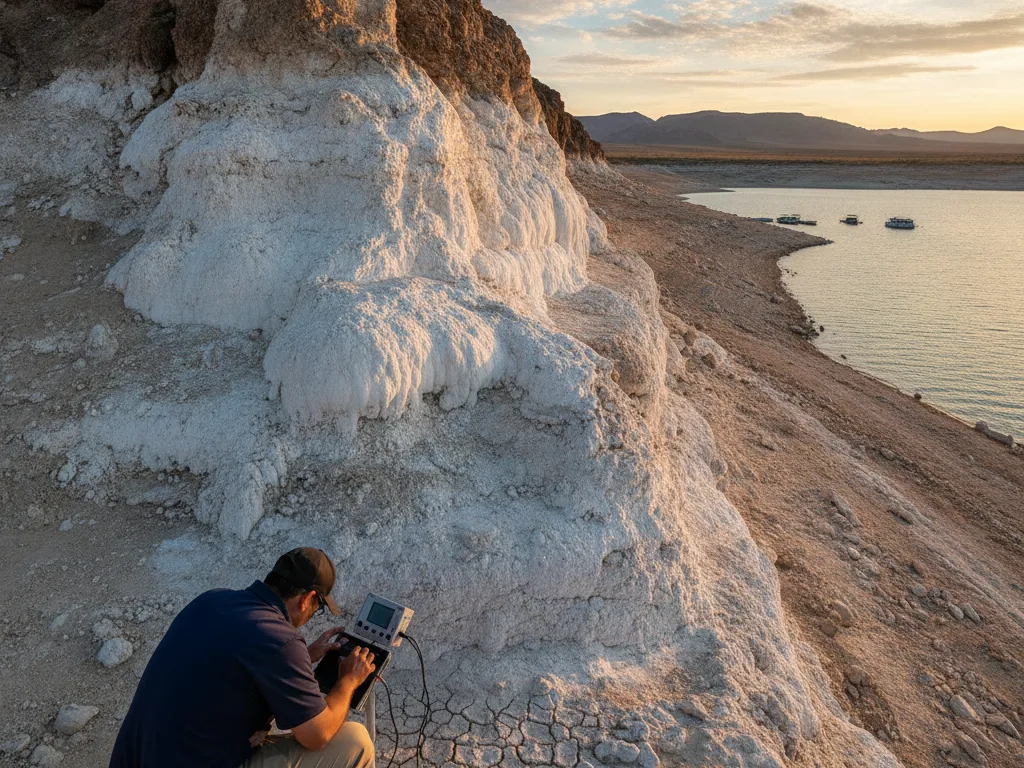
Lake Mead's elevation is projected to reach 1,040 feet in July 2026, matching the record low set in July 2022, and the long-term forecast calls for further drops through 2028.
Where Lake Mead Stands and Where It Is Headed
As of late June 2026, Lake Mead sat at approximately 1,047 feet above sea level, representing roughly 29 percent of its total capacity. The Bureau of Reclamation's July 2026 projection has the elevation dropping to approximately 1,040 feet, which would match the record low set in July 2022. That record was itself unprecedented in the history of Hoover Dam operations, and reaching it again in 2026 marks a continuation of the long-term stress on the Colorado River system that supplies the Las Vegas Valley.
The long-term outlook is more concerning than the July 2026 number alone. Forecasters project an additional 30-foot drop from current levels through May 2028, potentially bringing the lake to approximately 1,011 feet. That elevation is well below the current record and approaches territory where operational considerations for Hoover Dam's power generation become increasingly constrained. A 40 percent reduction to Hoover Dam's hydropower capacity is already being projected as a consequence of current and anticipated lake levels, which has broader implications for the region's electricity grid.
The Bureau of Reclamation has responded to the ongoing drought conditions with a series of interventions. Releases from Lake Powell have been reduced by 1.48 million acre-feet through September 2026, and 2.48 million acre-feet is being moved from Flaming Gorge Reservoir to Lake Powell to bolster downstream supplies. These are significant operational decisions that reflect how seriously federal water managers are treating the current conditions. The Colorado River system supplies approximately 40 million people across the region, and Las Vegas is among the most dependent communities on that supply.
What Low Lake Levels Mean for Las Vegas Water Service
Lake Mead provides approximately 90 percent of the Las Vegas Valley's water supply. The Southern Nevada Water Authority draws water through intake structures at the reservoir, and those intakes are positioned at specific elevations. As lake levels drop, lower intakes that were constructed specifically to handle shortage conditions become more critical, and the energy required to pump water from lower elevations increases. Lower lake levels do not cut off Las Vegas's water supply in any near-term scenario, but they do increase the cost and complexity of water treatment and distribution operations.
Water pressure fluctuations are a downstream consequence of drought-related operational changes that can affect residential plumbing systems. When water treatment and pumping operations are adjusted to manage lower reservoir levels, pressure at the street level can shift in ways that stress older pipes and fixtures. Las Vegas homes with older copper supply lines, corroded fittings, or water heaters that are already under stress from the valley's hard water are more vulnerable to pressure-related failures when the supply system is operating under drought conditions.
The Nevada 2027 nonfunctional turf ban is expected to remove approximately 3,900 acres of decorative grass and save 10 to 12 billion gallons of water annually, which will reduce the total demand on the Lake Mead supply. But that conservation benefit is a future one; the current shortage conditions apply right now, in July 2026, and Las Vegas homeowners are living with its consequences on their water service, their irrigation systems, and the long-term reliability of the pipes and fixtures in their homes.
What Las Vegas Homeowners Should Do for Their Plumbing Right Now
The most important plumbing action a Las Vegas homeowner can take in a drought year is a comprehensive leak check. Treated water that escapes through a slow leak in a supply line, a dripping faucet, a running toilet, or a failed irrigation fitting is water that was drawn from Lake Mead at significant cost and is being wasted without providing any benefit to the household. A slow leak that goes undetected for months can represent thousands of gallons of wasted water and a measurable increase in the water bill.
Beyond leak detection, homeowners should assess the condition of their water heater and supply lines. Las Vegas's hard water deposits minerals inside water heater tanks and on the internal surfaces of pipes over time, and drought conditions that concentrate minerals in the water supply can accelerate that process. A water heater that is running inefficiently, a supply line with visible corrosion at fittings, or an older pressure-reducing valve that is no longer maintaining steady pressure are all items that a professional plumbing inspection can identify before they become failures.
Kingdom Plumbing has served Las Vegas and Clark County since 2018 and has NV license 0085422. We specialize in drought-smart plumbing: leak detection, fixture upgrades, water heater service and replacement, and irrigation system inspections designed to keep Las Vegas homeowners compliant with SNWA rules while protecting their plumbing from drought-related stress. Call us at (702) 840-5037 to schedule an inspection or to discuss any plumbing concern related to the current water supply conditions.
Sources: Bureau of Reclamation; KTNV Las Vegas; 8 News Now; FOX 5 Vegas; Newsweek drought coverage (June/July 2026).
6 Plumbing Steps Las Vegas Homeowners Should Take During the Lake Mead Crisis
Low Lake Mead levels affect water pressure, treatment operations, and the long-term reliability of household plumbing systems. These six steps help protect your home and conserve the supply.
- Run a full-house leak check at the water meter: Shut off every fixture and check whether the meter still moves. Hidden leaks in supply lines, toilets, and irrigation systems waste treated Colorado River water that Las Vegas can not afford to lose.
- Check your pressure-reducing valve: Drought-related operational adjustments can cause street-level pressure fluctuations. A PRV that is failing or out of adjustment can expose household plumbing to damaging pressure swings. Kingdom Plumbing can test and replace PRVs as needed.
- Flush your water heater to remove sediment: Hard water concentrates minerals in the water supply during drought conditions, accelerating sediment buildup inside water heater tanks. Annual flushing improves efficiency and extends the heater's service life.
- Inspect supply line fittings for corrosion or seepage: Older copper and galvanized fittings in Las Vegas homes are vulnerable to corrosion from the valley's mineral-heavy water. A fitting that is seeping now can fail completely during a pressure event.
- Check irrigation backflow preventers and connections: Backflow preventers on irrigation connections protect the household water supply from contamination. Verify that the preventer is functional and that there are no seeping joints at the irrigation manifold.
- Consider upgrading to high-efficiency fixtures: High-efficiency toilets, low-flow showerheads, and aerating faucets reduce the household's demand on the Lake Mead supply. Every gallon saved at home is a gallon that stays in a reservoir that is already near record lows.
Frequently asked questions
- How low is Lake Mead right now in July 2026?
- As of late June 2026, Lake Mead was at approximately 1,047 feet above sea level, about 29 percent of capacity. The July 2026 projection has the elevation dropping to approximately 1,040 feet, which would match the record low set in July 2022.
- Will Las Vegas run out of water because of Lake Mead?
- No immediate cutoff is projected, but the shortage conditions are serious and long-term. The Southern Nevada Water Authority has developed multiple intake structures and conservation programs specifically to ensure the Las Vegas Valley's water supply remains reliable even at low lake levels. The 2027 turf ban and other conservation measures are designed to reduce demand on the supply over time.
- How do drought conditions affect residential plumbing in Las Vegas?
- Lower lake levels and drought-related operational changes in water treatment and pumping can cause pressure fluctuations at the street level. Those fluctuations can stress older pipes, fittings, and fixtures, particularly in homes with hard-water corrosion or aging supply lines.
- How can Kingdom Plumbing help Las Vegas homeowners during the drought?
- Kingdom Plumbing offers leak detection, supply line inspection, water heater service and replacement, pressure-reducing valve testing, and irrigation connection checks designed to protect your plumbing and conserve water during drought conditions. Call us at (702) 840-5037.
Kingdom Plumbing is a family-owned, licensed Las Vegas plumber (NV NV Contractors License #0085422) serving the valley since 2018. Questions about how this affects your home? Call (702) 840-5037. Dealing with a burst pipe or flooding right now? Our emergency plumbers in Las Vegas answer 24/7.
More Updates
- Nevada's 2027 Nonfunctional Turf Ban: 3,900 Acres of Grass Coming Out, 10 to 12 Billion Gallons Saved, and What Las Vegas Homeowners Need to Do with Their Plumbing
- Lake Mead Stays in Shortage for 2026: Household Water Efficiency That Actually Helps
- Lake Mead Is About to Pass a Record That Stood for Four Years: What It Means for the Water Behind Your Tap
- Nevada's Soil Moisture Just Hit a Record Low for Early July: What Bone-Dry Ground Means for Your Slab and Pipes