
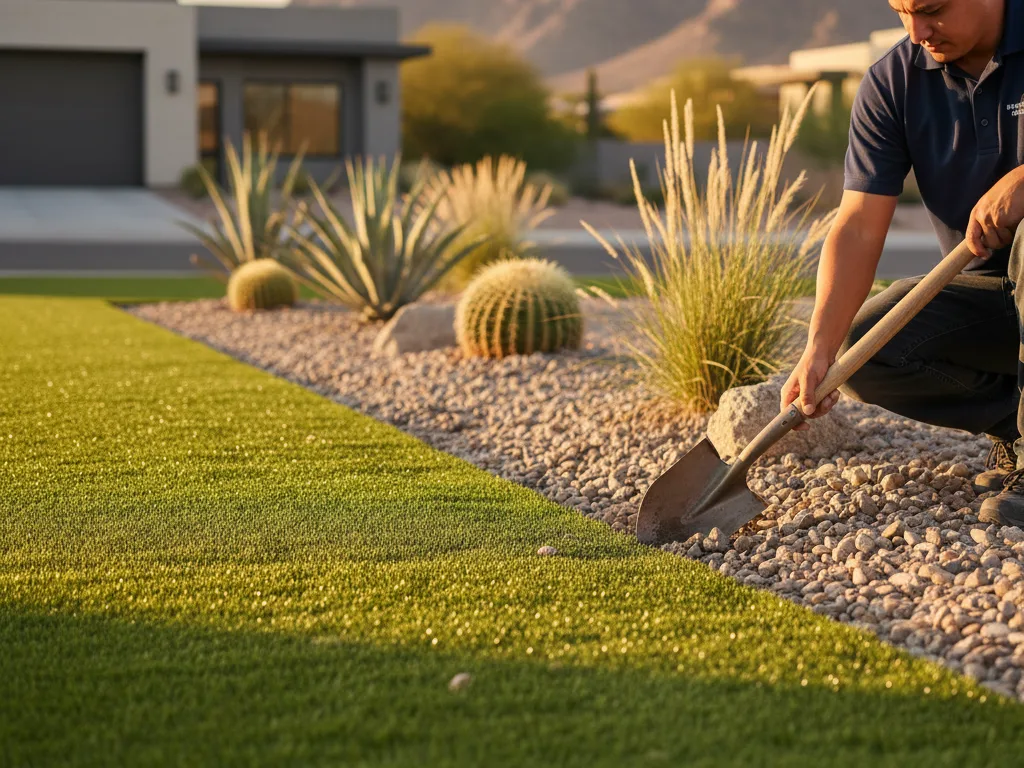
Nevada's prohibition on nonfunctional decorative turf takes full effect in 2027, removing roughly 3,900 acres of grass across the region. Here is what Las Vegas homeowners with grass need to know about the plumbing changes a conversion requires.
What the 2027 Turf Ban Means for Las Vegas Homeowners
Nevada's prohibition on nonfunctional turf, decorative grass that serves no recreational purpose, is scheduled to take full effect in 2027 and applies to a broad category of residential and commercial landscaping. The Southern Nevada Water Authority estimates that removing approximately 3,900 acres of nonfunctional turf across the region will save between 10 and 12 billion gallons of water annually, a conservation impact of genuine significance for a community that depends on Lake Mead for 90 percent of its water supply.
For Las Vegas homeowners, the practical consequence of the turf ban is that decorative grass in front yards, median strips, and other purely ornamental locations must be removed. The most common replacement landscaping choices in the Las Vegas valley are xeriscaping with drought-tolerant native plants, decorative gravel and rock, and artificial turf. Each of these alternatives has different plumbing implications, because they require different irrigation approaches or no irrigation at all in the case of gravel and rock installations.
The turf ban is not a surprise. Nevada has been moving toward this restriction for years, and the SNWA has been offering rebate programs to incentivize early voluntary grass removal. Homeowners who have already participated in those programs are ahead of the deadline; homeowners who have not yet begun planning their conversion have time to do so thoughtfully, with the right plumbing changes incorporated from the start. Doing the plumbing correctly the first time is significantly less expensive than converting a spray system to drip, then needing repairs or modifications after the landscaping is already installed.
The Plumbing Changes a Turf Conversion Requires
Grass watered by sprinkler systems uses a fundamentally different irrigation plumbing configuration than the drip or low-volume irrigation appropriate for desert landscaping. A typical Las Vegas front-yard grass installation uses pop-up spray heads connected to PVC supply lines that run just below the surface, controlled by a manifold with zone valves. That entire system, from the heads to the supply lines to the zone valves, is designed to deliver water in a spray pattern over a broad area. It is not the right infrastructure for a drip-irrigated desert landscape.
Converting from a spray system to a drip system requires replacing the spray heads with drip emitters or micro-spray heads designed for individual plants, resizing or replacing the supply lines where needed to match the flow characteristics of the new emitters, and in some cases reconfiguring the zone valve settings to account for the lower flow rates that drip irrigation uses. A spray system running at its designed flow rate will have too much pressure for most drip emitter configurations, so a pressure-reducing device at the drip zone supply is often required.
For homeowners who are converting to gravel or rock with no living landscape, the appropriate plumbing action is to cap off or disconnect the unused irrigation zones cleanly and permanently. Leaving unused PVC supply lines in place under the ground is not a major problem in most cases, but unused zone valves that are not properly isolated can develop slow leaks over time, and unused backflow preventer connections should be properly capped to prevent any pathway for contaminants. Kingdom Plumbing can handle the full scope of irrigation plumbing changes associated with a turf conversion, from spray-to-drip conversion to complete zone decommissioning.
Protecting Your Pipes During and After the Conversion
Turf removal exposes soil that was previously shaded and insulated by the grass canopy, and in Las Vegas summer conditions that exposure has consequences for buried plumbing. Soil temperatures under removed turf can increase significantly after the grass is gone, which accelerates thermal stress on shallow PVC supply lines that may not have been designed with exposed-soil temperatures in mind. Shallow irrigation lines that were adequately protected by a grass layer may need to be buried deeper or insulated after the turf is removed.
The conversion process itself can also damage existing supply lines if heavy equipment is used for turf removal. Rotary tillers, sod cutters, and small tractors used to remove grass can nick or crack shallow PVC pipes, creating leaks that may not surface immediately but will show up in the water bill over the following weeks. A professional plumbing inspection after turf removal, before the replacement landscaping is installed, can identify any pipes that were disturbed during the removal process when they are still accessible.
Kingdom Plumbing has helped Las Vegas homeowners navigate turf conversions since 2018 and holds NV license 0085422. We can assess your existing irrigation system, recommend the right conversion approach for your replacement landscaping, handle all plumbing modifications from spray-to-drip conversion to zone decommissioning, and inspect post-removal for any pipe damage before the new landscape is installed. Call us at (702) 840-5037 to schedule a consultation before your turf conversion project begins.
Sources: Southern Nevada Water Authority; KTNV Las Vegas; FOX 5 Vegas reporting on Nevada turf ban and water savings projections.
7 Plumbing Steps to Take When Removing Grass and Converting Your Las Vegas Yard
Converting from grass to desert landscaping involves more than removing turf. The irrigation plumbing underneath needs to change too. Here is what to address before, during, and after the conversion.
- Have your irrigation system mapped and assessed before removal begins: Know where every supply line and zone valve is located before any digging or removal equipment touches your yard. A plumbing assessment before the project starts prevents accidental pipe damage during turf removal.
- Decide whether to convert to drip or decommission the irrigation entirely: Desert landscaping and gravel require different irrigation approaches than grass. Decide your replacement landscaping before modifying the plumbing so the system is configured correctly for what will actually be planted.
- Replace spray heads with drip emitters for planted desert landscapes: Spray heads designed for grass will over-water desert plants and waste water. Drip emitters deliver water precisely to each plant's root zone, which is what the SNWA schedule and desert plants both require.
- Add a pressure reducer at drip irrigation zones: Drip systems operate at lower pressures than spray systems. The existing zone supply pressure may be too high for drip emitters, causing misting or blowouts. A pressure-reducing device at the zone supply fixes this.
- Cap or decommission zones that will no longer be used: Unused zone valves that are not properly isolated can develop slow leaks over time. Any irrigation zone that will no longer be used after the conversion should be cleanly capped or decommissioned by a licensed plumber.
- Inspect all supply lines after turf removal and before new landscaping goes in: Turf removal equipment can nick or crack shallow PVC supply lines. Inspect exposed lines after removal while they are still accessible, before gravel or new plants cover them again.
- Check whether shallow supply lines need deeper burial or insulation: Turf that previously shaded and insulated shallow pipes is gone after conversion. Bare soil in Las Vegas summer reaches temperatures that can stress shallow PVC. Kingdom Plumbing can advise on whether deeper burial is needed for your specific installation.
Frequently asked questions
- When does Nevada's nonfunctional turf ban take effect?
- Nevada's prohibition on nonfunctional decorative turf is scheduled to take full effect in 2027. The Southern Nevada Water Authority has been offering rebate programs to encourage voluntary early removal ahead of the ban deadline.
- What happens to my irrigation system when I remove my grass?
- It depends on your replacement landscaping. Desert plants and xeriscaping require a conversion from spray heads to drip emitters. Gravel or rock with no living plants requires decommissioning or capping of the existing irrigation zones. Either way, the existing spray system needs to be modified, not just turned off.
- How much water will Nevada save from the turf ban?
- The Southern Nevada Water Authority estimates that removing approximately 3,900 acres of nonfunctional turf will save between 10 and 12 billion gallons of water annually, reducing the demand on Lake Mead's already stressed supply.
- Can Kingdom Plumbing help with irrigation changes for a turf conversion?
- Yes. Kingdom Plumbing handles spray-to-drip conversions, zone decommissioning, supply line repairs, and post-removal inspections for turf conversion projects across Las Vegas and Clark County. Call us at (702) 840-5037 to schedule a consultation before your project starts.
Kingdom Plumbing is a family-owned, licensed Las Vegas plumber (NV NV Contractors License #0085422) serving the valley since 2018. Questions about how this affects your home? Call (702) 840-5037. Dealing with a burst pipe or flooding right now? Our emergency plumbers in Las Vegas answer 24/7.