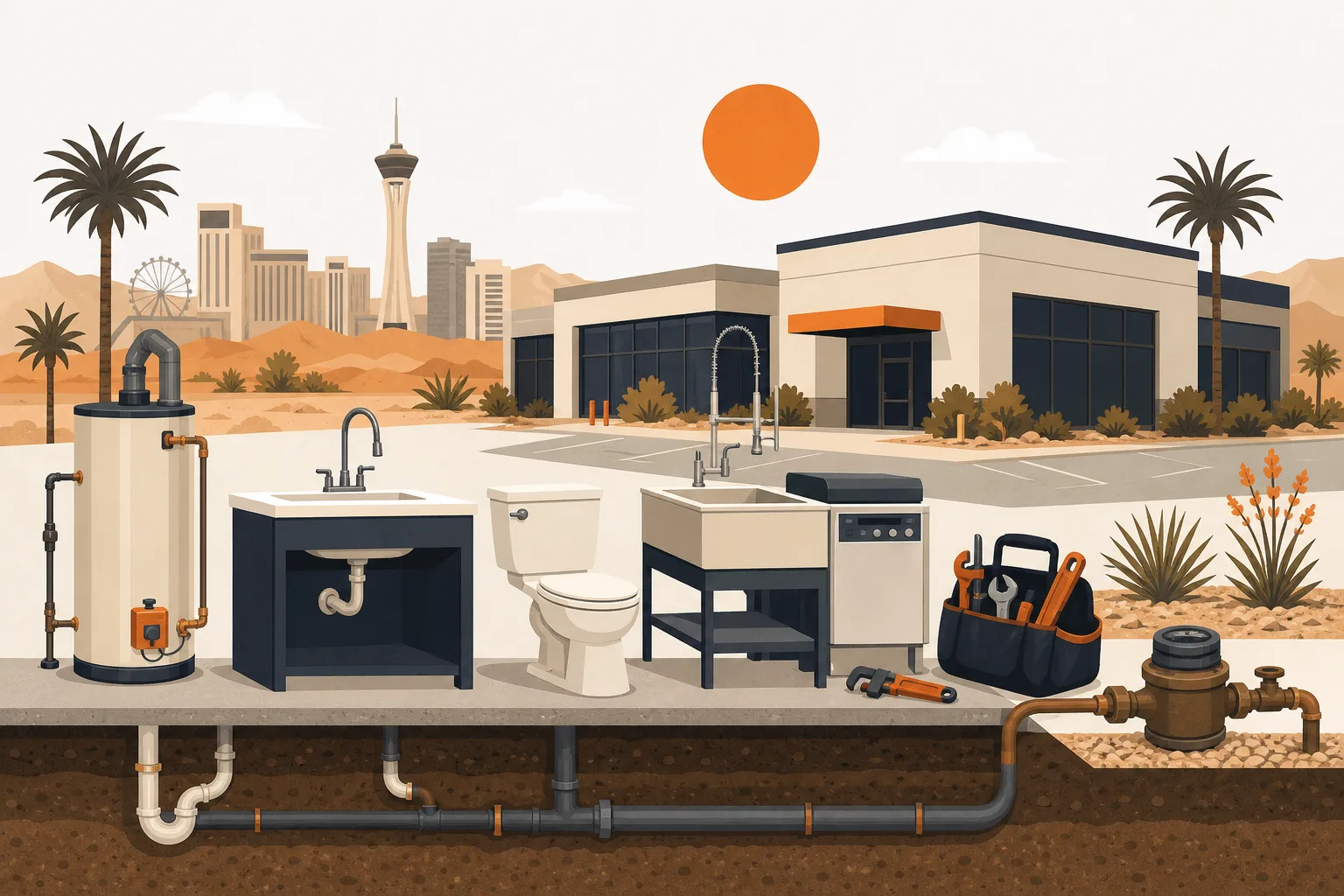
Commercial plumbing in Las Vegas has stricter codes, harsher water, and different cost drivers than a typical home job. This guide explains what local property owners should expect in 2026 so you can budget, schedule, and hire with confidence.
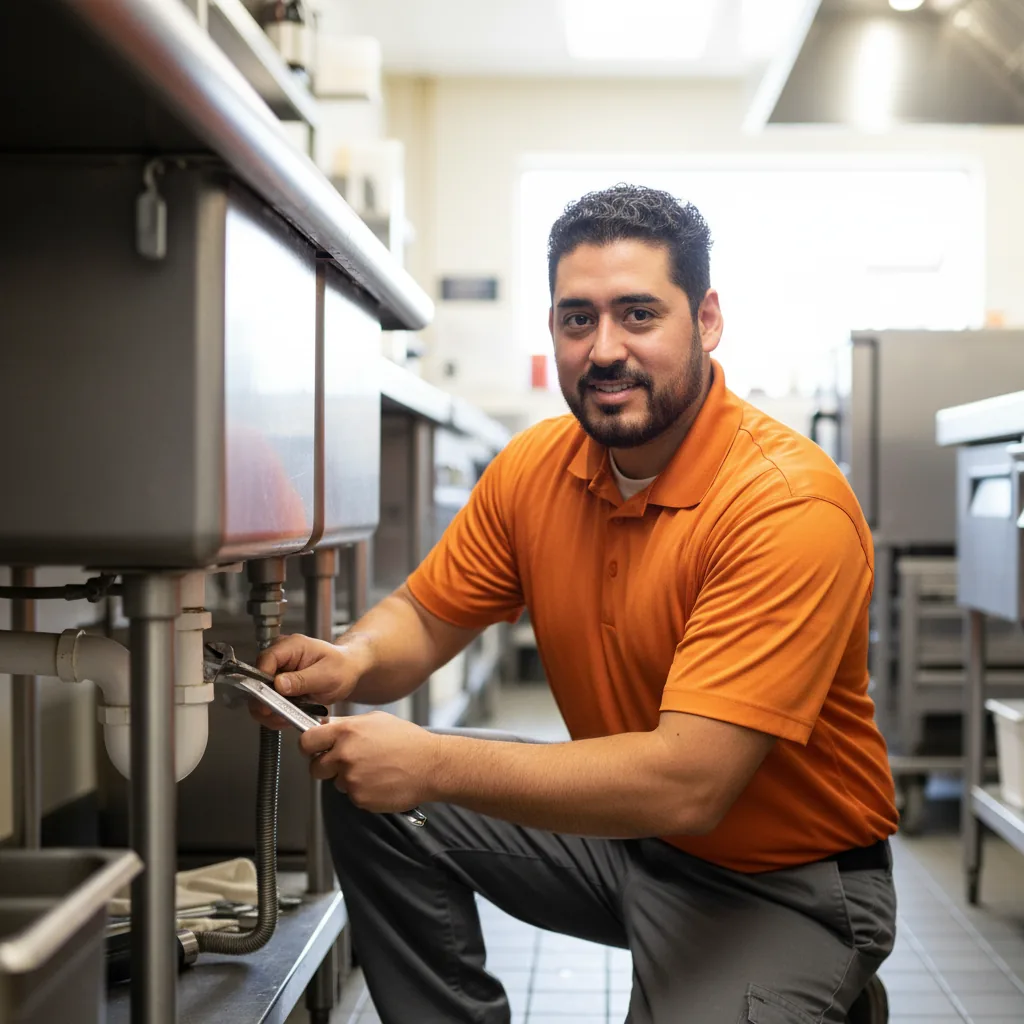
What makes Las Vegas commercial plumbing different from residential work in 2026?
If you own or manage property in the Las Vegas Valley, commercial plumbing is a different animal from what you are used to at home. The stakes are higher because plumbing problems can shut down revenue, disrupt tenants, or trigger health and safety violations. On top of that, the valley’s conditions, like very hard water and slab-on-grade construction, magnify small issues if the system is not designed and maintained for commercial loads.
Local water quality is a major factor. The Las Vegas Valley Water District reports hardness of about 280 parts per million, or roughly 16 grains per gallon, which falls in the “very hard” category. That level of hardness builds scale on valves, aerators, and water heaters more quickly, especially where restrooms, kitchens, and equipment cycle water all day. In a commercial setting this can mean more frequent service on flush valves, mixing valves, and water heaters if a good commercial plumbing plan is not in place.
Code requirements are also stricter. As of January 2026, Clark County and the cities in the valley are enforcing the 2024 Uniform Plumbing Code with Southern Nevada amendments. This affects everything from fixture counts in restrooms to trap venting and water heater safety measures. Commercial jobs must pass clearances around toilets, proper venting, correct pipe sizing, and pressure tests, and any deviation from approved plans needs to be documented. For a property owner, that means you want a commercial plumbing contractor who understands the local amendments, not just the base code.
- Higher fixture counts mean more demand on supply and drain lines
- Very hard water accelerates wear on commercial valves and heaters
- Southern Nevada code amendments tighten inspection requirements
- Business operations limit when disruptive work can be done
How much does commercial plumbing cost in Las Vegas and what drives the price?
When you are budgeting for commercial plumbing, the range can be wide because you are paying for more than a technician and a part. You are buying safe capacity for a building full of people, the testing and documentation the 2024 Uniform Plumbing Code requires, and the logistics of working around business hours. Market snapshots show that tasks like hydro jetting, sewer inspections, and commercial gas work span large ranges in the valley, and the same pattern applies to fixture and system work.
For Kingdom Plumbing’s commercial plumbing service, we quote flat-rate planning ranges that reflect those realities. Commercial fixture work typically falls between $375 to $3,100 depending on the type and number of fixtures, access limits, and how many code corrections are needed once walls or ceilings are opened. Commercial water treatment, such as softeners or filtration sized for a restaurant, office, or small retail center, usually lands between $7,400 to $11,500. Every building is different, so these figures are planning ranges, not quotes, and the flat rate is always approved with you before work starts.
Beyond fixture and treatment work, cost drivers you should expect in 2026 include after-hours or weekend scheduling so you can stay open, additional wall or concrete access to reach buried lines in slab-on-grade construction, and excavation in caliche soil if sewer or water services have to be exposed. Local codes also call for pressure testing and inspection of new or modified piping, which adds time but protects you from costly failures. A clear commercial plumbing proposal should spell out scope, testing, restoration, and what is included if inspectors ask for adjustments.
- Scope and complexity of the plumbing system involved
- Access to pipes in slab-on-grade floors, walls, or ceilings
- Need for after-hours or weekend work to avoid downtime
- Required inspections, testing, and any permit-related steps
What should a 2026 commercial plumbing maintenance plan include in Las Vegas?
For commercial properties in the valley, waiting for a leak or backup is a risky strategy. Current guidance for Las Vegas buildings emphasizes a structured preventive maintenance plan for commercial plumbing. Facility-focused sources outline regular backflow testing, grease interceptor service at jurisdiction-set intervals, and recurring inspections of water heaters and relief devices. These tasks align with 2024 Uniform Plumbing Code requirements and Southern Nevada amendments, which expect documented testing for certain devices and systems.
In practice, a solid maintenance plan will include annual testing and certification of backflow prevention assemblies where required, which protect both your tenants and the public water supply. Restaurants and food service spaces need grease interceptors pumped and inspected on a schedule set by local authorities, as neglected interceptors can cause sewer blockages and enforcement action. Water heaters should have their pans, strainers, and temperature and pressure relief valves checked at least twice a year, with flushing done according to the manufacturer. With the valley’s very hard water, those intervals are a realistic minimum rather than a luxury.
A commercial plumbing contractor should walk your property and build a site-specific checklist that matches your operations. For a small office building this might focus on restrooms, breakroom sinks, and a central water heater. For a plaza with restaurants, it may add interceptor schedules, hot water recirculation checks, and more frequent valve inspections. The goal is to catch slow drains, marginal water heaters, or failing shutoff valves before they become emergency calls that close restrooms or kitchens during business hours.
- Annual testing of required backflow prevention assemblies
- Grease interceptor pumping and inspection at set intervals
- Biannual checks of commercial water heaters and T and P valves
- Regular review of shutoff valves and visible supply lines
What does a commercial plumbing installation or retrofit look like from start to finish?
If you are planning a tenant improvement, expansion, or major plumbing change in 2026, knowing the typical sequence will help you schedule around it. Commercial plumbing installation generally starts with a walkthrough and scope review where fixtures, equipment, and routing are mapped against your plans. From there, your contractor prepares documentation for permits and plan checks where required. The permitting phase, plus inspections, usually stretches the timeline from several days to a few weeks depending on project size and how many reviews the jurisdiction requires.
Once permits are in place, the rough-in stage begins. Walls, ceilings, or slabs are opened as needed, then water, drain, vent, and gas lines are installed or rerouted. Before surfaces are closed, the 2024 Uniform Plumbing Code calls for pressure or leak testing of both water and drainage systems, and inspectors verify that work matches the approved plans, including clearances around toilets, proper venting, and correct pipe sizing. During the finish stage, fixtures, trim, and equipment are set, followed by a final inspection. Business owners should expect water shutoffs for some hours when tie-ins are made, and planning these windows around operating hours is a key scheduling step.
Because commercial jobs must line up with approved plans, one of the big pitfalls cited by code officials is making field changes without updating documentation. Even small shifts, like adding fixtures or moving a group of toilets, can change required pipe sizes or vent routing. A good commercial plumbing contractor will communicate any necessary change, update drawings where needed, and coordinate re-inspection so you stay compliant. On your side, it helps to lock decisions as early as you can and share all equipment and fixture selections before permits are pulled.
- Initial walkthrough and scope-of-work discussion
- Permit application and plan review where required
- Rough-in with walls or slabs open, followed by testing
- Fixture set, final connections, and inspection sign-off
What are the most common commercial plumbing code mistakes and how do you avoid them?
Commercial plumbing inspectors across the country report a handful of repeated mistakes on projects, and the same issues show up in Southern Nevada when work is rushed or not planned against the current code. Common problems include not leaving enough side clearance around commercial toilets, incorrect venting of traps, water pipes undersized for the number of fixtures they serve, and pressure tests that fail because joints were not properly prepared. Another frequent issue is doing work that does not match the approved plumbing plans without going back through the documentation process.
In the 2024 code environment, these are not minor details. Insufficient clearance around toilets affects accessibility compliance and can stop an inspection. Improper venting of fixture traps can lead to gurgling, slow drains, and sewer gas issues, which are both a comfort and health concern in a commercial space. Undersized water piping can cause poor fixture performance when restrooms and other fixtures are in heavy use, which tenants and customers notice quickly. Deviating from stamped plans without updates can trigger rework and delay your certificate of occupancy.
To avoid these pitfalls as a property owner, insist on a commercial plumbing contractor who reviews your plans against the current 2024 Uniform Plumbing Code and local amendments, not older standards. Ask for confirmation that clearances, venting, and pipe sizing have been checked for the actual fixture counts and layout. During construction, schedule brief check-ins at rough-in and before finishes go in so any layout concerns are caught early. A disciplined approach on the front end typically costs less than correcting issues after inspectors have flagged them.
- Confirm whether your project is truly commercial in the eyes of the jurisdiction, such as a rental, office, restaurant, or mixed-use space, because that determines which plumbing codes and inspections apply.
- Gather existing plans, prior permits, and any recent inspection reports for your building so a commercial plumber can quickly understand the current system and code history.
- Walk your property and list all plumbing issues and goals, from recurring clogs or low pressure to new restrooms or equipment, so the scope covers real needs instead of just visible problems.
- Ask potential contractors specifically about their experience working under the 2024 Uniform Plumbing Code with Southern Nevada amendments and how they handle plan changes during construction.
- Request a written commercial plumbing proposal that clearly separates diagnostic work, fixture or system installation, testing, and any wall or concrete access or restoration they anticipate.
- Clarify scheduling constraints such as business hours, blackout times, or tenant quiet hours so the plumber can plan shutoffs, noisy work, and inspections around your operations.
- Discuss preventive maintenance at the same time as repairs or upgrades, including backflow testing, grease interceptor service, and water heater checks, so you can bundle work efficiently.
- Verify that the contractor is licensed, bonded, and insured for commercial plumbing in Nevada and that you will approve a flat rate for the work before they start on site.
- Ask how the plumber documents pressure tests, inspections, and as-built changes so you have a paper trail if you ever sell the property or face a future insurance claim.
- Plan how you will communicate with tenants or staff about water shutoffs and access to units or suites so plumbing work causes minimal disruption on the actual work days.
Frequently asked questions
- How is commercial plumbing in Las Vegas different from residential plumbing?
- Commercial plumbing in Las Vegas typically serves more people, more fixtures, and longer operating hours than a home system, which puts extra stress on pipes, drains, and water heaters. It is also subject to stricter requirements under the 2024 Uniform Plumbing Code and Southern Nevada amendments, including fixture counts, accessibility clearances, and testing. Projects usually require more inspection and documentation than a residential job, and access in multi-tenant buildings can complicate scheduling.
- What does commercial plumbing maintenance include for a Las Vegas property?
- A good commercial plumbing maintenance plan here includes annual backflow device testing where required, grease interceptor pumping for food service at authority-set intervals, and at least twice-yearly inspections of water heaters, pans, and temperature and pressure relief valves. Facility guidance for Las Vegas also recommends flushing water heaters following manufacturer instructions and performing regular checks of visible piping and shutoff valves. The goal is to catch scale buildup and small leaks early since our very hard water accelerates wear.
- How much does commercial plumbing work cost in Las Vegas in 2026?
- Costs vary by scope, access, and scheduling, but you should expect commercial projects to reflect more than just parts and labor. For planning with Kingdom Plumbing, commercial fixture work typically ranges from $375 to $3,100 depending on fixture type, quantity, and code corrections. Commercial water treatment systems sized for businesses generally fall between $7,400 to $11,500. These are flat-rate planning ranges for the Las Vegas valley, and your exact price is always reviewed and approved before work starts.
- How long will a commercial plumbing installation or retrofit take?
- Straightforward commercial fixture replacements can sometimes be done in a day, especially if no walls or slabs need to be opened. Larger projects that require plan review, permits, rough-in with open walls, pressure and drain testing, and multiple inspections often run from several days to a few weeks. The 2024 Uniform Plumbing Code requires testing and inspection at certain stages, and coordinating those visits, plus any after-hours work to protect your operations, adds time to the schedule.
- What are the most common commercial plumbing code issues inspectors find?
- Common commercial plumbing issues cited by building departments include insufficient side clearance around toilets, traps that are not properly vented, water piping undersized for the fixture load, and pressure tests that fail because of poor joint preparation. Another frequent problem is plumbing work that does not match the approved plans, particularly when fixtures are added or moved without updating documentation. Addressing these elements during design and rough-in helps avoid costly rework and inspection delays.
- Why does hard water matter so much for commercial plumbing in Las Vegas?
- The Las Vegas Valley Water District reports hardness of about 280 parts per million, roughly 16 grains per gallon, which is considered very hard water. In a commercial setting with heavy daily use, that hardness creates mineral scale in pipes, valves, aerators, and water heaters more quickly than in many other regions. Without preventive maintenance and, in some cases, commercial water treatment, scale can shorten equipment life, reduce efficiency, and increase the frequency of service calls.
- When should I call a commercial plumber instead of using in-house maintenance?
- In-house maintenance teams are often fine for minor tasks like clearing simple sink traps or changing aerators, but commercial plumbing work that involves opening walls, modifying supply or drain lines, or tying into gas should be handled by a licensed commercial plumber. Anything that affects backflow devices, grease interceptors, fire-related plumbing, or fixtures covered by accessibility rules also deserves professional oversight. The combination of 2024 code requirements, inspections, and business risk makes professional commercial plumbing a safer choice for most building owners.
- Can commercial plumbing work be done after hours to avoid business disruption?
- Yes, many commercial plumbing projects in Las Vegas are scheduled in the evenings, early mornings, or on weekends to keep restrooms, kitchens, or sales floors open during business hours. After-hours work can influence your total project cost because of staffing and overtime, but it often saves money by preventing lost revenue or tenant complaints. When you request a proposal, be clear about blackout times and your operating schedule so the plan is built around your business rather than the other way around.
Talk to Kingdom Plumbing about commercial plumbing, or call (702) 840-5037. Family-owned, NV Contractors License #0085422, upfront flat-rate pricing.
Kingdom Plumbing is a family-owned, licensed Las Vegas plumber (NV NV Contractors License #0085422) serving the valley since 2018. Questions about how this affects your home? Call (702) 840-5037. Dealing with a burst pipe or flooding right now? Our emergency plumbers in Las Vegas answer 24/7.