You turn on the kitchen faucet and get hit with a sour, rotten, or sewer-like smell. It is one of the most common calls we get from Las Vegas homeowners, and the good news is that most stinky kitchen drains come down to a handful of everyday causes. This guide walks through why your sink smells, what you can safely fix yourself, and when it is time to call a plumber.
Key Takeaways
• Most kitchen sink smells come from food and grease buildup, garbage disposal gunk, a dried-out P-trap, or a blocked vent.
• Simple fixes like flushing with hot water, cleaning the disposal, and running water in unused sinks solve many cases.
• A smell that keeps coming back after cleaning usually means buildup deeper in the drain line.
• If you also see slow drains, gurgling, or backups, call a plumber before it turns into a full clog.
• Kingdom Plumbing answers 24/7 with a real person and upfront flat-rate pricing at (702) 840-5037.
What Is Actually Making Your Kitchen Sink Smell?
A kitchen drain is a small ecosystem. Every day it takes food scraps, cooking grease, soap, and coffee grounds. Over time that mix coats the inside of the pipe and starts to rot, which is where the odor comes from. Here are the four causes we see most often.
Food and grease buildup
Grease is the big one. When you rinse warm oil, butter, or bacon fat down the drain, it looks like a liquid going in. Once it cools inside the pipe, it hardens and traps food particles against the wall of the drain. That gunk sits there and smells. It also narrows the pipe, so water drains slower and the problem feeds on itself.
Garbage disposal gunk
If you have a disposal, food can collect under the rubber splash guard and on the walls of the grinding chamber. This is one of the most common sources of a rotten smell because you cannot see it. Running the disposal grinds food, but it does not scrub those hidden surfaces clean, so the buildup just sits and turns sour.
A dry P-trap
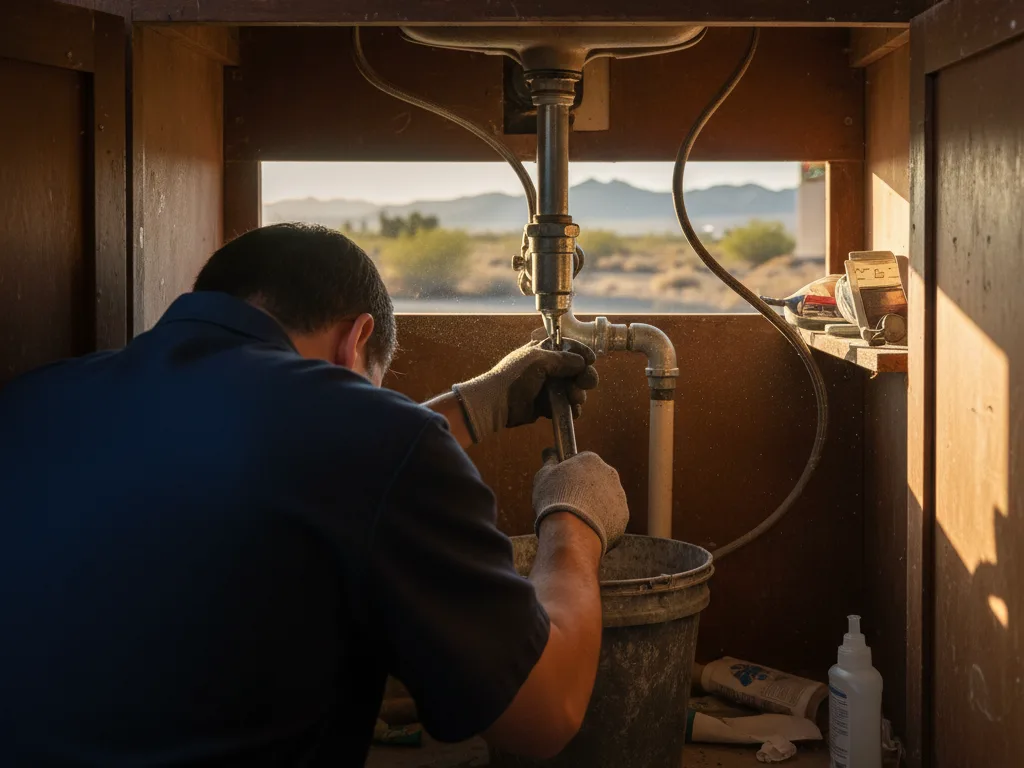
Under every sink is a curved pipe called a P-trap. It is designed to hold a small amount of water that blocks sewer gas from floating back up into your kitchen. If a sink goes unused for a while, that water can evaporate, and you get a sewer smell with no actual clog. In our dry desert climate, traps dry out faster than they would in a humid place, so a rarely used second sink or wet bar can go sour surprisingly quickly.
A blocked or poorly vented drain
Your plumbing has vent pipes that run up through the roof. They let air into the system so water drains smoothly and sewer gas escapes outside instead of through your sink. If a vent gets blocked by debris or a bird nest, you may notice a gurgling sound, slow drains, and a lingering smell. Venting problems are harder to pin down and usually need a plumber to diagnose.
Why Las Vegas Homes See This More
A couple of local factors make kitchen odors worse here. Las Vegas water, drawn from the Colorado River and Lake Mead, is among the hardest municipal water in the country. Hard water leaves scale inside pipes and fixtures, and that rough mineral coating gives grease and food more to cling to. The dry desert air also speeds up P-trap evaporation, so guest bathrooms, wet bars, and second kitchen sinks that sit unused are common culprits. Many valley homes also share drain lines between the kitchen and laundry, so buildup in one spot can create smells in another.
How to Fix a Smelly Kitchen Sink Yourself
Work through these steps in order. Most homeowners solve the problem before they reach the bottom of the list.
- Run hot water. Let hot tap water run down the drain for a minute or two to loosen and flush soft grease. Start here, since it is the easiest fix and often the only one you need.
- Refill a dry trap. If the smell is sewer-like and the sink is rarely used, run water for about 30 seconds to refill the P-trap. Pour a little water down any nearby floor or bar drains too.
- Clean the disposal. With the disposal switched off, wipe under the rubber splash guard with a sponge. Then grind a few ice cubes with cold water to scrape the chamber, and finish with a cut lemon or a spoon of baking soda followed by white vinegar.
- Try baking soda and vinegar. Pour about half a cup of baking soda into the drain, follow with a cup of white vinegar, let it fizz for ten minutes, then flush with hot water. This breaks down light grease and freshens the pipe.
- Skip harsh chemical cleaners. Store-bought chemical drain cleaners can damage older pipes and rarely fix grease or a venting issue. If baking soda and hot water did not work, the problem is likely deeper than a home rinse can reach.
One caution: avoid pouring boiling water into a sink with PVC pipes or a garbage disposal, since very high heat can loosen joints. Hot tap water is safer and is usually enough to do the job.
When to Call a Plumber
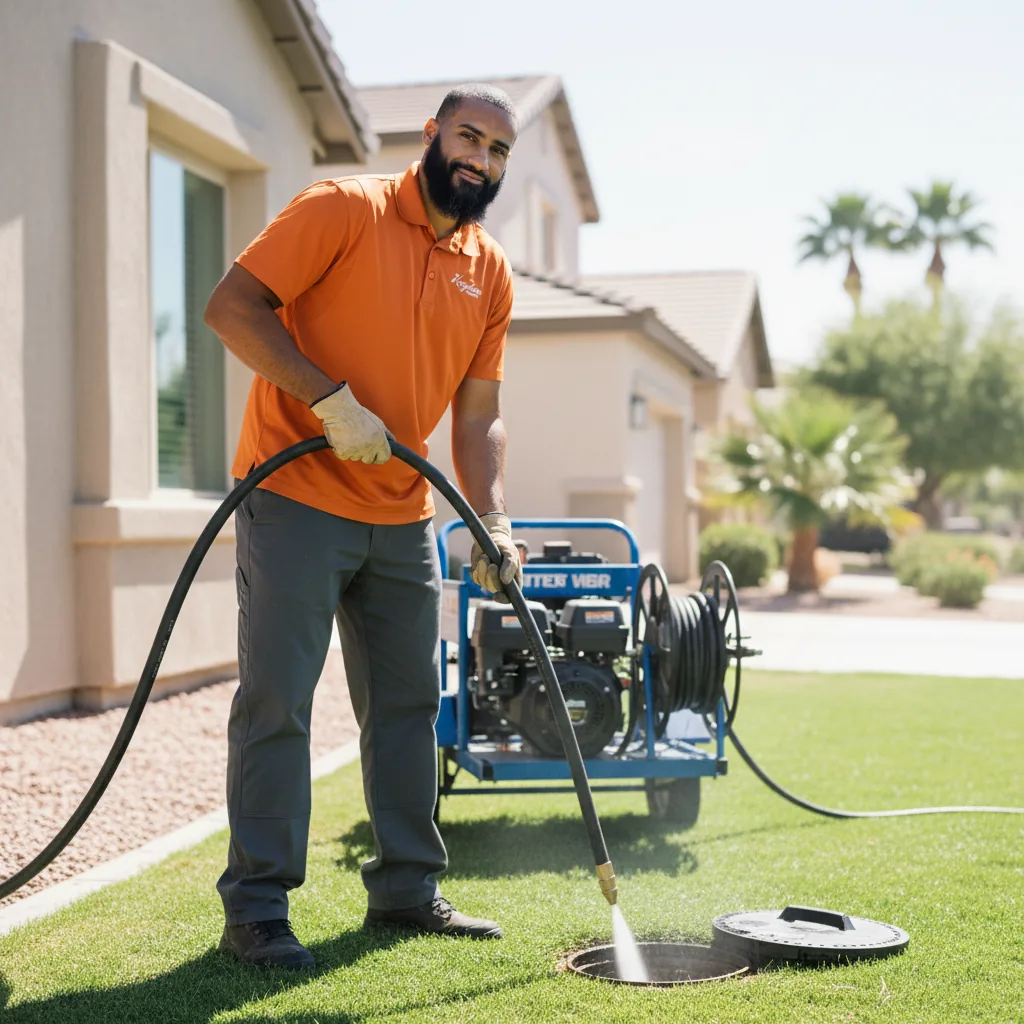
If the smell keeps coming back after you have cleaned the disposal and flushed the drain, the buildup is usually deeper in the line where a home fix cannot reach, and our drain and sewer cleaning team can clear it out and check the vent for you.
- The odor returns within a day or two of cleaning
- Water drains slowly or you hear gurgling
- More than one drain smells or backs up at the same time
- The sewer smell spreads beyond the kitchen
- You have already tried the steps above with no lasting fix
Kingdom Plumbing is a family-owned Las Vegas company with two northwest valley locations, one on West Cheyenne Avenue and one on Farm Road. We are licensed, bonded, and insured, a real person answers the phone 24/7, and every job comes with a flat-rate quote you approve before we start. If your kitchen drain will not stop smelling, call us at (702) 840-5037 and we will get to the bottom of it.
Frequently Asked Questions
Why does my kitchen sink smell like rotten eggs or sewer gas?
Will baking soda and vinegar really clean a smelly drain?
Is it safe to use chemical drain cleaner in my kitchen sink?
How often should I clean my kitchen drain?
My whole kitchen smells and the sink drains slowly. Is that an emergency?
Have a plumbing question or a problem right now?
Call (702) 840-5037Burst pipe or flooding that can't wait? Our 24/7 emergency plumbers in Las Vegas dispatch around the clock.