
You clear the drain and it runs fine for a week or two. Then it's slow again. You plunge it, pour something down it, and the cycle repeats. If that sounds like your kitchen sink, your shower, or the main line for the whole house, you're not imagining it, and you're not doing anything wrong. A drain that keeps clogging in the same spot is almost never a stray hairball or one bad food scrap. It's a sign that something deeper in the line is narrowing the pipe, so every quick fix only buys a little time before it fills back in. Below, we'll walk through why recurring clogs happen in Las Vegas homes specifically, and how to tell when it's time to stop snaking and start scouring the pipe clean.
Key Takeaways
• A drain that clogs again and again isn't bad luck (it usually means the pipe wall is coated with buildup, blocked by roots, or not venting right.
• Snaking punches a hole through a clog so water flows again. It doesn't remove the buildup coating the pipe, so the clog comes back.
• Hydro jetting uses high-pressure water to scour the full inside wall of the pipe, clearing grease, scale, and roots back toward the pipe's original width.
• Las Vegas hard water and mature trees in older northwest neighborhoods make recurring clogs especially common here.
• Kingdom Plumbing gives you a flat-rate quote you approve before any work starts) call (702) 840-5037.
A One-Time Clog and a Repeat Clog Are Two Different Problems
It helps to separate two things people tend to lump together. A one-time clog is a single object stuck in an otherwise healthy pipe, a wad of hair, a kid's toy, too much food at once. Clear it, and the pipe is basically as wide as the day it was installed. A repeat clog is different. The pipe itself has gotten narrower over time, so it now catches debris that used to wash straight through. You can keep clearing the surface blockage, but until the pipe is opened back up to its full width, you're treating the symptom, not the cause.
What's Actually Building Up in Your Pipes
When a line clogs over and over, one or more of these is usually why the pipe keeps closing in:
- Grease and soap. Cooking grease, oil, and soap scum cool and stick to the pipe wall, then harden into a layer that grabs everything floating by.
- Hard water scale. Minerals in the water leave a chalky crust inside the pipe, the same way they cloud your glass shower door and shorten the life of your water heater.
- Tree roots. Roots chase the water and nutrients inside a sewer line, slip in through tiny joints, and spread into a mesh that snags waste.
- Flushed items that never break down, wipes labeled 'flushable,' paper towels, and hygiene products that catch on any rough spot and build from there.
Hard water scale is a bigger deal here than most places
Las Vegas runs on some of the hardest municipal water in the country. It comes from the Colorado River and Lake Mead, which are loaded with minerals, and that hardness doesn't just spot your dishes. Inside your drain and supply lines, it leaves scale that slowly narrows the pipe and gives grease and debris a rough surface to cling to. It's the same buildup that shortens the life of water heaters and fixtures all over the valley. A smooth pipe sheds waste. A scaled-up pipe holds onto it, which is exactly why so many local clogs keep coming back.
Tree roots in older neighborhoods
Plenty of established Las Vegas neighborhoods, including parts of the northwest near Cheyenne and Farm Road, have mature trees with root systems that reach a long way underground looking for moisture. In a desert, your sewer line is one of the wettest targets around. Roots find the joints, work their way in, and keep growing. If your slow drain is a main line rather than a single fixture, roots are a prime suspect, and no amount of plunging touches them.
Sometimes it's the venting, not the clog
If a drain gurgles, drains slowly across the whole house, or empties fine one day and poorly the next, the issue may be air rather than blockage. Your plumbing needs vents to let air in so water can flow out smoothly, like the second hole you punch in a juice can. A blocked vent starves the line of air and mimics a clog. That's worth checking before you assume the pipe itself is packed.
Snaking vs. Hydro Jetting: Punching a Hole vs. Scouring the Pipe
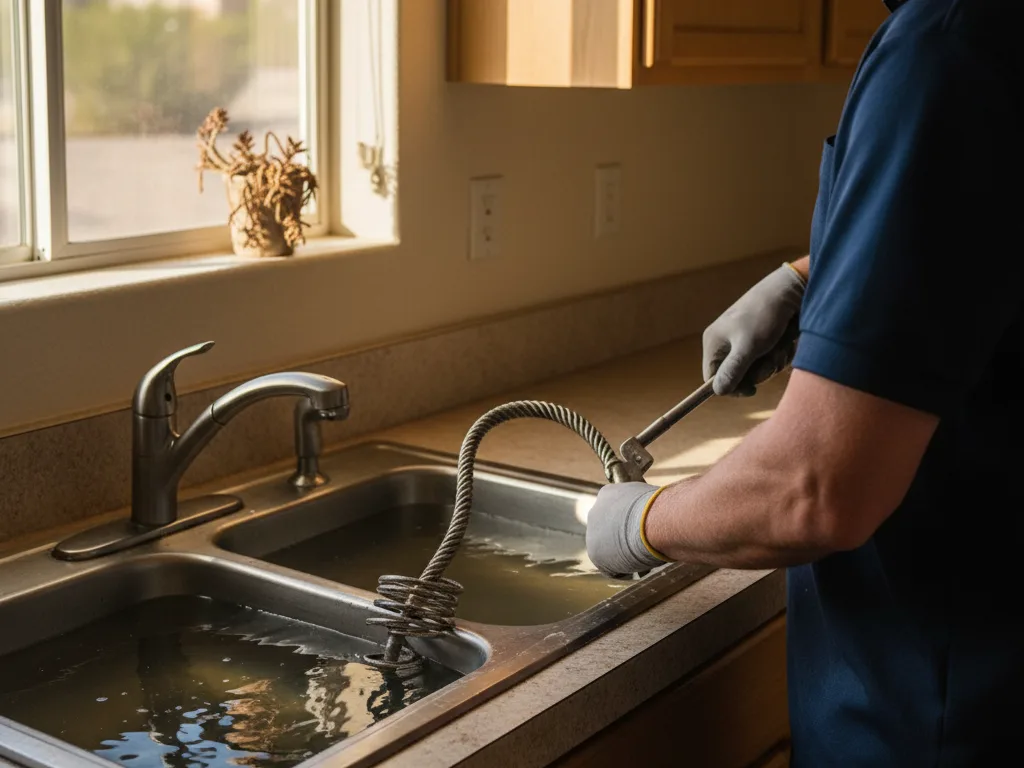
Here's the heart of it. A drain snake, or auger, is a long metal cable that spins down the pipe. When it reaches the clog, it bores through the middle or hooks the object and pulls it back. That restores flow, and for a one-time blockage it's often all you need. But think about what it leaves behind: a hole punched through the buildup. The grease, scale, and root hair coating the pipe wall are still there. Water starts moving again, debris catches on that same rough coating, and within weeks you're right back where you started.
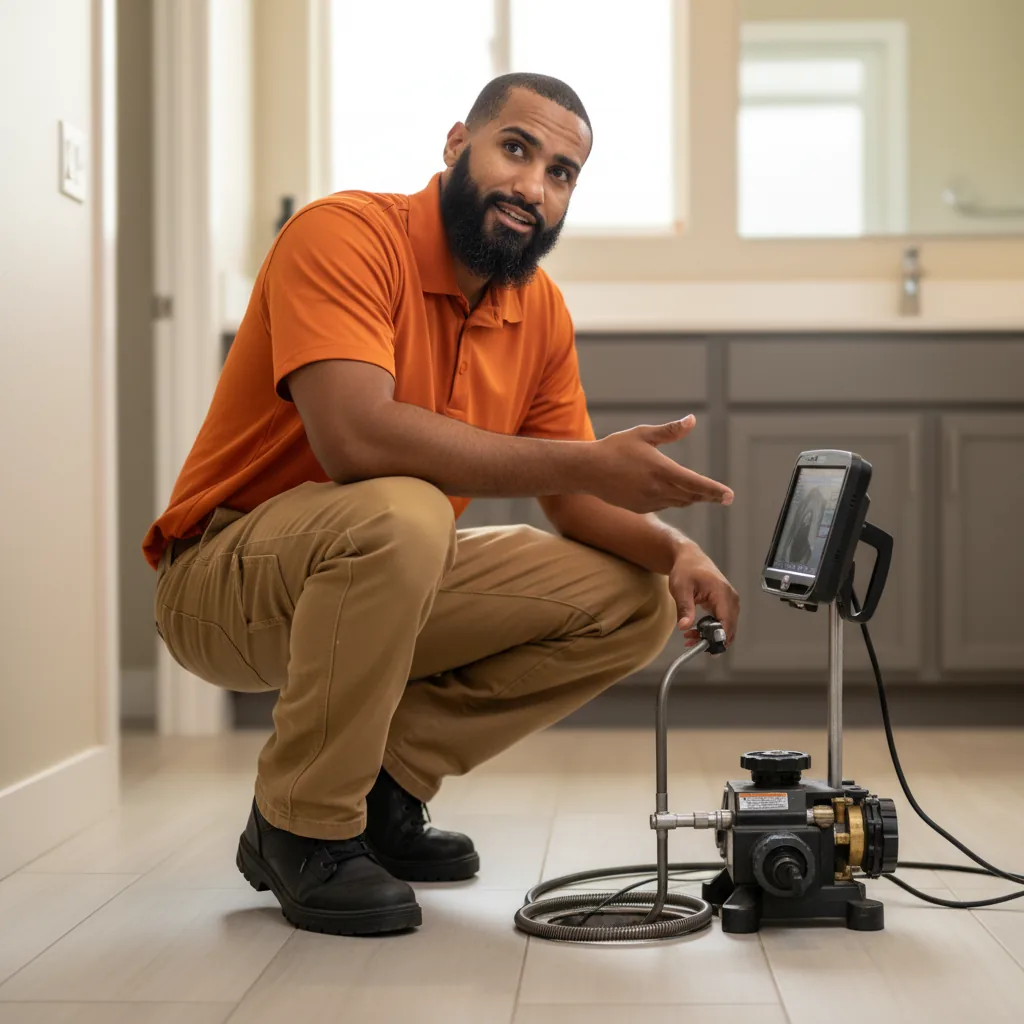
Hydro jetting takes a different approach. Instead of poking a hole through the blockage, our hydro jetting service uses a high-pressure stream of water to scour the entire inside wall of the pipe (grease, scale, and roots included) back toward its original diameter. It cleans the pipe rather than just clearing the clog, so debris has nothing left to grab onto. For a line that clogs on a schedule, that's the difference between another temporary fix and actually solving the problem.
When Hydro Jetting Is the Right Call
- The same drain clogs again and again, no matter how many times it's cleared.
- More than one fixture is slow at the same time, which points to the main line.
- You've got grease buildup from years of kitchen use, or heavy scale from hard water.
- Roots have gotten into the sewer line and a snake only shreds them for a short while.
When Snaking Is Still Enough
Snaking isn't bad, it's just the right tool for a different job. For a single, sudden clog in an otherwise healthy pipe, a snake is faster, gentler, and less expensive, and there's no reason to jet. A good plumber will tell you which one your situation actually calls for instead of defaulting to the pricier option. If we look at your line and a snake will do it, that's what we'll recommend.
Get a Straight Answer and a Price First
Kingdom Plumbing is a family-owned Las Vegas plumber with two locations in the northwest, on West Cheyenne Avenue (89129) and Farm Road (89131). When you call, a real person answers, and we're available 24/7 for drain emergencies that can't wait. Before any work starts, you get an upfront, flat-rate quote you approve first, so there are no surprise charges after the fact. We're licensed, bonded, and insured (NV Contractors License #0085422), we hold a 4.9-star rating across 611 reviews, and we back our work with a 100% satisfaction guarantee. If your drains keep clogging and you're tired of the merry-go-round, call (702) 840-5037 and we'll figure out what's really going on.
Frequently Asked Questions
Why does the same drain keep clogging even after I clear it?
Is hydro jetting better than snaking?
Can hydro jetting clear tree roots?
How much does it cost to fix a recurring clog in Las Vegas?
Do you offer emergency drain service?
Have a plumbing question or a problem right now?
Call (702) 840-5037Burst pipe or flooding that can't wait? Our 24/7 emergency plumbers in Las Vegas dispatch around the clock.