When your water heater quits in the middle of a Las Vegas summer, the first question is simple: fix it or replace it? There is no single rule that fits every home. A newer unit with one bad part is usually worth repairing, while an older tank that leaks from the body is usually worth replacing. Most real decisions land somewhere in between, and that is where age, symptoms, and our famously hard water all come into play. This guide walks through each factor in plain language so you can make a smart call instead of a rushed, expensive one.
Key Takeaways
Repair usually wins when the unit is young and the problem is a single part like a thermostat, heating element, or valve. Replacement usually wins when the tank itself is leaking, the hot water runs rusty, or an older unit needs repair after repair. Age matters most: tank heaters often last only around a decade, and Las Vegas hard water tends to cut that short. When in doubt, get a flat-rate quote you approve first.
Start With the Age of Your Water Heater
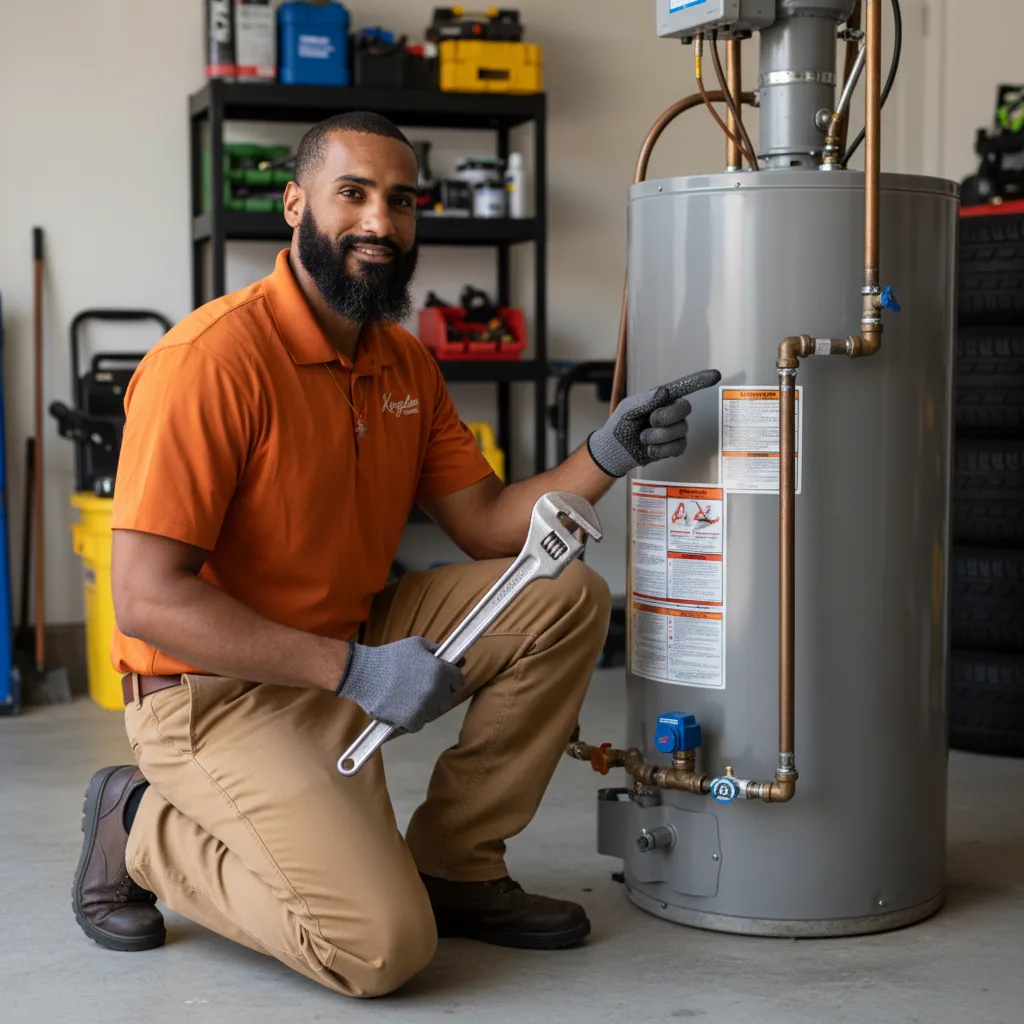
Age is the single most useful clue. A tank water heater often lasts around a decade, give or take, and our hard water tends to push that toward the shorter end. If your unit is only a few years old, leaning toward repair almost always makes sense. If it is pushing ten years or more, every repair becomes money spent on a unit that may not have much life left. Not sure how old yours is? Check the sticker on the side of the tank. The serial number usually encodes the month and year it was built, and if you cannot make sense of it, a plumber can date the unit for you during a visit.
When a Repair Is the Right Call
Plenty of water heater problems come down to one worn part, not a dying tank. When the tank itself is still sound, replacing a part costs far less than replacing the whole unit and can buy you years of reliable hot water. These are the kinds of issues that usually point toward a repair:
- No hot water on a gas unit, which often traces to a failed thermocouple or pilot assembly.
- No hot water on an electric unit, usually a burned-out heating element or thermostat.
- Water that gets warm but never truly hot, another common element or thermostat symptom.
- A dripping temperature and pressure relief valve, which is often a worn safety part rather than a tank failure, but can also be the valve doing its job and relieving real over-pressure or over-temperature, so it is worth having a pro check your system pressure and temperature rather than just swapping the part.
- Popping or rumbling noises from sediment, which a thorough flush and tune-up can often quiet down.
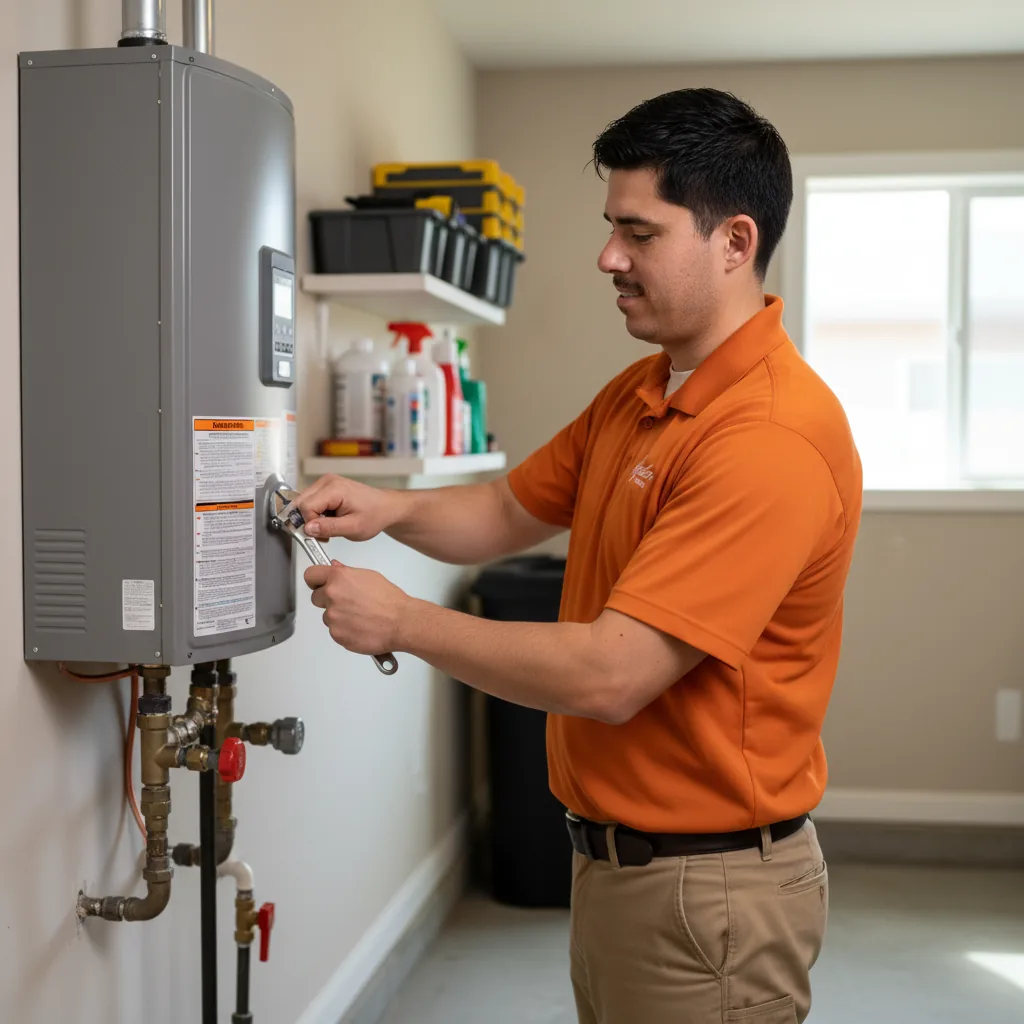
If any of these sound familiar and the tank is not leaking, a repair is usually the better value. Our water heater repair team can diagnose whether it is a part or the tank that is failing and give you a flat-rate quote you approve before any work starts.
When Replacement Makes More Sense
Some problems are not worth chasing. When the tank itself has failed or the unit is simply old and unreliable, pouring money into repairs rarely pays off. Watch for these three signs that replacement is the smarter move.
A Tank That Leaks From the Body
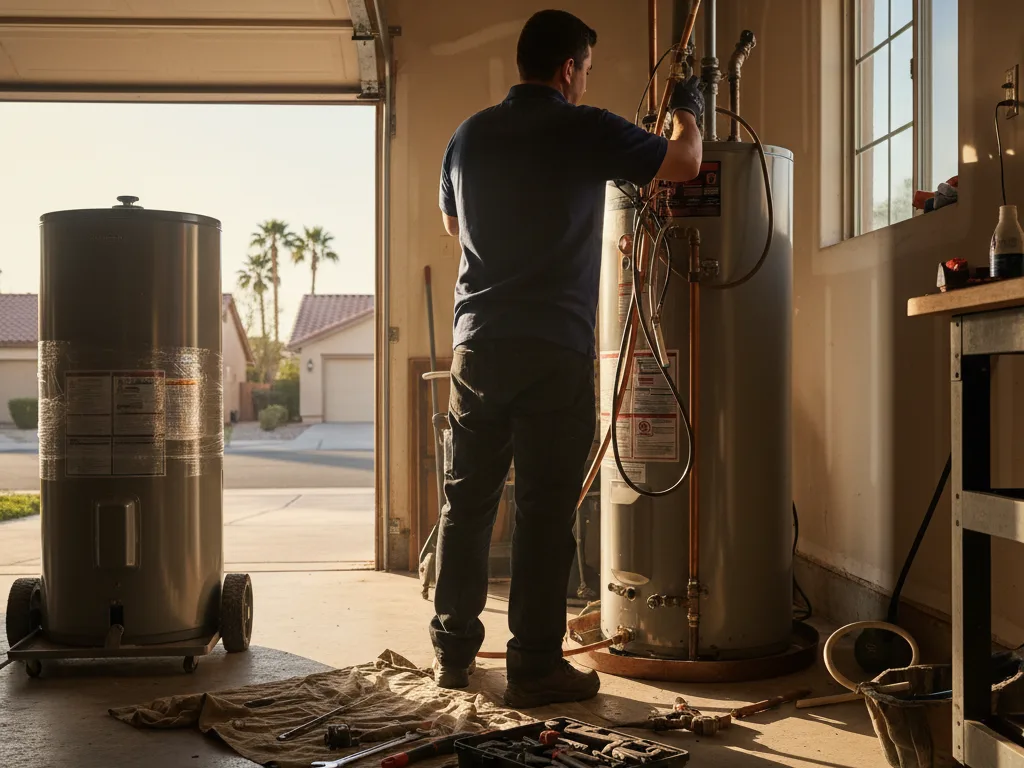
This is the clearest signal of all. If water is pooling under the heater and it is coming from the tank itself, not from a fitting, valve, or connection above it, the steel tank has corroded through. That kind of damage cannot be repaired. Once the tank leaks, replacement is the only real fix, and you want to handle it quickly before a slow drip turns into a flooded garage or closet.
Rusty Hot Water, Rising Bills, and Repeat Repairs
If only your hot water runs rusty or brown, the inside of the tank is likely corroding. On a newer unit a fresh anode rod can sometimes catch this early, but on an older one, rust in the hot water usually means the tank is on its way out. The same goes for climbing energy bills and repeated service calls. An aging heater works harder to do the same job, especially once hard-water sediment coats the bottom of the tank, and when repairs start stacking up on a unit near the end of its life, a new, more efficient model often costs less over time than nursing the old one along.
How Las Vegas Hard Water Tips the Scale
Las Vegas water is very hard, much harder than the water in most cities, and it is drawn largely from the Colorado River and Lake Mead. That water carries a heavy load of dissolved minerals, and when it is heated those minerals settle out as scale at the bottom of the tank. Over time that layer of sediment insulates the burner, forces the unit to run longer and hotter, and speeds up corrosion. The practical result is that water heaters here often wear out faster than the same unit would in a softer-water city, which is why age carries even more weight in the repair-versus-replace decision. If you do end up replacing a unit, softening your water first is the best way to protect the new one and get full life out of it.
How to Decide, and Who to Call
When you are standing in front of a struggling water heater, work through these questions in order. They will point you toward the right answer most of the time.
- How old is it? A unit only a few years old leans toward repair; around ten years or more leans toward replacement.
- Where is the water coming from? A leak from the tank body means replace; a leak from a valve or fitting is often a simple repair.
- Is the hot water rusty? Discolored hot water on an older unit usually means the tank is failing.
- How are the bills and repair history? Rising costs plus repeat repairs on an older unit tip the scale toward replacement.
- Still not sure? Get a professional diagnosis and a flat-rate quote before you commit to anything.
The repair-versus-replace call is far easier once someone actually looks at the unit. At Kingdom Plumbing, a real person answers the phone 24/7, and we give you upfront, flat-rate pricing you approve before we start, so there are no surprises either way. We are a family-owned Las Vegas plumber, licensed, bonded, and insured under Nevada Contractors License number 0085422, with two northwest-valley locations on West Cheyenne Avenue and Farm Road. We will tell you honestly whether a repair makes sense or your money is better spent on a new unit, and we back every job with a 100 percent satisfaction guarantee, the kind of straight advice that earned us a 4.9-star rating across 611 reviews. Whether you need an emergency fix tonight or a planned replacement, call (702) 840-5037 and we will help you get your hot water back.
Frequently Asked Questions
Is it cheaper to repair or replace a water heater?
How long do water heaters last in Las Vegas?
My water heater is leaking. Can it be repaired?
Why is my hot water rusty but my cold water clear?
Do you offer emergency water heater service in Las Vegas?
Have a plumbing question or a problem right now?
Call (702) 840-5037Burst pipe or flooding that can't wait? Our 24/7 emergency plumbers in Las Vegas dispatch around the clock.