The short answer
A leak at a fitting, an isolation valve, or the pressure relief valve is a straightforward repair. A genuine pinhole in the heat exchanger itself is usually not worth repairing, and the real question becomes whether the unit is still under warranty, because heat exchangers often carry a longer warranty term than the rest of the unit. First, confirm it is actually a leak: a condensing unit produces water as a normal byproduct, and a blocked or disconnected condensate drain looks exactly like a leaking heater.
Rule out condensate before anything else
A high-efficiency condensing tankless unit extracts so much heat from the exhaust that water vapor in it condenses back to liquid. That water is supposed to leave through a condensate drain line. It is mildly acidic, which is why many installations include a neutralizer in that line.
If the condensate line is kinked, clogged, disconnected, or draining uphill, that water ends up on the floor or pooled in the cabinet. It looks like the heater is leaking. It is not. Check the drain line before you accept any diagnosis that involves replacing the unit.
- Follow the small drain line from the unit and check it is clear, sloped downward, and actually connected at both ends.
- If there is a neutralizer cartridge in the line, check whether its media is spent or packed solid.
- Look at whether the water is clean and appearing only while the unit runs, which fits condensate, or present continuously, which fits a supply leak.
Where the water is coming from decides the job
| Source | What it means | Worth repairing? |
|---|---|---|
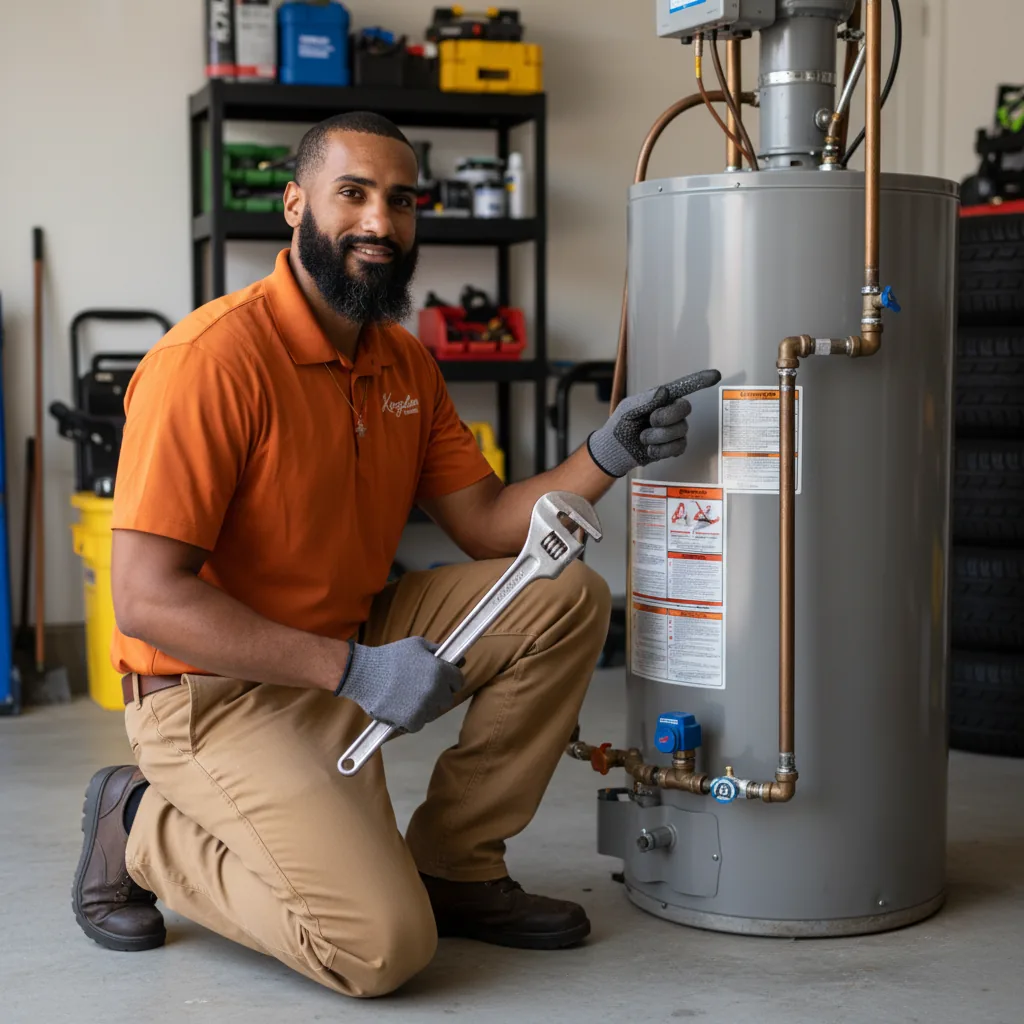
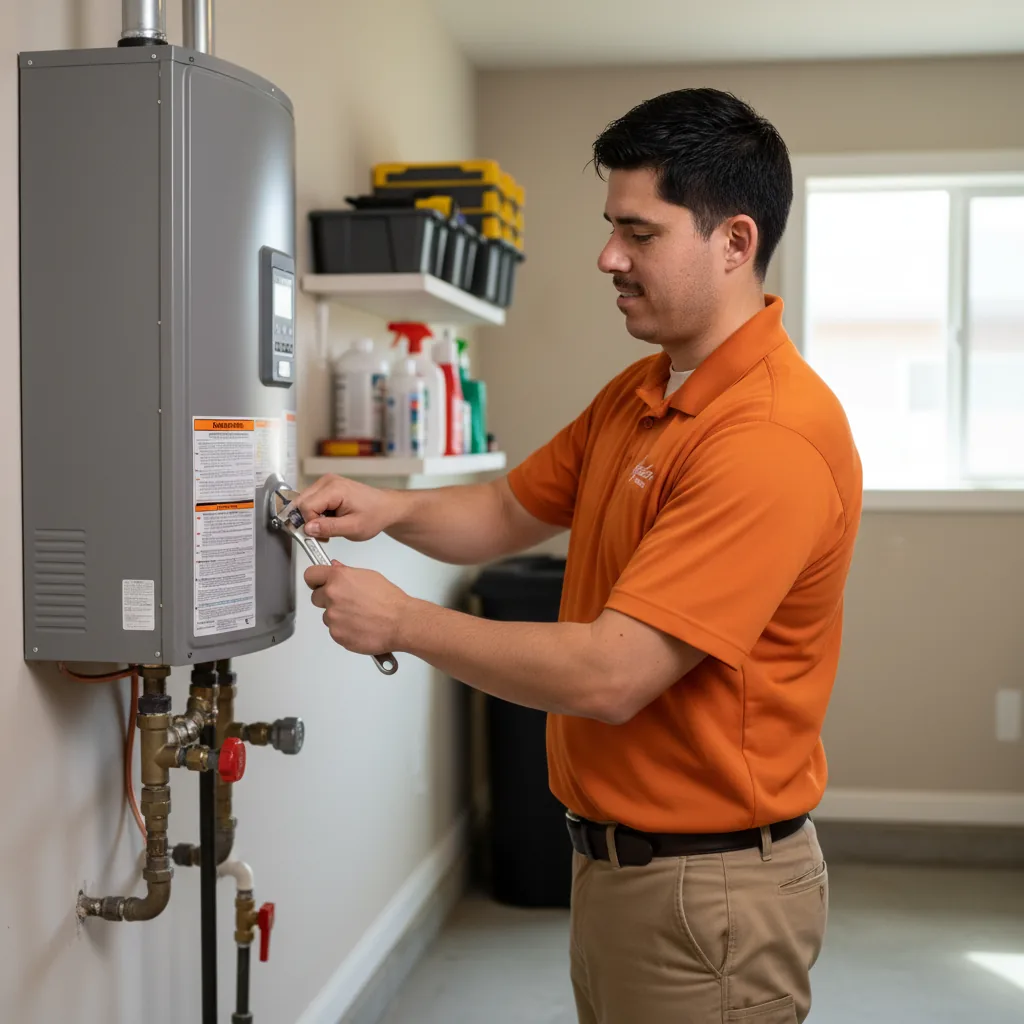
| A threaded fitting or union at the water connections | A seal or thread sealant has failed, or a connection has loosened | Yes. One of the simpler repairs on the unit |
| An isolation or service valve | Valve packing or an internal seal has worn | Yes. Valve replacement |
| The pressure relief valve | Either a failed valve, or the valve doing its job because pressure is too high | Yes, but find out which. A relief valve discharging may be a symptom, not the fault |
| The heat exchanger body itself | The core component has corroded through | Usually not economic to repair. This is the warranty conversation |
| Water under the unit with no visible source, only while running | Often condensate drainage rather than a leak at all | Fix the drain line, not the heater |
If it really is the heat exchanger
A heat exchanger is the core of the unit and the most expensive part in it. A pinhole in one is generally a corrosion failure, and corrosion does not happen in one isolated spot. Where there is one pinhole there is usually thinning elsewhere, which is why patching is not a real option and why a replacement exchanger on an older unit often approaches the cost of a new heater.
So the decision becomes: is it in warranty, and if so what does the warranty actually cover. Many manufacturers warrant the heat exchanger for a longer term than the other parts, and most of those warranties cover the part only, not the labor to fit it. Some require proof of annual maintenance or professional installation to remain valid.
What to gather before you call the manufacturer
- The model and serial number from the data plate on the unit.
- The original installation date and, if you have it, the installer’s invoice. Warranty terms frequently depend on professional installation.
- Any records of descaling or annual service, because several manufacturers condition the warranty on maintenance.
- Whether you are the original owner, since some warranty terms do not transfer with the house.
Why hard water matters more for these units here
A tankless heater runs water through a narrow heat exchanger and heats it very quickly. That is exactly the condition in which dissolved minerals come out of solution and deposit as scale. Las Vegas water is hard, so scale accumulates on the inside of the exchanger faster here than in a soft water market. Scale restricts flow, makes the unit work harder, and creates hot spots that accelerate corrosion. Descaling on a schedule is not optional maintenance on a tankless unit in this valley, it is what keeps the exchanger alive. See our tankless service and water treatment, because treating the incoming water is the thing that slows it down at the source.
If you are weighing replacement
Do not let a failure push you into a decision without a quote on both paths. Get the warranty answer first, then price a warranty exchanger fitted against a new unit. On a unit that is still young and was maintained, the warranty route usually wins. On an older unit that has never been descaled in hard water, a new heater may be the better value.
Talk to a licensed Las Vegas plumber
We find where the water is actually coming from before recommending anything, because most of the sources on that list are repairs rather than replacements. Kingdom Plumbing is family-owned, licensed, bonded and insured (NV Contractors License #0085422), available 24/7 with a real person answering and an upfront flat-rate quote you approve first. Call (702) 840-5037.
Frequently Asked Questions
Is a pinhole leak in a tankless water heater worth repairing?
Why is there water under my tankless water heater?
Does the warranty cover a leaking heat exchanger?
Can hard water cause a tankless water heater to leak?
My pressure relief valve is dripping. Is the heater broken?
How long should a tankless water heater last?
Have a plumbing question or a problem right now?
Call (702) 840-5037Burst pipe or flooding that can't wait? Our 24/7 emergency plumbers in Las Vegas dispatch around the clock.