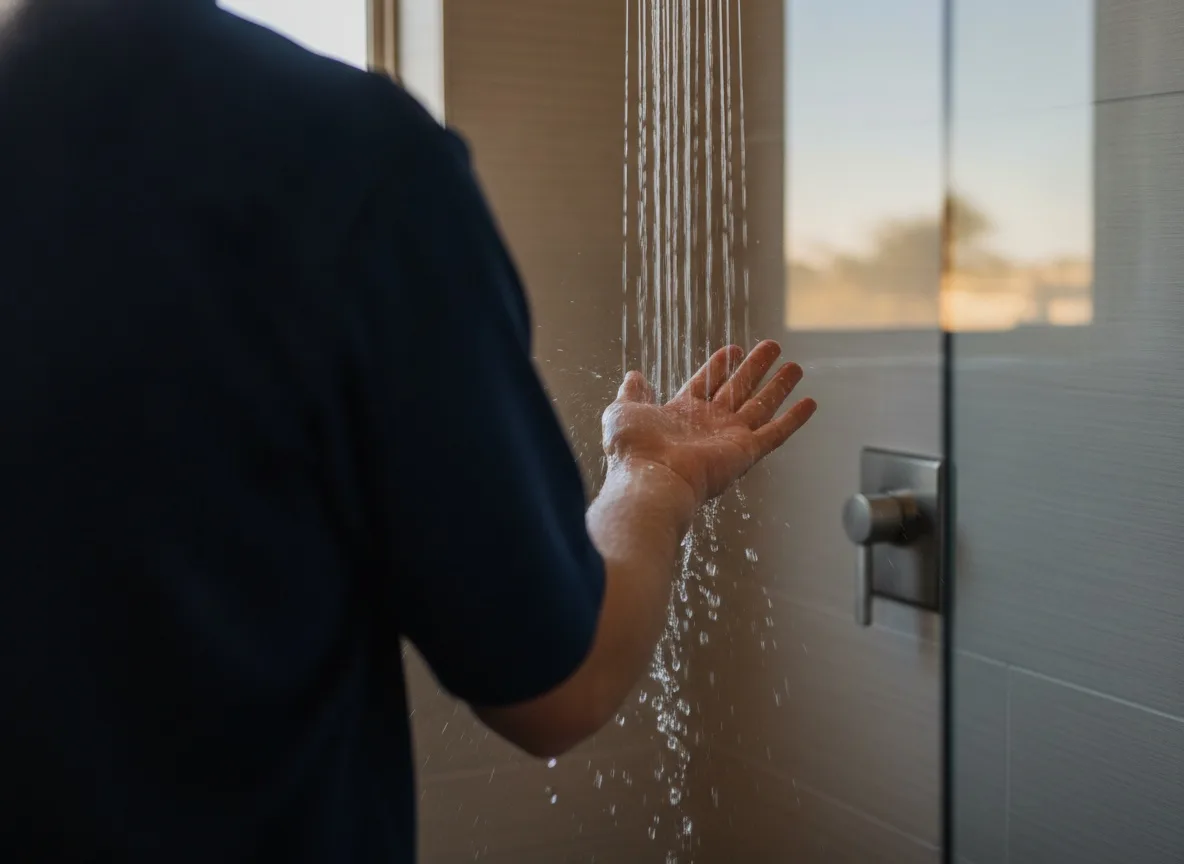
Losing hot water always seems to happen at the worst time, a cold shower before work, or a sink you cannot rinse. The good news is that a water heater with no hot water usually has a short list of causes, and a few of them are safe to check yourself before you call. This guide walks Las Vegas homeowners through the most common reasons a heater stops making hot water, what you can safely look at on your own, and the point where it is smarter to stop and call a licensed plumber.
Key Takeaways
First find out whether your water heater is gas or electric, because the fixes are different. On a gas unit, no hot water usually points to the pilot light or igniter. On an electric unit, it is often a tripped breaker, a burned-out heating element, or a bad thermostat. Water that turns warm but never hot often means a thermostat set too low or a tank full of hard-water sediment. Checking a breaker or a printed pilot instruction is safe; opening gas lines, wiring, or a leaking tank is not, that is when to call. A real person answers Kingdom Plumbing's phone 24/7 at (702) 840-5037.
First, Find Out If It's Gas or Electric
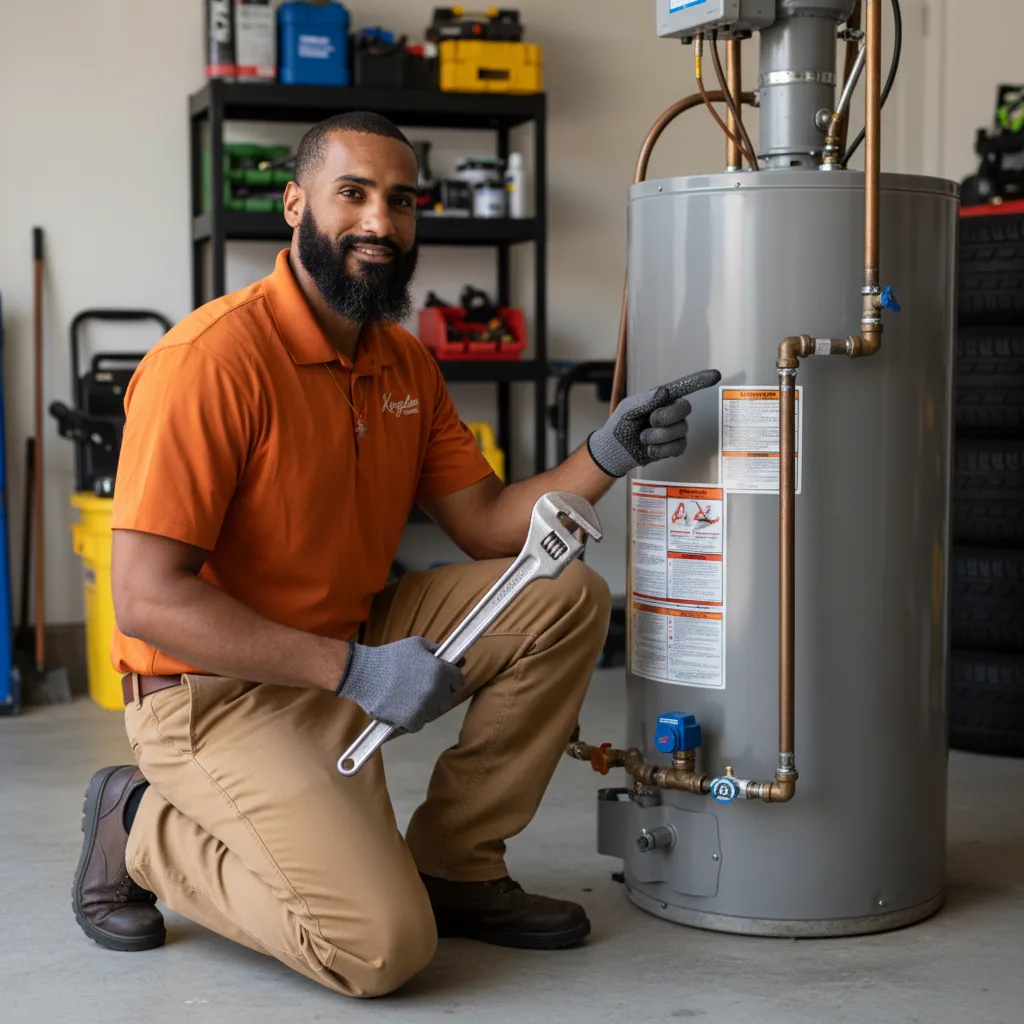
Before you touch anything, figure out which kind of water heater you have, because the causes and the checks are completely different. Look at the bottom of the tank. A gas water heater has a burner area behind a small cover near the floor, a gas line running to it, and a flue pipe on top that vents the exhaust. An electric water heater has no gas line and no flue, instead you will see an electrical conduit or cable running into the top or side, and it runs off a breaker in your panel. If you are still not sure, the label on the side of the tank will say. Knowing this one thing tells you which section below applies to you.
No Hot Water on a Gas Water Heater
On a gas unit, the most common reason for no hot water is that the flame has gone out. Older heaters use a standing pilot light (a small flame that stays lit and lights the main burner when you need hot water. Newer ones use an electronic igniter that sparks the flame on demand. Either way, if that ignition fails, the burner never fires and the water goes cold. Many units have lighting instructions printed right on the label or access panel. If yours has a pilot you can safely reach and relight by following those printed steps, it is fine to try once. If the pilot will not stay lit, or the igniter clicks but never catches, stop there) a pilot that keeps dying usually points to a failing thermocouple, gas valve, or igniter that needs a professional.
- Make sure the gas is actually on. Check that the shut-off valve on the gas line to the heater is open, and that other gas appliances like your stove are still working.
- Confirm the temperature dial has not been bumped down to a low or 'pilot/vacation' setting.
- If your unit has printed lighting instructions and a pilot you can reach, follow them exactly, one time only.
- If you smell gas, a rotten-egg odor, do not try to light anything. Leave the area and call from outside. Never troubleshoot around a gas smell.
No Hot Water on an Electric Water Heater
Electric water heaters heat water with one or two heating elements controlled by thermostats, and they draw a lot of power. That is why the first thing to check is your electrical panel. A water heater on a tripped breaker gets no power at all, which means no hot water anywhere in the house. Reset a tripped breaker once. If it trips again right away, do not keep resetting it, a breaker that trips over and over is warning you about a real electrical fault, and that needs a licensed pro, not another flip of the switch. If the breaker is fine but you still have no hot water, the usual culprit is a burned-out heating element or a failed thermostat inside the unit, which have to be tested with a meter.
- Check your breaker panel for a tripped water-heater breaker and reset it one time.
- Some units have a red reset button on the thermostat behind an access panel. Only press it with the power off, and if it trips again, leave it and call.
- Make sure no one recently switched the unit off at the disconnect or unplugged a 120-volt plug-in model.
- If power is confirmed and the water is still cold, the element or thermostat has likely failed, a job for a plumber, not guesswork.
Warm but Never Hot? Check the Thermostat and Sediment
Not every hot-water problem is all-or-nothing. If your water gets warm but never truly hot, or runs hot briefly and then goes cold fast, the cause is usually one of three things. The simplest is a thermostat set too low (an easy dial adjustment, though you should never crank it up high, since scalding water is a real burn risk. Next is a partly failed component: on an electric unit with two elements, one dead element cuts your hot water short. The third, and very common here, is sediment. Las Vegas water comes largely from the Colorado River and Lake Mead and is among the hardest municipal water in the country. As it heats, minerals settle out as scale on the bottom of the tank, where they insulate the burner or element and leave less room for hot water) so an aging heater slowly delivers less than it used to.
Once you have ruled out the simple stuff, the question becomes whether you need a repair or a new unit. A single bad part (a thermocouple, a heating element, a thermostat) is usually a straightforward, affordable fix on a tank that is otherwise sound. A tank that is leaking from the body, rusting your hot water, or failing again after recent repairs is usually telling you its life is over. If you are not sure which camp you are in, our water heater repair team can test the unit, tell you honestly whether a part or the tank is the problem, and give you a flat-rate quote you approve before any work starts.
Safe Checks You Can Do, and When to Call a Pro
Here is the short version of what is safe to try yourself and when to hand it off. Working around the outside of the unit (checking a breaker, a gas shut-off valve, a temperature dial, or following printed pilot instructions) is fair game. Opening up wiring, gas connections, or a tank that is leaking is where the risk outweighs any savings, and a mistake there can mean a fire, a flood, or a gas hazard. When you reach that line, stop and call.
- Confirm the power or gas is on: check the breaker for an electric unit, or the gas valve and other gas appliances for a gas unit.
- Check the temperature setting on the dial in case it was bumped down.
- For a gas unit with printed lighting steps, try relighting the pilot once; if it will not stay lit, stop.
- For an electric unit, reset the breaker once; if it trips again, stop.
- If none of that restores hot water (or you see a leak, smell gas, or the breaker keeps tripping) turn the unit off and call a licensed plumber.
When a check does not fix it, or you would rather have a pro handle it from the start, Kingdom Plumbing is here around the clock. We are a family-owned Las Vegas plumber with two northwest-valley locations, on West Cheyenne Avenue in the 89129 area and Farm Road in 89131, and a real person answers our phone 24/7, even for after-hours emergencies. We are licensed, bonded, and insured under Nevada Contractors License number 0085422, we give you flat-rate pricing you approve before we start, and we back every job with a 100 percent satisfaction guarantee, the straight, no-pressure service that earned our 4.9-star rating across 611 reviews. If your water heater quit and you want it fixed right, call (702) 840-5037.
Frequently Asked Questions
Why do I suddenly have no hot water?
How do I relight the pilot light on my gas water heater?
My water heater breaker keeps tripping. What does that mean?
Why is my water warm but not hot?
Do you offer emergency water heater service at night in Las Vegas?
Have a plumbing question or a problem right now?
Call (702) 840-5037Burst pipe or flooding that can't wait? Our 24/7 emergency plumbers in Las Vegas dispatch around the clock.