Your home's pipes are easy to ignore, until they start failing all at once. In Las Vegas, where the tap water is among the hardest in the country, the metal and plastic lines behind your walls take a beating for years before you ever see a problem. A repipe replaces those worn-out water lines throughout your home or building instead of patching the same leaks over and over. Here's how to tell the difference between a one-off repair and a house that's ready for the bigger fix.
Key Takeaways
• Repeated pinhole leaks, rusty water, and falling pressure are the classic signs a whole-home repipe is coming.
• Galvanized steel and polybutylene pipe are known problem materials, age alone can justify replacement.
• Las Vegas hard water speeds up scale buildup and corrosion inside pipes.
• One or two isolated leaks usually means repair; a pattern across the house points to repipe.
• Kingdom Plumbing gives you a flat-rate quote you approve before any work starts, call (702) 840-5037.
What a Repipe Actually Means
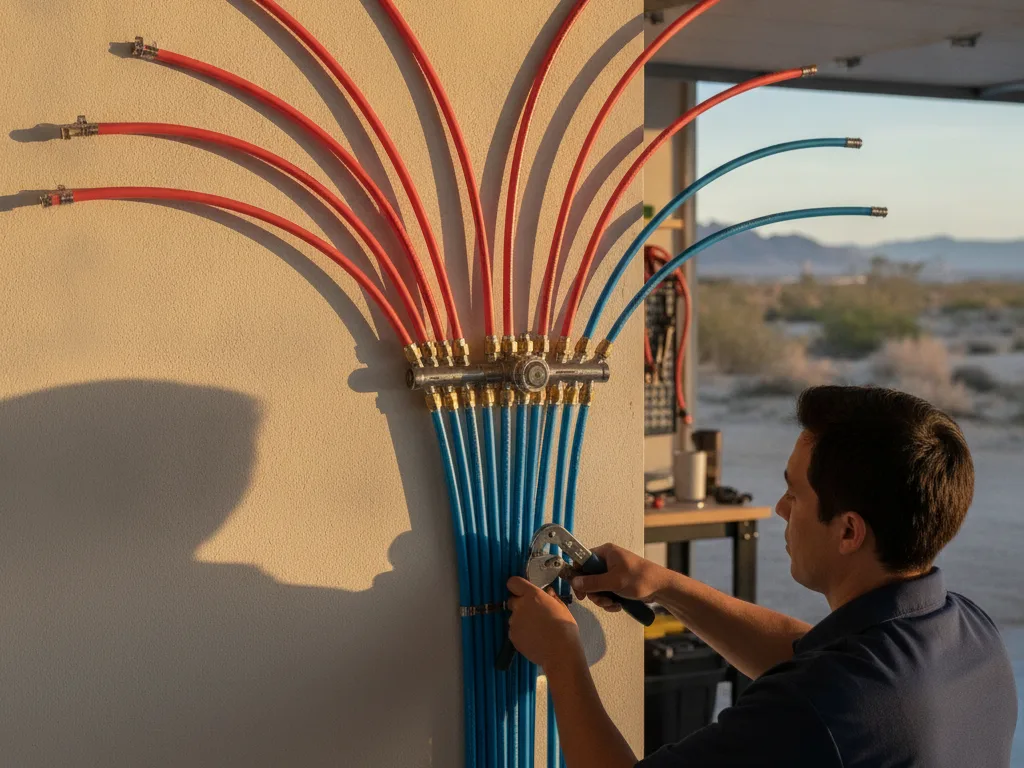
A repipe means replacing the water supply lines that run through your walls, ceilings, and floors, the pipes that carry fresh water to your sinks, showers, toilets, and appliances. It's different from swapping out a single leaky section under one sink. Plumbers do it when the piping material itself has reached the end of its useful life, so fixing one spot just moves the next leak down the line. A repipe is a bigger job, but it stops the cycle of repeat repairs and gives you clean, full-pressure water again.
Signs You Need a Repipe
No single clue proves you need a repipe. But when several of these show up together, it's usually time to stop patching and start planning the replacement.
1. Repeated Pinhole Leaks
A pinhole leak is a tiny hole that opens up in a metal pipe, usually from corrosion eating through the wall from the inside. One leak can be bad luck. But when you're calling a plumber for a new pinhole every few months (a drip in the ceiling here, a wet spot in a wall there) that's the pipe telling you the whole run is corroding. Patching each hole is cheaper today and more expensive over a year of repeat visits and water damage.
2. Rusty or Discolored Water
If your water comes out brown, yellow, or rusty, especially first thing in the morning or after the house has sat unused, the color often comes from the inside of corroding metal pipes. Run the cold tap for a minute; if it clears up fast it may be minor, but if discolored water keeps coming back, the pipes are rusting from the inside out. Discolored water can stain fixtures and laundry, and it's a strong sign the supply lines are breaking down.
3. Chronic Low Water Pressure
Over the years, scale and corrosion build up inside pipes and narrow the opening water flows through (like plaque in an artery. When that happens across the whole house, showers go weak and it takes forever to fill a tub or run two fixtures at once. If low pressure came on slowly and affects the entire home) not just one faucet you can clean or replace, buildup inside aging pipes is often the reason, and repiping restores the flow.
4. Old Galvanized Steel or Polybutylene Pipe
Some pipe materials are simply known to fail. Galvanized steel, common in older homes, rusts and clogs from the inside as it ages. Polybutylene, a gray plastic pipe used in many homes built from the late 1970s to the mid-1990s, became known for cracking and failing and is no longer installed. If you know or suspect your home has either, replacement is often a question of when, not if. A plumber can check your pipe material and tell you exactly what you're working with.
Why Las Vegas Hard Water Wears Pipes Out Faster
Las Vegas gets most of its water from the Colorado River and Lake Mead, and it's among the hardest municipal water in the country. Hard water is loaded with dissolved minerals that leave scale behind (the same chalky buildup you see on faucets and glass shower doors. Inside your pipes and water heater, that scale coats the walls, narrows the path water flows through, and speeds up corrosion where it collects. It's a big reason valley homes can see pressure loss and pipe problems sooner than homes in softer-water parts of the country. Hard water doesn't mean you'll definitely need a repipe) but it does mean Las Vegas pipes work in tougher conditions than most.
Repair or Repipe? How to Decide
The honest answer is that most homes don't need a repipe (a single leak or one bad section is usually a straightforward repair. The tipping point is a pattern: repeat leaks, discolored water, and falling pressure showing up together, on top of old problem-material piping. When you're weighing the two, Kingdom Plumbing can inspect your lines, walk you through what's actually failing, and handle everything from a targeted pipe repair to a full whole-home repipe. Either way, you get an upfront, flat-rate quote you approve before any work begins) so there's no pressure to jump to the big job if a repair will do.
- Lean toward repair: one isolated leak, a single old fixture, or a problem in just one part of the house.
- Lean toward repipe: repeat leaks in different spots, discolored water that keeps returning, and slow-building low pressure across the whole home.
- Always ask about pipe material and age, old galvanized or polybutylene shifts the math toward replacement.
- Get the leak found and the pipe material identified before deciding, guessing gets expensive.
Get a Straight Answer From a Local Plumber
If you're seeing one of these signs, it may be nothing. If you're seeing three, it's worth a professional look before the next leak does real damage. Kingdom Plumbing is a family-owned Las Vegas plumber with two Northwest Valley locations, available 24/7, and a real person answers the phone. We're licensed, bonded, and insured (NV Contractors License #0085422), rated 4.9 stars across 611 reviews, and every job is backed by our 100% satisfaction guarantee. Call (702) 840-5037 for a flat-rate quote you approve first.
Learn more about our repiping and pipe repair in Las Vegas, or call (702) 840-5037.
Frequently Asked Questions
How long do pipes last in Las Vegas?
Is a repipe worth it, or should I just keep repairing?
Can I stay in my home during a repipe?
What causes pinhole leaks in the first place?
Have a plumbing question or a problem right now?
Call (702) 840-5037Burst pipe or flooding that can't wait? Our 24/7 emergency plumbers in Las Vegas dispatch around the clock.