A sewer line problem rarely announces itself with a single, obvious symptom. It usually creeps up: one drain gurgles, then two, then you catch a whiff of something outside that should not be there. By the time most Las Vegas homeowners call a plumber, the line has been struggling for a while. The good news is that a failing sewer line gives off clear warning signs if you know what to look for, and not every bad line needs a full, dig-up-the-yard replacement. This guide walks through the signs, the one test that settles the guessing, and how the repair-versus-replace decision actually gets made.
Key Takeaways
• Multiple slow or backing-up drains at once (not just one) is the biggest red flag that the problem is the main sewer line, not a single fixture.
• A rotten-egg or sewage smell inside or around the house, plus a soggy or unusually green patch in the yard, often points to a cracked or leaking line underground.
• A camera inspection is the only way to know for sure what is wrong and where (it turns guesswork into a clear picture before anyone digs.
• A single crack or short damaged section can often be fixed with a targeted spot repair. Collapsed, sagging, or repeatedly failing lines usually call for full replacement.
• Trenchless methods can sometimes replace a line with little or no digging, but only when the existing pipe is in the right condition) an honest plumber will tell you if it fits.
Warning Signs Your Sewer Line Is Failing
A clogged toilet or one slow sink is usually a local problem. A sewer line problem shows up across the whole house at once, because every drain in your home eventually feeds into that one main line. When that line is blocked, cracked, or collapsing, the trouble backs up everywhere. Watch for these signs, especially if you notice more than one at the same time, one on its own may just be a fixture clog, but two or three together is your cue to stop plunging and get the main line looked at:
- Multiple slow drains at once. If the tubs, sinks, and toilets are all draining slowly or gurgling, the issue is likely downstream in the main line, not in each fixture.
- Sewage smell inside or outside. A persistent rotten-egg or sewage odor near floor drains, in a bathroom, or out in the yard means waste is not moving the way it should.
- Water or waste backing up. Water rising in a tub when you flush a toilet, or a toilet bubbling when the washer drains, is a classic sign the main line is struggling.
- A soggy or extra-green patch in the yard. A leaking sewer line underground can keep one spot of soil wet or make the grass there greener than everywhere else, which stands out fast on a desert lot.
- Repeat clogs. If you are snaking the same drain every few weeks, something structural may be wrong with the line itself.
- Gurgling sounds. Air trapped by a partial blockage makes drains and toilets gurgle as water fights its way past.
Why Las Vegas homes can be prone to sewer trouble
A few things about living here work against your pipes. Las Vegas tap water, drawn largely from the Colorado River and Lake Mead, is among the hardest municipal water in the country. That hardness leaves mineral scale behind, and over years that buildup can narrow pipes and give clogs something to cling to. Our desert soils move, too: ground that swells when it gets wet from irrigation and shrinks when it dries can slowly stress and shift a buried line, and older established neighborhoods often have older pipe materials underground. None of this means your line is doomed, plenty of homes go decades without issue, but it does mean the warning signs above are worth taking seriously here.
Why a Camera Inspection Comes First
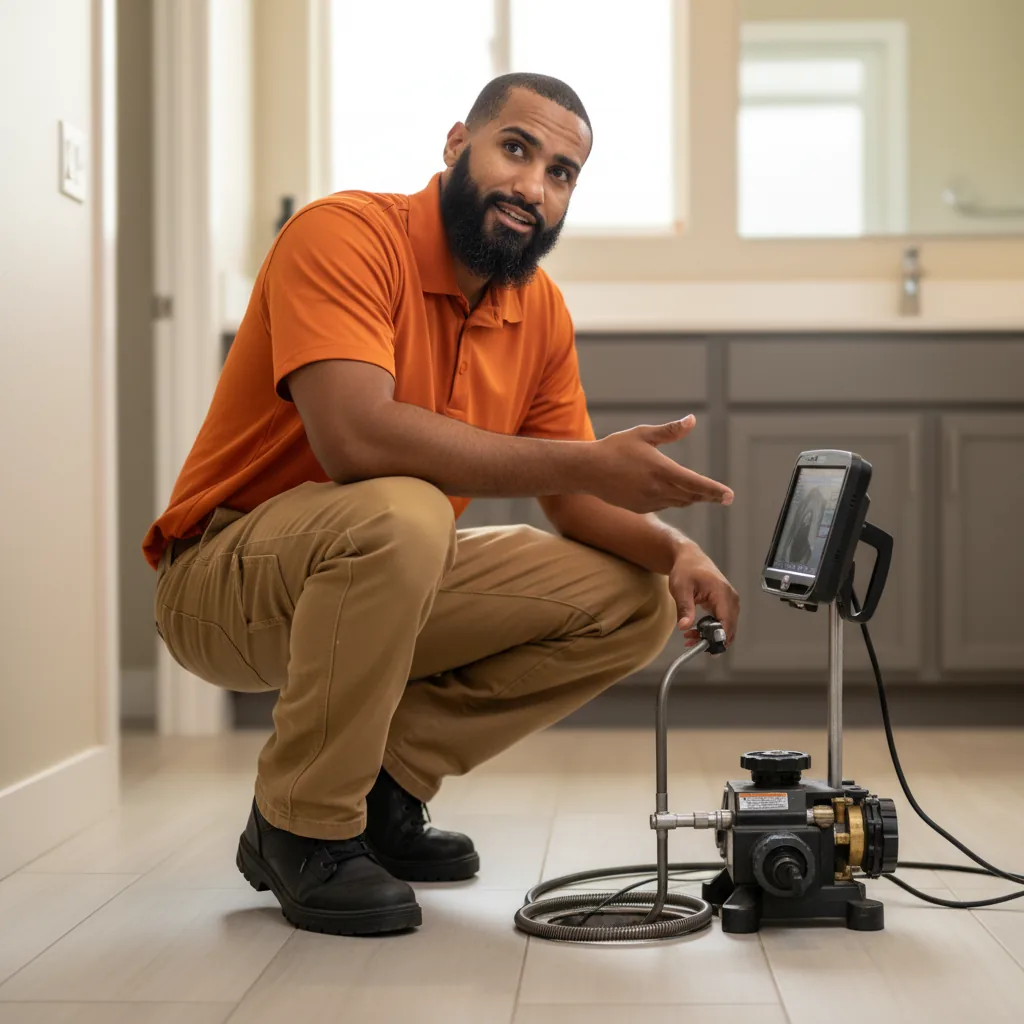
Here is the honest truth about sewer lines: no one can tell you exactly what is wrong by looking at your drains from inside the house. The line is buried, sometimes several feet down. Guessing leads to over-repair (digging up a line that only needed a small fix) or under-repair (patching a line that was actually collapsing). That is why any good plumber starts with a camera inspection. A waterproof camera on a flexible cable is fed down the line, and you watch a live video of the inside of your own pipe. It turns a vague, scary problem into a clear picture you can make a decision from. It shows:
- Exactly where the problem is, measured in feet from the access point, so digging is precise instead of exploratory.
- What the problem is, a crack, a gap at a joint, a sag that holds water, roots that pushed in, or a fully collapsed section.
- How much of the line is affected, which is the single biggest factor in whether you repair or replace.
- The overall condition of the rest of the pipe, so you are not fixing one spot only to have the next section fail next year.
Repair vs. Replace: How the Decision Gets Made
Once the camera shows what is going on, the choice usually comes down to how much of the line is damaged and why. Neither option is automatically better, a spot repair is not always the cheap shortcut, and a full replacement is not always overkill. The deciding question is simple: will fixing one spot solve the problem for years, or will the next section fail soon after? The camera footage answers that, and a straight-shooting plumber will show it to you rather than just asking you to trust them.
When a spot repair makes sense
A spot repair fixes one damaged section and leaves the rest of the line in place. It tends to be the right choice when the camera shows a single, isolated issue and the rest of the pipe is in good shape, for example:
- One crack or one cracked joint in an otherwise solid line.
- A short section damaged by a specific cause, like roots that entered at a single point.
- Damage that is easy to reach without tearing up the whole yard or slab.
- A pipe that is aging but not yet failing along its full length.
When a full replacement is the smarter call
Sometimes patching one spot just delays the inevitable, and a second repair trip costs you more than doing it right the first time. Full replacement usually wins when the camera reveals problems along the whole line, not just one point:
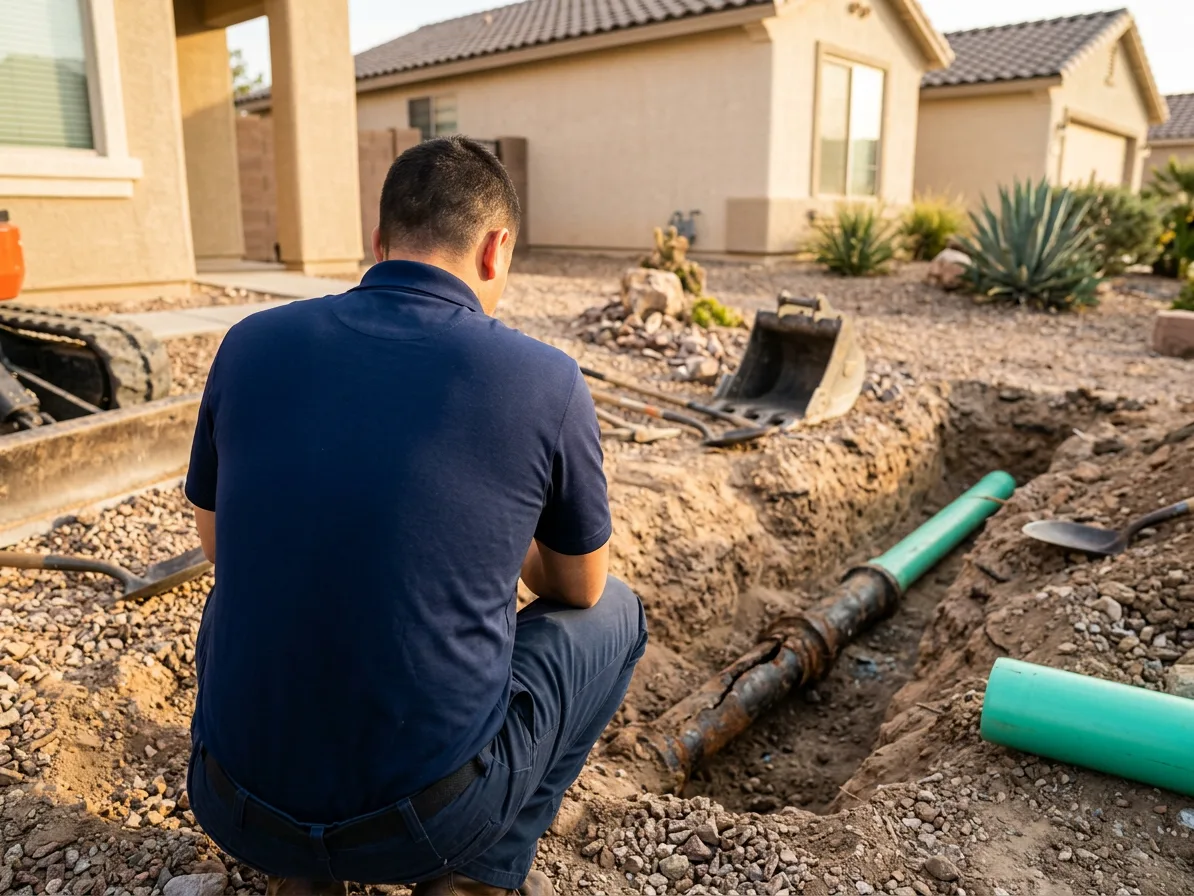
- A collapsed or crushed section, where the pipe has lost its shape and cannot simply be patched.
- A 'belly' or sag in the line that keeps holding water and waste, causing repeat clogs no snaking will fix.
- Multiple cracks or bad joints spread along the pipe.
- A line that has already been repaired before and keeps failing.
- Old, brittle pipe material that is breaking down in more than one place.
Where trenchless fits, and where it does not
You may hear about trenchless sewer repair, which can replace or reline a pipe with little or no digging, often through one or two small access points instead of a long trench across your yard. When it fits, it is less disruptive to landscaping, driveways, and concrete. But it is not magic and it is not right for every line, the existing pipe has to be in the right condition for it to work, and a fully collapsed line often cannot be relined. An honest plumber will look at the camera footage and tell you whether trenchless is genuinely an option or whether traditional digging is the sounder choice. Be wary of anyone who promises trenchless before they have even seen inside your pipe.
What to Do If You Suspect a Sewer Problem
If you are seeing more than one of these signs (several slow drains, a sewage smell, a soggy spot in the yard) do not wait for a full backup inside the house. Stop running water into the affected drains and get the line inspected, because a sewer issue only gets more expensive the longer it sits. That is where our Las Vegas sewer line repair team comes in: a real person answers the phone 24/7, and you get an upfront, flat-rate quote you approve before any work starts. Kingdom Plumbing is a family-owned local company serving the northwest valley from two locations, on W Cheyenne Ave (89129) and Farm Rd (89131), licensed, bonded, and insured (NV Contractors License #0085422). We inspect first, show you what we find, and lay out your repair-versus-replace options in plain language, backed by a 100% satisfaction guarantee. When you are ready, call (702) 840-5037.
Frequently Asked Questions
How do I know if my sewer line is cracked or just clogged?
Is trenchless sewer repair available in Las Vegas?
How much does sewer line repair cost in Las Vegas?
Can tree roots really damage a sewer line in the desert?
Do I really need a camera inspection before repairs?
Have a plumbing question or a problem right now?
Call (702) 840-5037Burst pipe or flooding that can't wait? Our 24/7 emergency plumbers in Las Vegas dispatch around the clock.