The short answer
Stop running water anywhere in the house right now. No sinks, no laundry, no dishwasher, and do not flush. Waste appearing at the lowest drain means the main sewer line is blocked downstream, so everything you send down has nowhere to go but back up. This is not a fixture clog and a plunger will not help. Call us at (702) 840-5037. We answer 24/7.
Why the shower and not somewhere else
Every drain in the house feeds the same main line out to the sewer. When that line blocks, waste water backs up and finds the lowest opening it can reach, the way water in a dam finds the lowest point in the wall. In most homes the lowest opening is a shower pan or a tub, because they sit nearly at floor level while sinks and toilets sit higher.
So the shower is not the problem. The shower is the overflow point. That is actually useful information, because it tells you the blockage is past the point where the bathroom joins the rest of the house, not inside that bathroom.
The pattern that confirms it
Flush a toilet and watch the shower. If the water in the shower rises, gurgles, or waste comes up, those two fixtures are connected behind a shared blockage. One fixture backing up on its own is a fixture clog. Two or more reacting to each other is the main line, and that is a different job.
What to do in the next few minutes
- Stop all water use in the house. Tell everyone. The washing machine and dishwasher are the ones people forget, and either can dump a lot of water into the line without anyone standing there.
- Do not flush. Each flush sends several more gallons toward a line that cannot take it.
- Do not pour drain chemicals down it. They will not clear a main line, and they sit in standing water where they can burn whoever works on it next, including you.
- Keep people and pets away from the standing water. Sewage backup is a biological hazard, not just a mess.
- If you can reach your main cleanout safely, note where it is. Do not open it. A capped cleanout under pressure can release a lot of waste water at once.
What is usually blocking it
| Cause | What points to it |
|---|---|
| Tree roots in the line | Common in older northwest neighborhoods near Cheyenne and Farm Road, where mature trees chase the only reliable water in a desert. Often a recurring backup that returns every few months |
| Grease and buildup narrowing the pipe | Builds slowly. Usually the drains were getting lazy for a while before this |
| Wipes and non-flushables | Often a sudden backup with no warning. Flushable wipes do not break down, whatever the box says |
| A collapsed, cracked, or offset pipe | Repeats quickly after clearing, or the line clears and blocks again within weeks. Needs a camera to confirm |
| A blockage in the city main rather than yours | Neighbors having the same trouble at the same time. Worth asking before paying for your own line to be cleared |
How it actually gets fixed
The immediate job is to open the line so the house can drain. That is usually a cable machine through the main cleanout, which bores through the blockage and restores flow. For a one-time obstruction that is often the whole repair.
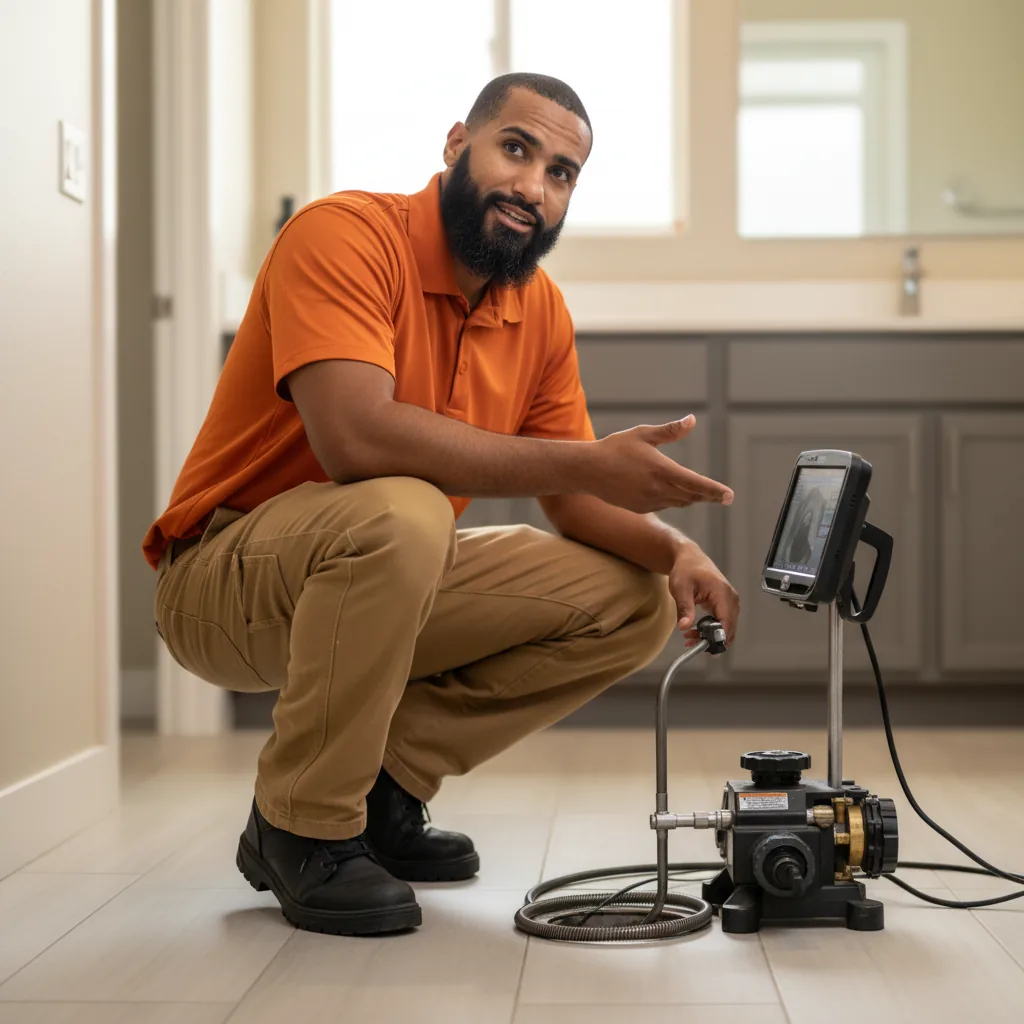
The second question is whether it will come back, and that is where a camera earns its keep. Running a camera down the opened line shows whether you are looking at roots, at buildup coating the pipe wall, or at a structural failure like a crack or an offset joint. Those are three different futures and they are not guesses once you have seen the inside of the pipe. See what a sewer camera inspection shows.
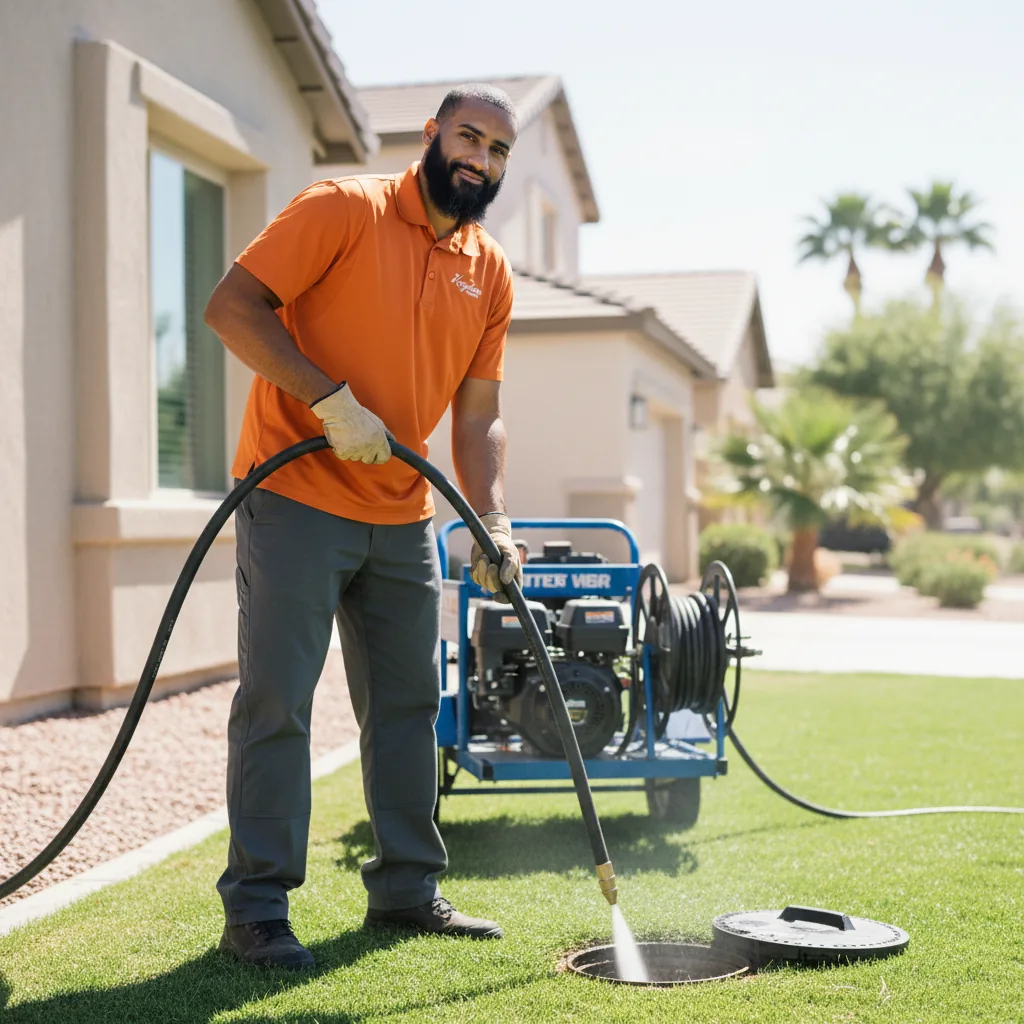
If the line is coated with grease, scale, or root hair, cabling punches a hole through it and leaves the coating behind, which is why some houses are back in the same spot a few months later. Hydro jetting scours the pipe wall back toward its original diameter instead. If the camera shows a broken or collapsed section, no amount of cleaning fixes that, and the conversation turns to repair versus replacement.
About the cleanup
We clear the line and get the house draining. Sewage cleanup and sanitizing is restoration work and a separate trade, and for anything beyond a small area it is worth having done properly rather than mopping it yourself. If the backup reached flooring, drywall, or cabinets, that is also worth a call to your insurer, because some policies cover sewer backup under a specific endorsement and others do not. Ask before you throw anything away, and photograph it first.
Talk to a licensed Las Vegas plumber
This is one of the calls we take at every hour, and a real person answers. Kingdom Plumbing is family-owned, licensed, bonded and insured (NV Contractors License #0085422), available 24/7, with an upfront flat-rate quote you approve before any work starts. Call (702) 840-5037 or see sewer and drain service.
Frequently Asked Questions
Why is sewage coming up in my shower instead of the toilet?
Can I plunge a sewage backup in the shower?
How do I know if it is the main line or just one drain?
Should I pour drain cleaner down it?
Why does my sewer line keep backing up?
Is sewage backup covered by homeowners insurance?
Have a plumbing question or a problem right now?
Call (702) 840-5037Burst pipe or flooding that can't wait? Our 24/7 emergency plumbers in Las Vegas dispatch around the clock.