
Las Vegas water is very hard, so choosing the right plumber for water treatment and softeners matters for your plumbing and appliances. Here are the questions to ask before you sign a contract, and how solid answers protect your home and budget.
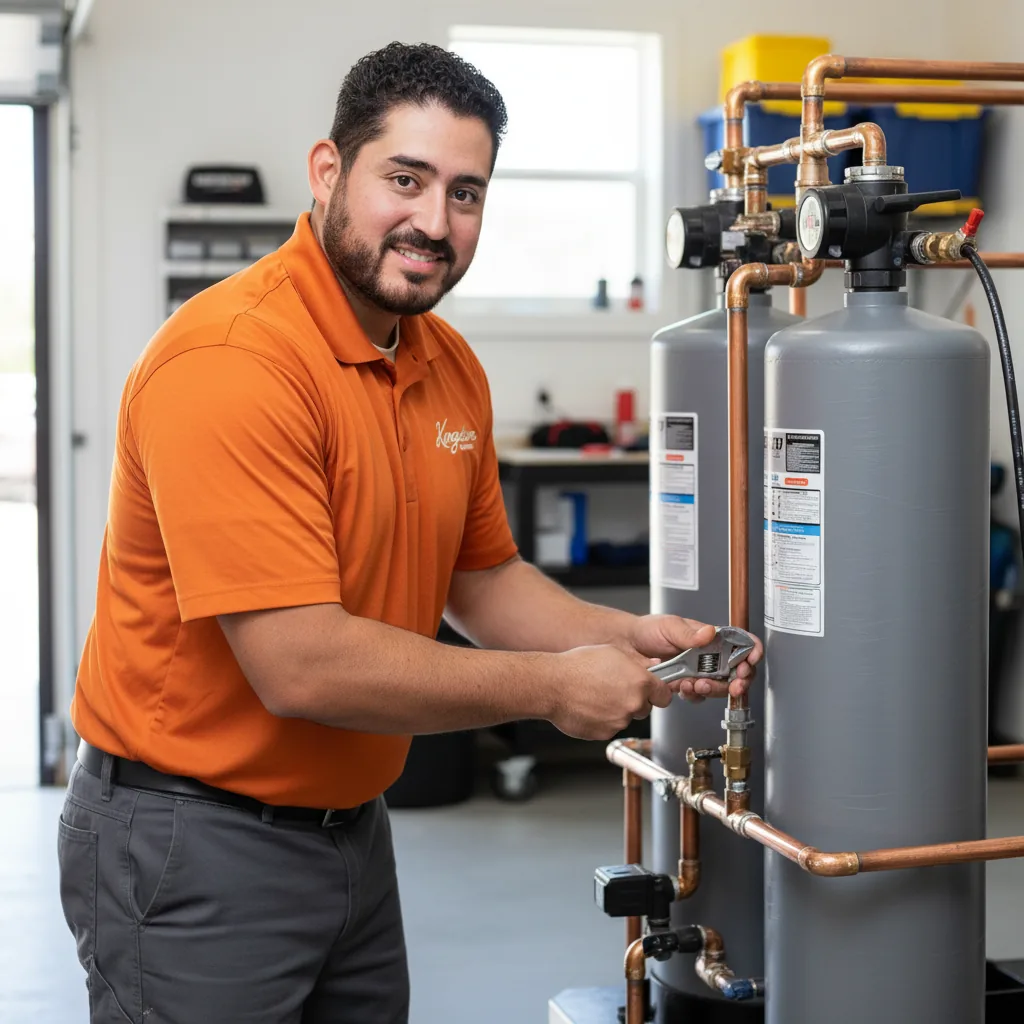
Why do the right questions matter for Las Vegas water softeners?
In the Las Vegas valley, hard water is not a minor annoyance. The Las Vegas Valley Water District reports that our water averages around 280 parts per million of hardness, or about 16 grains per gallon, which is considered very hard water. That level of calcium and magnesium is not a health issue, but it is rough on fixtures, glass, and appliances if you do not manage it with a good water treatment and softeners setup. When you are investing in a softener, the plumber you pick and the questions you ask up front have a real impact on how well the system works and how long it lasts.
A water softener is not a one-size-fits-all box you bolt to the wall. The right system is sized to your water hardness, your household water use, and how often the softener will regenerate. The U.S. Environmental Protection Agency explains that proper sizing and efficient regeneration are key to both performance and water savings. If a plumber cannot clearly explain how those pieces fit together in your home, that is your cue to slow down and ask better questions before signing anything.
- Las Vegas water is very hard at about 16 grains per gallon.
- Hardness minerals are not unsafe but are tough on plumbing and fixtures.
- Softener performance depends on correct sizing and setup.
- Good questions up front prevent costly changes after install.
What should you ask about Las Vegas water hardness and system sizing?
One of the first topics to cover with any plumber is how they will size your water softener for local conditions. Per the Las Vegas Valley Water District, the valley's water hardness is about 280 ppm, roughly 16 grains per gallon. Your plumber should already know that figure or be willing to look it up, then factor it into the size of the resin tank, the salt usage, and how often the unit regenerates. If they guess or shrug off the hardness number, that is a concern.
Ask the plumber to walk you through how many people live in your home, your approximate daily water use, and how they convert that into a system size. The EPA's guide to efficient softeners explains that good sizing balances the grains of hardness removed with the water used during regeneration. You want a unit that does not regenerate so often that it wastes water and salt, but also does not wait so long that you start feeling hard water inside the house again. A clear explanation here tells you the plumber is thinking about both comfort and efficiency.
- What hardness level are you using to size my system?
- How many grains of hardness will my softener handle between regenerations?
- How does the number of people in my home affect the size you recommend?
- Will you use demand-initiated regeneration programming or a timer?
How much will a water softener cost and what should be in the estimate?
Before you agree to a water treatment and softeners install, ask the plumber for a written estimate that breaks out equipment, labor, and any add-ons. A recent cost guide for Las Vegas estimates that installing a typical water softener runs roughly $825 to $3,050 depending on the system type and complexity. Basic ion-exchange softeners tend to fall toward the lower end of that range, while larger dual-tank units or softener plus whole-house filtration combinations can land higher. According to that guide, installation costs here are close to the national average, which can help you recognize numbers that are far outside the norm.
The estimate should also clarify any electrical work, drain connections, or permits that might be needed. Ask the plumber whether the price includes hauling away old equipment, startup salt, and the initial programming of the unit. Clarify whether the quote is a flat rate or whether there are possible extras based on what they find once they start work. At Kingdom Plumbing, we use upfront flat-rate pricing, so our customers know what the project will cost before work starts. Whatever company you choose, the goal is the same: no surprises when the final bill arrives.
- Ask if the estimate is flat-rate or time-and-materials.
- Confirm the brand and model that quote is based on.
- Clarify what is included, such as disposal of old equipment.
- Verify who pays for permits or extra electrical work if needed.
What installation questions reveal if the plumber plans to do it right?
A neat, code-compliant install affects everything from how easy your softener is to service to how likely it is to leak or malfunction. Ask the plumber to describe exactly where the tank will go, where the brine tank will sit, and how they will route the drain line. A common mistake mentioned in industry articles is poorly routed drains that can kink, back up, or become unsanitary. You want to hear that the plumber will secure the line properly and follow plumbing code for any air gaps or discharge connections.
You should also ask how the bypass valve will be set up and labeled. A clean bypass lets you switch the softener out of service if you need to work on plumbing or water the yard with hard water. Another smart question is how they will handle the first regeneration cycle after installation. The EPA recommends a complete backwash and rinse before softened water is sent through the home. A careful plumber will mention that initial cycle, verify there are no leaks, and then walk you through any controls and settings before they leave.
- Where will the softener and brine tank be located in my home?
- How will you route and secure the drain line to avoid problems?
- How is the bypass valve arranged and labeled for emergencies?
- Who verifies the first regeneration cycle and checks for leaks?
What should you ask about efficiency, salt use, and ongoing maintenance?
Operating costs matter just as much as the upfront price. Ask how efficient the recommended system is in terms of salt and water use. The EPA highlights demand-initiated regeneration systems as more efficient because they regenerate only when needed rather than on a fixed timer. You can ask the plumber whether the unit they recommend uses demand-based controls and how they will set the hardness and reserve capacity to match your home. Clear answers here can add up to real savings over the years.
Maintenance questions are just as important. Ask how often you will likely need to add salt, whether your model is prone to salt bridging in our dry climate, and what basic checks you should do between service visits. The EPA guide calls out tasks like preventing salt bridges, cleaning resin when needed, and monitoring for leaks as part of ongoing care. Your plumber should be willing to set expectations for routine maintenance, explain what is homeowner-friendly, and outline what they recommend leaving to a professional. That helps you avoid common mistakes that shorten the life of the system.
- Does this softener use demand-initiated regeneration controls?
- How much salt will I typically use each month in Las Vegas?
- What maintenance can I do myself versus calling a pro?
- Do you offer maintenance plans for water treatment and softeners?
Which warranties, guarantees, and credentials should you confirm?
Before you sign, ask about three types of protection: the equipment warranty, the workmanship warranty, and the plumber's licensing and insurance. Most quality water softener manufacturers offer multi-year warranties on tanks and valves, but the details vary, so ask who registers the warranty and who you call if something fails. For workmanship, you want a clear written promise that covers leaks or installation issues discovered after the job. At Kingdom Plumbing we back our work with a 100% satisfaction guarantee, which gives homeowners an extra layer of comfort.
Licensing and insurance are non-negotiable. In Nevada, a plumbing contractor should carry an active state license, and should be bonded and insured. Kingdom Plumbing holds Nevada Contractors License #0085422 and is licensed, bonded, and insured for work in the Las Vegas valley. When you talk with any plumber, ask for their license number and be sure they can explain what insurance coverage they carry. That way, if there is ever an accident or property damage, you are not left in a gray area about who is responsible.
- undefined
- undefined
- undefined
- undefined
- undefined
- undefined
- undefined
- undefined
- undefined
Frequently asked questions
- How hard is Las Vegas water and do I really need a softener?
- According to the Las Vegas Valley Water District, local water averages about 280 parts per million of hardness, roughly 16 grains per gallon, which is considered very hard. Those minerals are not a health risk, but they do cause scale buildup, spotting, and soap scum. A properly sized water softener can greatly reduce those issues and help protect fixtures and appliances.
- How much does it cost to install a water softener in Las Vegas?
- A recent cost guide estimates that a typical water softener installation in Las Vegas runs from about $825 to $3,050 depending on the system type and complexity. Basic salt-based softeners are usually toward the lower end, while larger or combined softener and filtration systems cost more. Always ask for a written quote that explains what is included.
- What should I ask a plumber before they install my water softener?
- You should ask how they are sizing the system for our local hardness, where they will place the tanks, and how they will route the drain. It is also smart to ask about the type of regeneration controls, expected salt and water use, and what maintenance the system will need. Finally, confirm their Nevada license, insurance, and what warranties and guarantees they provide.
- How long after installation will my water feel soft?
- In most homes, you will notice a difference in feel and soap lather soon after the first full regeneration cycle, which the EPA notes is an important part of initial setup. A professional plumber should run that first cycle, check for leaks, and then put the system into normal service. Heavier scale inside pipes or heaters can take longer to flush out, but daily-use water usually feels different quickly.
- Are demand-initiated water softeners worth it in Las Vegas?
- Demand-initiated systems start regeneration based on actual water use, which the EPA highlights as a good way to save water and salt compared to simple timers. In a Las Vegas home where usage can swing with guests or seasonal patterns, that flexibility can improve efficiency. Ask your plumber whether the model they recommend uses demand controls and how it will be programmed for your family.
- Can I maintain my own water softener or do I need a plumber?
- Most homeowners can handle basic tasks like keeping the brine tank filled, checking for salt bridges, and watching for leaks or unusual noises. The EPA guide notes that deeper maintenance, like resin cleaning, control valve service, or troubleshooting regeneration issues, is usually better left to a professional. Setting expectations with your plumber up front helps you know when to call for service.
- What happens if my softener is sized wrong for Las Vegas hardness?
- If the system is undersized, it may regenerate too often, use more water and salt, and still let some hardness slip through before each cycle. If it is oversized or poorly programmed, it might regenerate too rarely and waste capacity or leave you with inconsistent water feel. This is why asking your plumber to explain their sizing calculations, based on our roughly 16 grains per gallon hardness, is so important.
Talk to Kingdom Plumbing about water treatment and softeners, or call (702) 840-5037. Family-owned, NV Contractors License #0085422, upfront flat-rate pricing.
Kingdom Plumbing is a family-owned, licensed Las Vegas plumber (NV NV Contractors License #0085422) serving the valley since 2018. Questions about how this affects your home? Call (702) 840-5037. Dealing with a burst pipe or flooding right now? Our emergency plumbers in Las Vegas answer 24/7.