
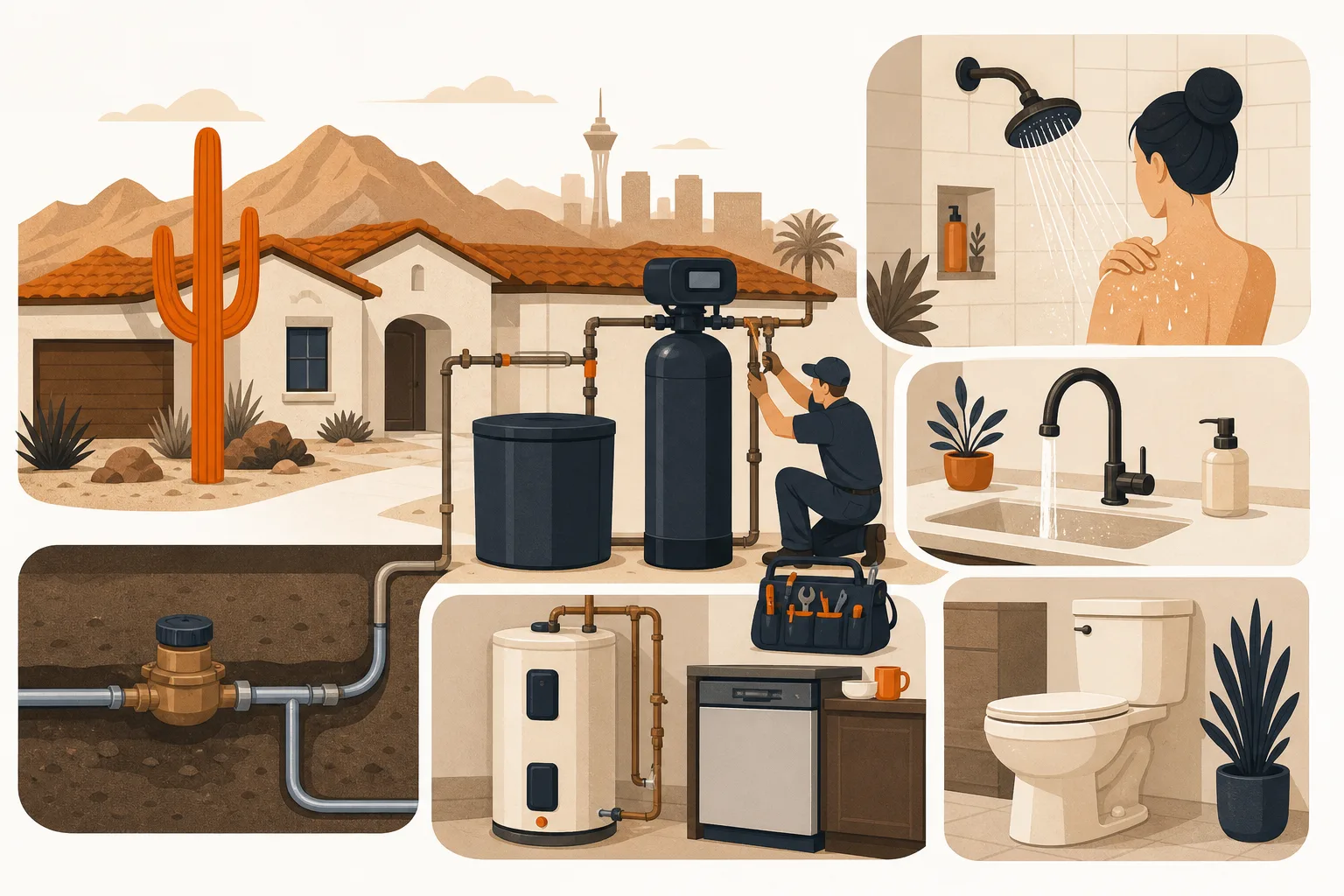
Las Vegas has very hard water, so many homeowners look at water treatment and softeners but are unsure how much time to budget. This guide lays out a realistic timeline from first call to your first shower with soft water so you can plan work, kids and pets around the visit.
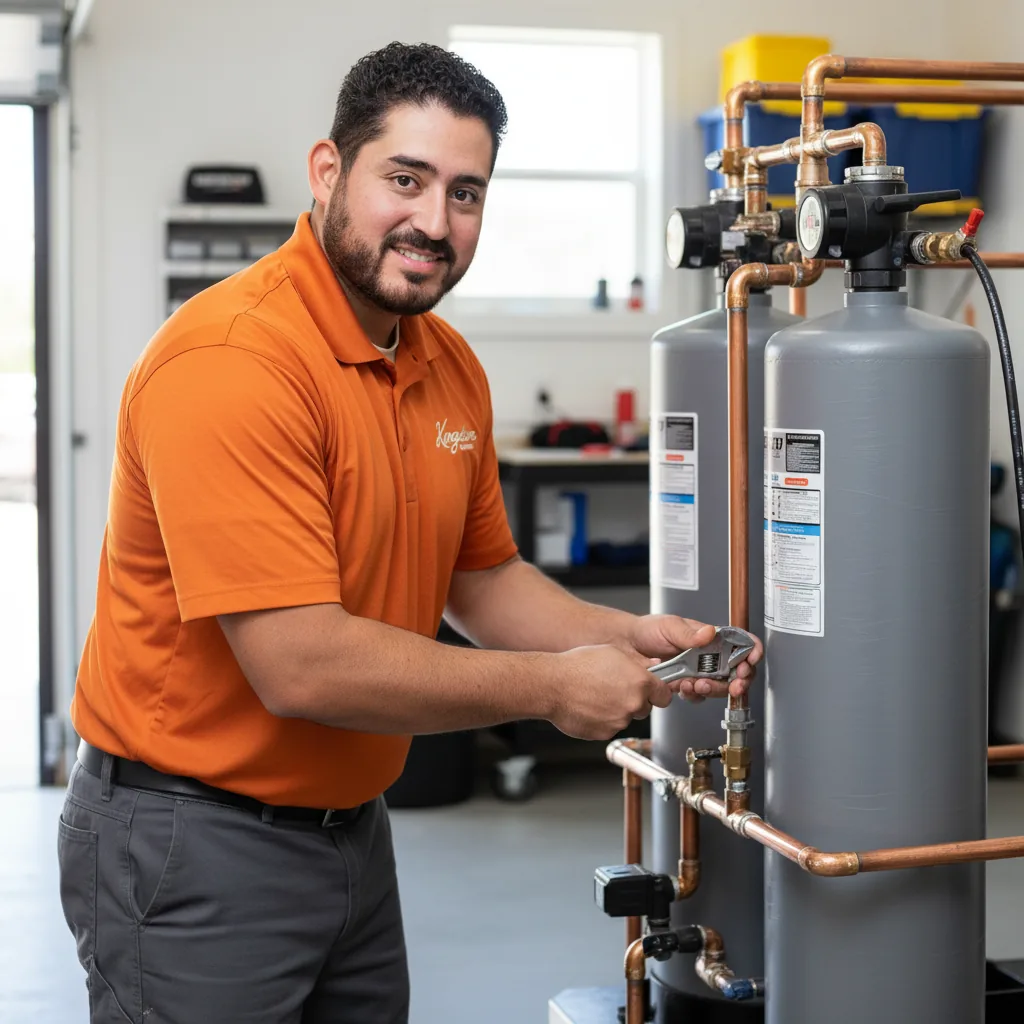
Why water softener installations move fast in Las Vegas but still need planning
For most Las Vegas homes, installing a water softener is not a multi-day construction project. Once a licensed plumber is on site with the right equipment, the physical installation is usually a same-day job. Industry guidance from installation walkthroughs notes that a straightforward residential softener install commonly takes about 2 to 4 hours of hands-on plumbing time when the plumbing is accessible and there is a proper loop in place. That general benchmark matches what we see in typical tract homes in the valley that were pre-plumbed for water treatment.
The part that often surprises homeowners is that the total timeline is longer than just those few hours on the day of work. You have time up front for testing your water, choosing the right capacity and configuration, getting on the schedule and deciding if you want to add whole-home filtration or under-sink reverse osmosis. Because Las Vegas water is classified as "very hard" by the Las Vegas Valley Water District and local utilities, at roughly 280 to 304 ppm or around 16 to 18 grains per gallon, it puts more demand on a softener than moderate water does. That means taking an extra day to choose the correct system can prevent the headaches of undersizing or overusing salt later.
A good way to think about it is in stages. There is the decision stage where you learn what you really need for your home and budget, the scheduling stage where you coordinate around your workday and any HOA or access issues, the installation day itself, and a short break-in and first-maintenance stage where you get used to the system. When done properly, the whole process feels smooth, and you are not left without water for long. As a family-owned Las Vegas plumber, Kingdom Plumbing walks homeowners through each stage so you know exactly when water will be off, when you can do laundry again, and when to expect your first shower with softened water.
What happens before installation day and how long that part usually takes
The timeline really starts when you first decide to look into water treatment and softeners. In Las Vegas, that decision often comes after you see white crust on shower glass and faucets, or you are tired of replacing fixtures that have been eaten up by mineral scale. Utility data from the Las Vegas Valley Water District and other local sources confirms our tap water often tests around 291 ppm to just over 300 ppm of hardness minerals. The U.S. Geological Survey considers anything above 180 ppm "very hard", so it is not surprising that many homeowners take this step soon after moving in.
Your first step is usually a conversation and a basic hardness check. While the LVVWD publishes hardness for the general system, an on-site test tells you what you are actually getting at your tap, especially if your neighborhood is on the edge of two service zones or you have an older or partially treated supply line. The EPA WaterSense program notes that water above about 120 mg/L, roughly 7 grains per gallon, is generally considered hard enough to justify softening. Since our valley water is well above that mark, discussing water treatment and softeners is typically not a question of "if" but of what size and type is appropriate.
From that first call to a firm decision on equipment, many homeowners take anywhere from a day to a week. You may want to review options such as standard ion-exchange softeners, twin-tank setups for high demand, or combined softener and whole-home filtration packages. If you live in a community with specific rules about where equipment can be placed, a quick site visit adds another day or two. Once you decide, scheduling usually looks a lot like booking any other plumbing job. Depending on season and your availability, Kingdom Plumbing can often get a water softener installation on the calendar within a few business days. We confirm access, parking, gate codes and where the softener loop or main water entry is located so that installation day runs on time.
- Confirm who in the household needs to be home for access and questions
- Locate your existing softener loop or main shutoff ahead of time
- Gather any HOA or property management requirements about exterior equipment
- Decide whether you want to add whole-home filtration or reverse osmosis now
- Plan a time when being without water for up to 90 minutes will not disrupt meals
What to expect hour by hour on a typical Las Vegas water softener install
On installation day, the most important question for many homeowners is how long the water will be off and when normal life can resume. For a home that already has a softener loop in the garage or side yard, a typical timeline looks like this: the first 30 to 45 minutes are spent verifying the plan, protecting the work area and shutting down the water. Next comes about 60 to 90 minutes of tying into the plumbing, mounting or leveling the tank and running the drain line with the required air gap. Industry installation guides describe four primary connections for a standard ion-exchange softener: inlet, outlet, drain and brine overflow, which helps explain why this is not just a simple "drop and plug" appliance.
The water is usually off only during the period when we are cutting into or reconnecting to the main line or softener loop. In many Las Vegas homes that is in the 30 to 90 minute range, after which cold water can be turned back on while the system is programmed and filled. Home Water Lab and similar step-by-step installation resources peg total install time at roughly 2 to 4 hours for a straightforward job, and our experience in valley homes matches that. Slab-on-grade construction here means we rarely have to run lines through basements, which keeps timelines more predictable. However, if we need to reroute a softener loop or correct older non-code drain connections, extra work can add an hour or more.
Programming and startup take the remaining time. Once the unit is physically connected and the drain line has a proper air gap as required by plumbing codes, the control head is set to your real hardness level, which in our area is usually around 16 to 18 grains per gallon for city water per local utility reports. Correct settings matter because an under-programmed unit can leave scale behind, while an over-programmed one can waste salt and water during regeneration. At Kingdom Plumbing, we walk you through how the bypass valve works, when the system will regenerate and how to refill salt. In most cases, you can start using water again right after we complete testing, with the first full batch of softened water arriving after the initial regeneration later that day or overnight.
- Expect 2 to 4 hours on site for a standard installation with a good loop
- Plan for 30 to 90 minutes of water being fully shut off during tie-in
- Allow extra time if your loop needs rerouting or code upgrades
- Ask your plumber to review bypass operation before they leave
- Wait until after the first regeneration before judging water feel
How local water hardness and system choice affect installation timing
Las Vegas is not an average-water market. The Las Vegas Valley Water District's most recent water quality reporting and local utility guides show hardness commonly in the 280 to 304 ppm range across the valley. That translates to roughly 16 to 18 grains per gallon, which national sources label as very hard. This level of mineral content means a small system sized for milder climates can struggle and regenerate too often, which in turn uses more salt and sends more water to the drain. It also means that programming the right hardness setting during installation is not optional. The EPA's WaterSense softener guidance specifically encourages demand-initiated regeneration controls and correct hardness input to limit water waste.
From a timing standpoint, this has a few impacts. First, your plumber will spend a bit more time upfront selecting or confirming a system that can handle our hardness without constant cycling. That might mean recommending a higher grain-capacity tank for a family of four or pairing the softener with pre-filtration if your water has noticeable sediment. Second, demand-initiated controls take a few more minutes to set up than simple time clocks, since they measure actual water use. Third, local code compliance on drainage and discharge matters because regeneration water needs a legal path to a drain with the proper air gap. Correcting a too-small or incorrectly placed drain can add time on installation day, but it prevents messy overflows and code issues later.
The choice between a standard single-tank system, a twin alternator design or a combined water treatment and softeners package changes the installation footprint as well. Twin-tank setups and systems with whole-home filtration typically require more wall space, more careful planning of pipe routes and possibly longer drain lines. Each additional component adds a bit of time for mounting, leveling, connecting unions and verifying flow direction. Guides that catalog common installation mistakes list mis-routed flow, missing bypass valves and undersized or sloped drain runs among the problems that can lead to callbacks. Taking an extra half hour during installation to get these details right saves you from surprise downtime later if a unit has to be re-piped.
What happens after installation: first regeneration, fine-tuning and maintenance
Once your water softener is installed and programmed, there are still a few timeline points to understand. Most systems are set to run their first full regeneration after they have processed a certain amount of water or at a scheduled low-use time, often in the middle of the night. In practical terms, you will usually start to notice "slipperier" water from the ion-exchange process within hours, but the house as a whole feels fully softened after that first complete cycle. The EPA's WaterSense materials point out that this regeneration process is when the unit sends brine through the resin bed to recharge it, and it is also when most of the system's water use occurs.
In the first week after installation, we recommend paying attention to a few things: your water feel, soap lathering, and the salt level in the brine tank. If your hardness setting is dialed in correctly for our local 16 to 18 grains per gallon water, you should see good lather with less soap and fewer spots on dishes. If things seem off, a minor adjustment may be needed. Many manufacturers and the WaterSense program suggest checking salt levels every 4 to 6 weeks and keeping the brine tank at least one-third full, but not heaping full. That practice reduces the risk of salt bridging, where a crust forms and prevents proper brine formation.
Over the long term, water treatment and softeners are low-maintenance compared with many other home systems, but they are not set-and-forget. Annual service to inspect the valve, clean the injector, verify drain performance and review your settings against current local hardness reports is time well spent. Local water agencies occasionally adjust blending or treatment, which can change hardness slightly year to year. Having a licensed plumber familiar with Las Vegas water check your system helps maintain efficiency. At Kingdom Plumbing, we include a walkthrough of ongoing care at the end of the installation visit, so you know when to call us, what a normal regeneration sounds like, and how to use the bypass if you have special cleaning tasks that do not need softened water.
- Expect your first full-home soft water after the initial regeneration cycle
- Watch salt levels weekly for the first month to learn your usage pattern
- Schedule annual service to clean and check the control valve and drain
- Ask for a quick demo of how to recognize a normal regeneration sound
- Call a pro if you see standing water around the softener or drain line
When timelines stretch: situations that make softener projects take longer
While a straightforward Las Vegas installation often fits neatly into a morning or afternoon, there are real-world situations that can extend the timeline. One common example is a home that was not pre-plumbed with a softener loop. In that case, we may need to expose part of the main water line in a garage wall or in the side yard, reroute piping and add shutoff and bypass valves. That level of work can push the on-site time toward the longer end of the 2 to 4 hour guideline or beyond, particularly if we uncover aging fittings that should be brought up to current code. Slab-on-grade foundations and caliche soil also influence how easily new lines can be routed outside.
Another factor is combining water treatment and softeners with other upgrades. If you choose to install whole-home filtration, under-sink reverse osmosis or to reroute an existing loop that was placed in an inconvenient location, the project becomes a more involved plumbing job. Each added component means more connections, more supports, and more time spent flushing and testing so that no part of your system is left with trapped air or debris. In some cases, we recommend splitting large multi-component projects into two visits to keep daily water shutdown times comfortable for the household.
Permitting and access can also affect timing. While many softener swaps on an existing loop are fairly streamlined, adding new drain lines or making structural changes may trigger local permitting requirements, especially in multi-unit or commercial settings. For property managers, coordinating dates with tenants, security and maintenance staff can add days between decision and installation. By talking through these possibilities during your first conversation with a plumber, you avoid surprises later. Kingdom Plumbing is licensed, bonded and insured in Nevada under Contractors License #0085422, and we handle the code side so that you can focus on how the work fits your schedule instead of worrying about technical details.
- Check your latest Las Vegas Valley Water District water quality report so you have a baseline hardness level before you talk with a plumber.
- Walk around your home to locate the main shutoff valve and any existing softener loop or capped stubs in the garage or side yard.
- Make a list of every fixture that bothers you because of spotting or scale so your plumber understands your priorities and usage patterns.
- Decide whether you want water treatment and softeners only for inside the home or also for irrigation zones that serve pools or water features.
- Ask your HOA or property manager if there are rules about where equipment can be placed or whether exterior tanks must be screened from view.
- Think about future plans, such as adding a bathroom or casita, so the system can be sized with a reasonable margin for growth.
- Set aside a block of 3 to 4 hours on a day when you can be home to answer questions and test fixtures after installation.
- Call a licensed local plumber like Kingdom Plumbing to discuss options, code requirements and a flat-rate planning range before you book a date.
- Review whether you also want whole-home filtration or under-sink reverse osmosis so they can be installed at the same time as the softener.
- Plan where salt bags will be stored and how you will access the brine tank so routine refilling is quick and safe.
Frequently asked questions
- How long does a typical water softener installation take in Las Vegas?
- For most Las Vegas homes with an existing softener loop, a standard water softener installation usually takes about 2 to 4 hours on site. The water is typically turned off for only 30 to 90 minutes during the plumbing tie-in, with the rest of the time spent on mounting, programming and testing the system.
- Will I be without water all day while a softener is installed?
- You should not be without water all day for a standard installation. In most cases, the full shutoff window is under an hour and a half while the plumber connects to the main line or loop, and then cold water can be restored while the softener is configured and flushed. Planning laundry and showers outside that window keeps the disruption minimal.
- When will I actually feel the difference of softened water after installation?
- You will usually notice some difference in water feel within hours as the system fills and begins operating, especially at fixtures closest to the unit. The biggest change often comes after the first full regeneration cycle, which is commonly scheduled overnight, since that is when the resin bed is fully conditioned to handle our local 16 to 18 grains per gallon hardness.
- Does Las Vegas’s very hard water make installation take longer?
- The physical act of connecting a softener does not take much longer, but our very hard water does mean more attention is needed for sizing and programming. Local utilities report hardness around 280 to 304 ppm, so your plumber should verify hardness, set the control valve correctly and confirm that the drain and brine systems can handle more frequent regenerations. That extra setup time helps prevent wasted salt and premature wear.
- How often will I need to add salt to a new water softener here?
- EPA WaterSense guidance suggests checking salt every 4 to 6 weeks, and that is a good starting point in Las Vegas because our high hardness means more frequent regenerations. Actual refill timing depends on your household size and system capacity, but keeping the brine tank at least one-third full and never completely heaped is a reliable rule of thumb.
- Can I combine water softener installation with whole-home filtration in one visit?
- Yes, many Las Vegas homeowners install water treatment and softeners at the same time as whole-home filtration to address both hardness and taste or sediment. Doing the work in one visit often makes sense, but it does extend the on-site time because the plumber must mount and connect more components and thoroughly flush each one. Discussing this up front helps your plumber block enough time and limit how long your water is turned off.
- Is it worth hiring a plumber if a softener installation only takes a few hours?
- Even though the on-site work window is short, hiring a licensed plumber protects you from common mistakes like reversed inlet and outlet connections, missing drain air gaps or mis-set hardness levels. Local water is very hard and our homes are mostly slab-on-grade, so a poorly installed system can cause leaks that are hard to spot or waste significant water during regeneration. A professional who understands Las Vegas codes and conditions will complete the job efficiently and safely.
- How far in advance should I schedule a water softener installation in Las Vegas?
- In many cases you can get on the schedule within a few business days, but lead times vary by season and your own availability. It is wise to call at least a week ahead if you are trying to coordinate around guests, work-from-home obligations or HOA access windows. That buffer gives you time to review options and prepare the installation area before the plumber arrives.
Talk to Kingdom Plumbing about water treatment and softeners, or call (702) 840-5037. Family-owned, NV Contractors License #0085422, upfront flat-rate pricing.
Kingdom Plumbing is a family-owned, licensed Las Vegas plumber (NV NV Contractors License #0085422) serving the valley since 2018. Questions about how this affects your home? Call (702) 840-5037. Dealing with a burst pipe or flooding right now? Our emergency plumbers in Las Vegas answer 24/7.