
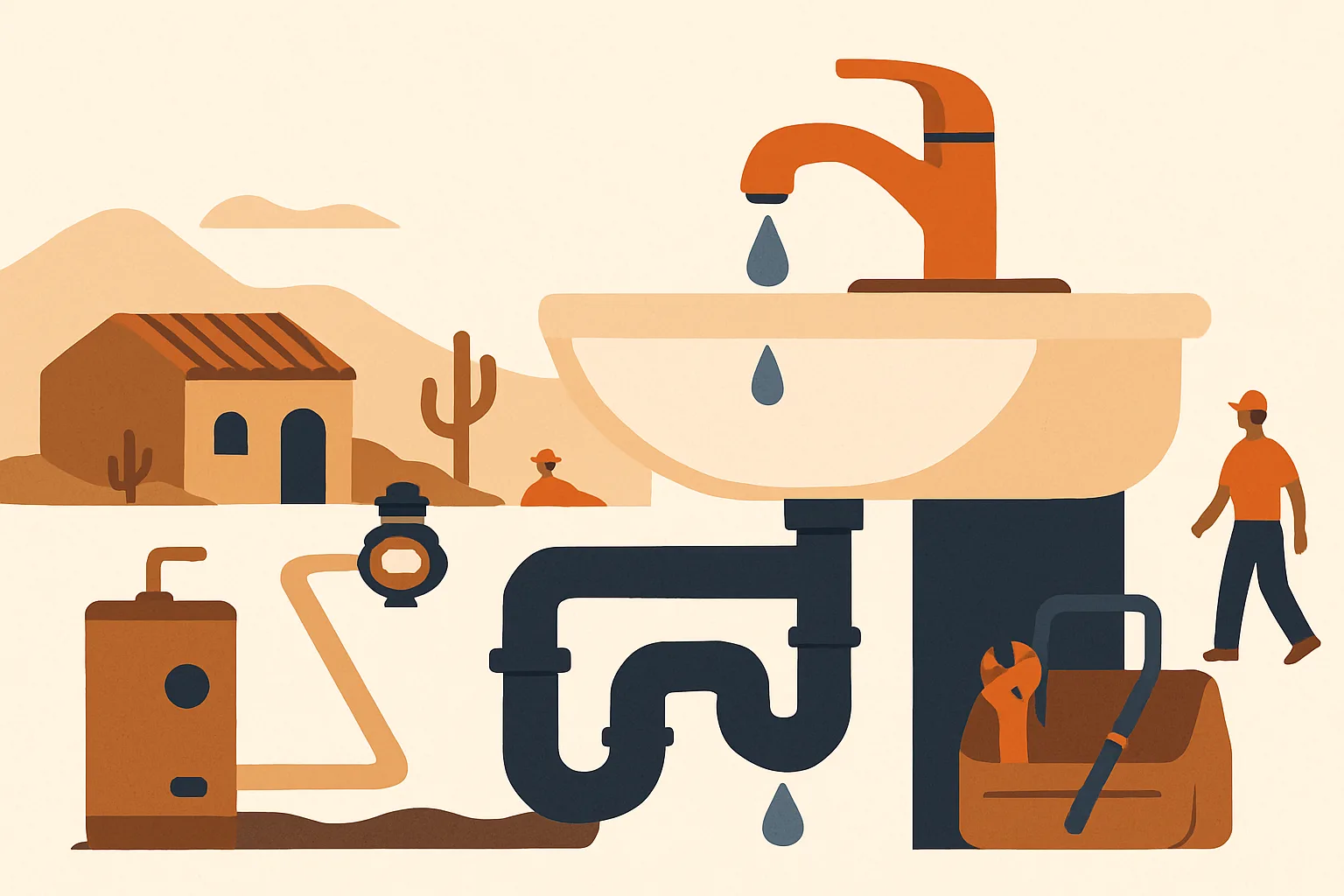
Faucet and fixture projects seem simple, but in Las Vegas they go wrong fast when you underestimate hard water, measurements, or hidden plumbing issues. Avoiding a few common mistakes can save you from leaks, damage, and repeat work when you plan faucet and fixture repair and installation.
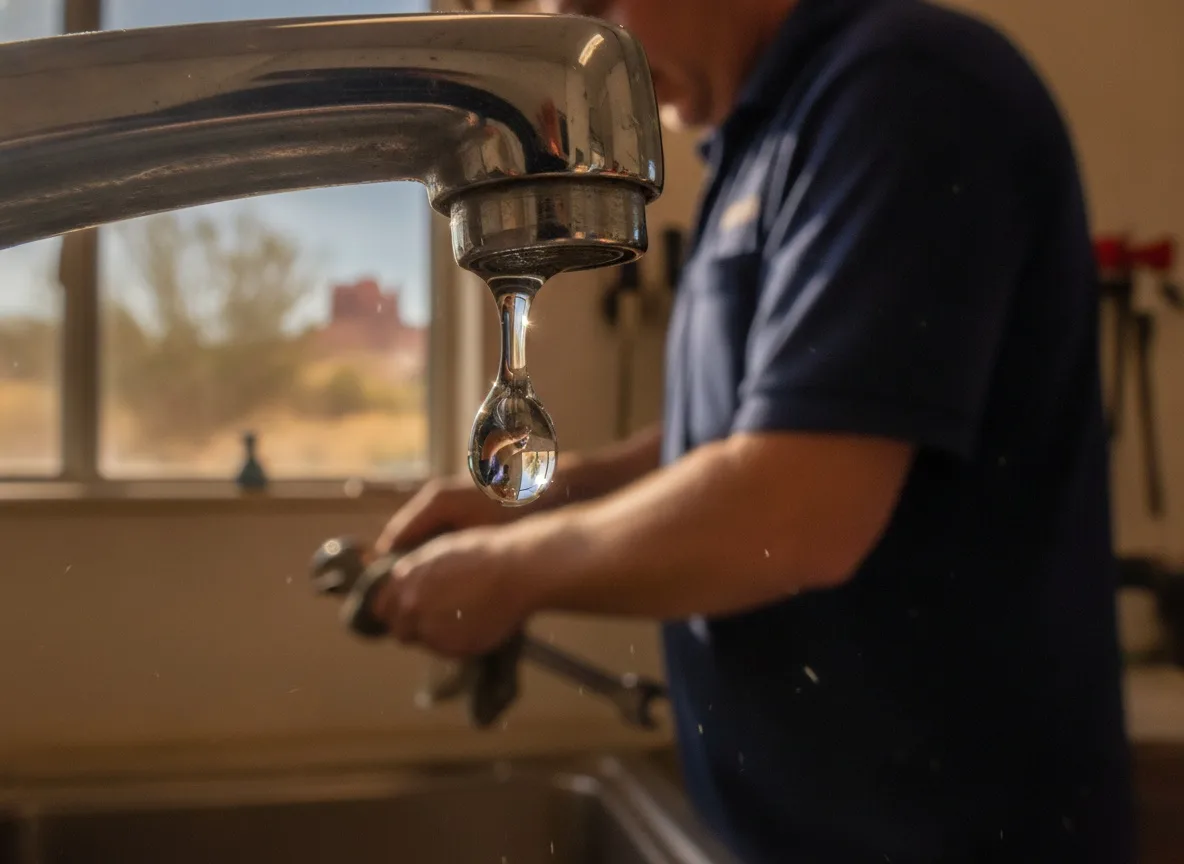
Why do “simple” faucet projects cause so many problems in Las Vegas homes?
On paper, replacing a faucet looks easy. You buy a shiny new fixture, loosen a few nuts, and swap it out. In real Las Vegas homes with slab-on-grade foundations and very hard city water, faucet and fixture projects are rarely that simple. The problems usually start long before anyone picks up a wrench.
Per the Las Vegas Valley Water District, our tap water runs about 280 parts per million of hardness, which they classify as very hard. That level of mineral content is tough on cartridges, aerators, and any moving faucet parts. If you choose the wrong fixture or skip maintenance-friendly features, you are more likely to see drips, stiffness, and clogs sooner than in a softer-water city. When you pair that with older shutoff valves, tight sink cabinets, and sometimes corroded supply lines, a quick weekend project can turn into a leak or even water damage.
A good faucet and fixture repair and installation service looks at the whole picture, not just the shiny trim. They pay attention to shutoffs, access, water hardness, and how the new hardware will perform over time. The biggest homeowner mistakes come from treating the job as a cosmetic swap instead of a small plumbing remodel.
- Las Vegas water is very hard and tough on faucet internals.
- Older homes may have corroded valves and lines under the sink.
- Tight cabinets can make access and sealing more difficult.
- A faucet project is really a plumbing project, not just decor.
Mistake 1: Buying a faucet that does not match your sink or tub openings
One of the most common and costly mistakes is buying a fixture based on looks alone and finding out during installation that it does not fit your sink, countertop, or tub. Sinks are drilled with a certain number of holes and specific spacing. If your new faucet does not match, you end up improvising with plates, drilling, or returning parts in the middle of the job.
According to trade guidance on faucet installation mistakes, homeowners often forget to check the number of holes, the distance between them on widespread faucets, and the thickness of the deck. That is how you end up with a single-hole faucet and a three-hole sink, or a widespread set whose valves will not reach the existing openings without modification. In a bathroom with a stone top or an older tub, drilling is not always practical, and mistakes can be permanent.
In Las Vegas kitchens and baths, access is often tight because cabinets are shallow and plumbing is tucked far back under the deck. If you discover a mismatch once the old faucet is removed, you can be left without a working sink until the right fixture is purchased. A professional faucet and fixture repair and installation service will always measure the existing layout first and recommend products that fit your exact openings, so you do not waste time and money on returns.
For homeowners planning upgrades, the takeaway is simple. Before you click “buy,” verify hole count, spacing, and deck thickness, and consider sending photos to a licensed plumber for a quick check. That step alone can prevent one of the most frustrating faucet upgrade mistakes.
- Count the number of faucet holes in your sink or counter.
- Measure center-to-center spacing on widespread faucet holes.
- Check how thick your countertop or sink deck is.
- Confirm that any side sprayer or soap dispenser has a matching hole.
Mistake 2: Underestimating total cost and choosing only by sticker price
Another big misstep is looking only at the faucet box price and assuming installation will be a token add-on. In reality, the labor to remove the old faucet, deal with stuck parts, and install the new unit often costs more than the hardware itself, especially on older Las Vegas homes with hard-water buildup. When homeowners do not budget realistically, they are tempted to cut corners halfway through the project.
Several national cost guides give a sense of normal pricing. A typical faucet repair that involves replacing internal parts averages about $210, according to Angi. For a new installation, Angi cites a range of roughly $100-$575 depending on how complex the job is and whether plumbing needs to be modified. A Las Vegas-focused labor guide reports that standard faucet installation often takes 1-3 hours, with average labor-only costs around $150-$350 when you factor in common hourly rates.
Local estimates for straightforward kitchen or bathroom faucet installations in accessible locations often fall around $150-$250 for labor, with more complex projects such as tub faucets or new supply connections running closer to $250-$400 or higher. That does not include the faucet itself, which can range from simple models near $50 to high-end fixtures at $500 or more. All of these figures are ballparks, but they show why chasing the cheapest labor quote or expecting a 15-minute install is often unrealistic.
A better approach is to treat faucet and fixture repair and installation as an investment in both performance and reliability. Ask for upfront flat-rate pricing, clarify what is included, and remember that dealing with stuck shutoffs, corroded threads, or sealing a new drain can legitimately add time. When you budget for professional work, you are less likely to be pressured into shortcuts that can cost you later, such as skipping valve replacement or leak testing.
- Factor in both labor and the cost of the faucet itself.
- Expect higher labor cost if access is tight or parts are corroded.
- Plan a budget that allows for shutoff valve or supply line upgrades.
- Ask what is included in the quoted price before approving work.
Mistake 3: Ignoring shutoff valves, supply lines, and hard-water wear
Homeowners often focus on the visible fixture and overlook the small but critical parts that feed it. Shutoff valves, flexible supply lines, and seals live in a harsh environment, especially in Las Vegas where mineral deposits from very hard water can seize moving parts and corrode metal over time. If those components are not inspected and addressed during a faucet project, a neat-looking new fixture may be sitting on top of failing infrastructure.
Industry checklists of common faucet installation mistakes call out skipping shutoff valve inspection as a major issue. Old angle stops that have not been turned in years tend to freeze or leak once you try to operate them. A stuck valve can break in the closed position and leave that sink without water, or worse, fail and leak behind the cabinet. The same applies to old or incorrectly sized supply lines. Lines that are too short get stressed, and lines that are too long can kink and restrict flow.
In a city with very hard water, cartridges and aerators also take a beating. If you are repairing a leaky faucet without addressing mineral buildup and worn components, the fix may be short-lived. A professional plumber will often suggest replacing questionable shutoffs and supply lines during faucet and fixture repair and installation, and may recommend fixtures with cartridges or finishes known to hold up better in hard water conditions.
When you are planning your project, make it a point to ask how your shutoff valves and supply lines will be evaluated. It is usually far cheaper to replace aging parts under controlled conditions than to respond to a surprise leak under the cabinet later on.
Mistake 4: Overtightening, skipping sealant, and not testing for leaks
A faucet can look perfect from above the sink and still be one tiny drip away from cabinet damage below. One of the biggest technical mistakes highlighted in plumbing trade resources is overtightening mounting hardware or supply connections. Tight spaces and basic tools make it tempting to crank down hard until something “feels” secure. The problem is that too much force can crack porcelain sinks, deform gaskets, strip threads, or damage the new fixture body itself.
Another frequent shortcut is using no sealant where it is needed, or using it in the wrong place. Some faucets come with integral gaskets that seal against the deck, while others expect a thin bead of plumber’s putty or silicone under the base or around the drain flange. If those sealing steps are skipped or improvised, water can sneak under the escutcheon or around the drain and soak into countertops or cabinet bases over time.
Finally, many do-it-yourself installations stop as soon as water flows from the spout. Professional faucet and fixture repair and installation goes further. It includes pressurizing the lines, cycling handles through hot and cold, then thoroughly inspecting every connection under the sink and around the base for even the slightest bead of water. Industry guides stress that catching micro-leaks during this test is key, because a single drip per minute adds up quickly and can go undetected until you smell musty wood or see swelling particleboard.
If you are hiring a plumber, ask how they protect sinks from overtightening, what sealing materials they use, and how they perform final leak checks. You want a methodical process, not just a quick turn-on-and-go.
Mistake 5: Choosing DIY when the risks, access, or time do not really allow it
There is nothing wrong with being handy, but faucet work is more than cosmetics once you get under the sink. Between cramped cabinets, corroded nuts, and the need to control water flow safely, it sits right on the line where many Las Vegas homeowners start a project and then call for help halfway through. That can actually increase your total cost, because the plumber must first undo partial work before installing things correctly.
Current labor guides note that simple, accessible faucet installations often run 1-2 hours, while more involved or obstructed jobs can take 2-4 hours. That is for a trained tech with the right tools. If you must make two hardware store trips, fight stuck parts, or work around a disposal, you can easily spend an entire day under one sink. In that time, a professional could have completed the work, tested for leaks, and addressed any hidden issues such as failing valves or drain seals.
DIY also increases the chance of missing larger patterns, like whole-home water pressure problems or widespread hard-water damage to fixtures. A licensed plumber who regularly provides faucet and fixture repair and installation will notice when your faucet issue is a symptom of something bigger, such as poor pressure regulation or piping problems. Catching those early is often more important than the faucet itself.
If you value your time, would rather avoid surprises, or have any doubt about shutoff valve condition or access, it is reasonable to treat this as a professional job from the start. You can still choose your faucet style and finish, but let a pro handle the water side.
How to pick the right plumber for faucet and fixture repair and installation in Las Vegas
Once you know the common mistakes, the next step is finding a plumber who actively avoids them. For faucet work in Las Vegas, you want someone who understands local water conditions, is comfortable working in tight cabinets, and is transparent about costs. The goal is to get a faucet that not only looks good on day one but also holds up under very hard water and daily use.
Start with licensing and insurance. In Nevada, plumbing contractors must be properly licensed, bonded, and insured. A company should be able to provide its license number so you can verify it. Kingdom Plumbing, for example, is family-owned, has been serving the Las Vegas valley since 2018, and is licensed under NV Contractors License #0085422. That kind of transparency is a base requirement, not a bonus.
Next, focus on process and communication. Ask how they handle shutoff valve issues, what their typical faucet and fixture repair and installation visit includes, and whether they use upfront flat-rate pricing so you know the cost before work starts. It is also worth asking what kind of guarantee they offer on workmanship. Kingdom Plumbing, for instance, offers a 100% satisfaction guarantee and 24/7 emergency response, which matters if you ever have an urgent leak.
In a market like Las Vegas, where homes range from older builds with galvanized fittings to newer properties with modern fixtures, choosing a plumber who takes the time to evaluate your specific situation is key. When you are ready, you can call Kingdom Plumbing at (702) 840-5037 to schedule professional faucet and fixture repair and installation and avoid the pitfalls that turn simple upgrades into headaches.
- undefined
- undefined
- undefined
- undefined
- undefined
- undefined
- undefined
- undefined
- undefined
Frequently asked questions
- How much does it usually cost to install a new faucet in Las Vegas?
- Several national guides give a good baseline. Angi reports that new faucet installations typically run between about $100 and $575 depending on how complex the job is and whether any plumbing must be modified. Local-focused guides suggest that labor alone for many standard installations falls in the $150-$350 range, with more complex setups or valve work adding cost. The price of the faucet itself is separate and depends on the model you choose.
- Is it worth repairing a leaky faucet or should I just replace it?
- Angi estimates that average faucet repair work, such as replacing cartridges or seals, costs around $210, which can make sense for newer or higher quality fixtures. If your faucet is older, heavily affected by hard water, or has multiple issues, replacement during a planned visit may be more cost effective. A plumber can compare the repair cost against the price of a new faucet and advise based on the overall condition of your valves and supply lines.
- How long should a professional faucet installation take?
- A 2025-2026 labor guide notes that straightforward installations in good conditions typically take about 1-2 hours. More involved jobs that include dealing with tight spaces, resealing drains, or addressing shutoff valves can take 2-3 hours and sometimes up to 3-4 hours. Your plumber should be able to give a more specific estimate after seeing the actual sink, cabinet, and existing plumbing.
- What are the most common mistakes people make when installing faucets?
- Trade resources highlight several recurring mistakes: buying a faucet that does not match the existing hole pattern, overtightening mounting or supply nuts, ignoring the condition of shutoff valves, and skipping thorough leak checks after the water is turned back on. In Las Vegas, another common oversight is failing to account for very hard water, which can accelerate wear on cartridges and seals. Hiring a professional faucet and fixture repair and installation service helps avoid these pitfalls.
- Does Las Vegas hard water really affect my faucets that much?
- Yes. The Las Vegas Valley Water District reports that local water has a hardness of about 280 parts per million, which falls in the very hard category. That much mineral content tends to clog aerators, wear out cartridges, and leave scale on finishes more quickly than in softer water areas. Choosing appropriate fixtures and having them installed and serviced with hard water in mind can improve performance and lifespan.
- Should I replace my shutoff valves when I install a new faucet?
- If your shutoff valves are older, difficult to turn, or show any signs of corrosion or leaking, it is wise to consider replacing them during a faucet project. Plumbing trade guidance emphasizes that ignoring aging valves is a common mistake that leads to leaks later on. Since the water is already off and the area is accessible during faucet and fixture repair and installation, this is often the most convenient and cost effective time to upgrade them.
- Can I install a new faucet myself or do I really need a plumber?
- Some homeowners with tools and experience can handle basic swaps, but many Las Vegas faucet projects involve tight spaces, mineral buildup, and stuck hardware that make DIY risky. Labor guides show that a professional often completes the job in 1-3 hours, including inspection and leak testing, while a first-time DIY effort can take much longer and still miss hidden issues. If you are unsure about shutoff valve condition or do not want to risk a leak under your cabinets, hiring a licensed plumber is usually the safer choice.
- What should I ask a plumber before hiring them for faucet and fixture work?
- Ask if they are licensed, bonded, and insured in Nevada, and request their license number. Then ask how they handle common problems like stuck shutoff valves, what their faucet and fixture repair and installation visit includes, and whether they provide upfront flat-rate pricing. It also helps to ask about their experience with Las Vegas hard water and what kind of workmanship guarantee they offer.
Talk to Kingdom Plumbing about faucet and fixture repair and installation, or call (702) 840-5037. Family-owned, NV Contractors License #0085422, upfront flat-rate pricing.
Kingdom Plumbing is a family-owned, licensed Las Vegas plumber (NV NV Contractors License #0085422) serving the valley since 2018. Questions about how this affects your home? Call (702) 840-5037. Dealing with a burst pipe or flooding right now? Our emergency plumbers in Las Vegas answer 24/7.