Turn on the shower and get a weak trickle instead of a strong spray, and the whole morning feels off. Low water pressure is one of the most common calls we get from Las Vegas homeowners, and the causes run from a quick fix you can do yourself to a worn part hidden behind a wall. The trick is knowing which one you are dealing with before you start taking anything apart. This guide walks you through how to narrow it down, starting with the single most useful question you can ask.
Key Takeaways
• The first move is to figure out whether low pressure hits your whole house or just one faucet, that one answer points you straight at the cause. • One slow fixture is usually a clogged aerator or showerhead thick with hard-water scale, and cleaning it is a safe job you can do yourself. • Whole-house low pressure usually means a failing pressure regulator, a hidden leak, corroded old galvanized pipes, or a problem on the city supply side. • Las Vegas has some of the hardest water in the country, so mineral scale building up inside fixtures and pipes is a common culprit here. • If cleaning the aerators does not fix it, or the pressure keeps dropping, it is time to have a plumber find the real source.
Start Here: Whole House or Just One Fixture?
Before you touch a tool, take a few minutes to figure out how far the problem spreads. This one step saves you from chasing the wrong fix. Walk through the house and run the cold, then the hot, at several fixtures, the kitchen sink, each bathroom faucet, the shower, and an outside hose bib. Pay attention to where the pressure is weak and where it is strong. What you find tells you almost everything about where to look next.
- If only one faucet or showerhead is weak while everything else runs strong, the problem is almost certainly right at that fixture.
- If the weak pressure shows up at every fixture in the house, the cause is somewhere on your main line, your pressure regulator, or the city supply feeding the home.
- If only the hot side is weak everywhere, the trail points toward your water heater or the hot lines running from it, not your incoming pressure.
- If pressure is fine early but drops when your irrigation or a neighbor's sprinklers kick on, the supply side is worth a closer look.
One Weak Fixture: Usually a Clogged Aerator
When the trouble is limited to a single faucet, the fix is often refreshingly simple. The small screen at the tip of most faucets, called the aerator, catches sediment and mineral buildup over time. Because Las Vegas tap water comes from the Colorado River and Lake Mead and is among the hardest municipal water in the country, that buildup is mostly hard-water scale, chalky mineral deposits that slowly choke the flow to a dribble. A showerhead clogs the same way, its little nozzles crusting over until the spray splits and weakens. The good news is that clearing scale out of an aerator or showerhead is a safe job most homeowners can handle in a few minutes.
How to Clean a Clogged Aerator or Showerhead
- Unscrew the aerator from the faucet tip by hand, or use pliers padded with a cloth so you do not scratch the finish. Most showerheads twist off the same way.
- Rinse out the loose grit, then soak the parts in plain white vinegar for a few hours to dissolve the hard-water scale. An old toothbrush clears out whatever is left.
- Rinse everything clean, reassemble, and run the faucet. If the flow is back to normal, you just solved it for the cost of a splash of vinegar.
- If cleaning does not bring the pressure back, or the aerator is corroded and crumbling, swap in an inexpensive replacement from any hardware store before assuming something bigger is wrong.
Whole-House Low Pressure: The Usual Suspects
If cleaning the fixture did not help, or every faucet in the house runs weak, the cause is upstream on the water's way into your home rather than at the fixtures themselves. Here are the four we track down most often in the valley.
A Failing Pressure Regulator
Most Las Vegas homes have a pressure regulator, also called a PRV, usually near where the main water line enters the house or by the front hose bib. Its job is to knock the strong pressure coming off the city street down to a level that is safe and comfortable for your home's pipes and fixtures. When a regulator wears out, it can drift the wrong way and choke your pressure down to a trickle throughout the house, or, less often, let too much pressure through. A regulator is a mechanical part that wears out over the years, and replacing one is a job for a plumber because it sits on the main line under full pressure. A pro can confirm the reading with a gauge and set the new one to the right target for your home.
A Hidden Leak
A leak somewhere in your supply line steals pressure before the water ever reaches your faucets. If a line is leaking underground, under the slab, or inside a wall, the pressure can fade while the water quietly escapes where you cannot see it. Watch for a patch of yard that stays green or soggy when everything around it is dry, the sound of water running when every fixture is off, or a warm spot on the floor. A hidden leak will not fix itself and tends to get worse, so it is worth having found and repaired quickly.
Corroded Galvanized Pipes
Older Las Vegas homes were often plumbed with galvanized steel pipe. Over the decades these pipes rust and scale from the inside out, and the mineral-heavy desert water speeds that along. The opening inside the pipe narrows as the buildup thickens, until a pipe that once carried a full flow can only pass a fraction of it. Whole-house pressure that has slowly faded over years, especially in an older home, often points right here. You cannot reverse it by cleaning from the inside, the real fix is repiping the corroded sections, which a plumber can scope and price for you.
The City Supply Side
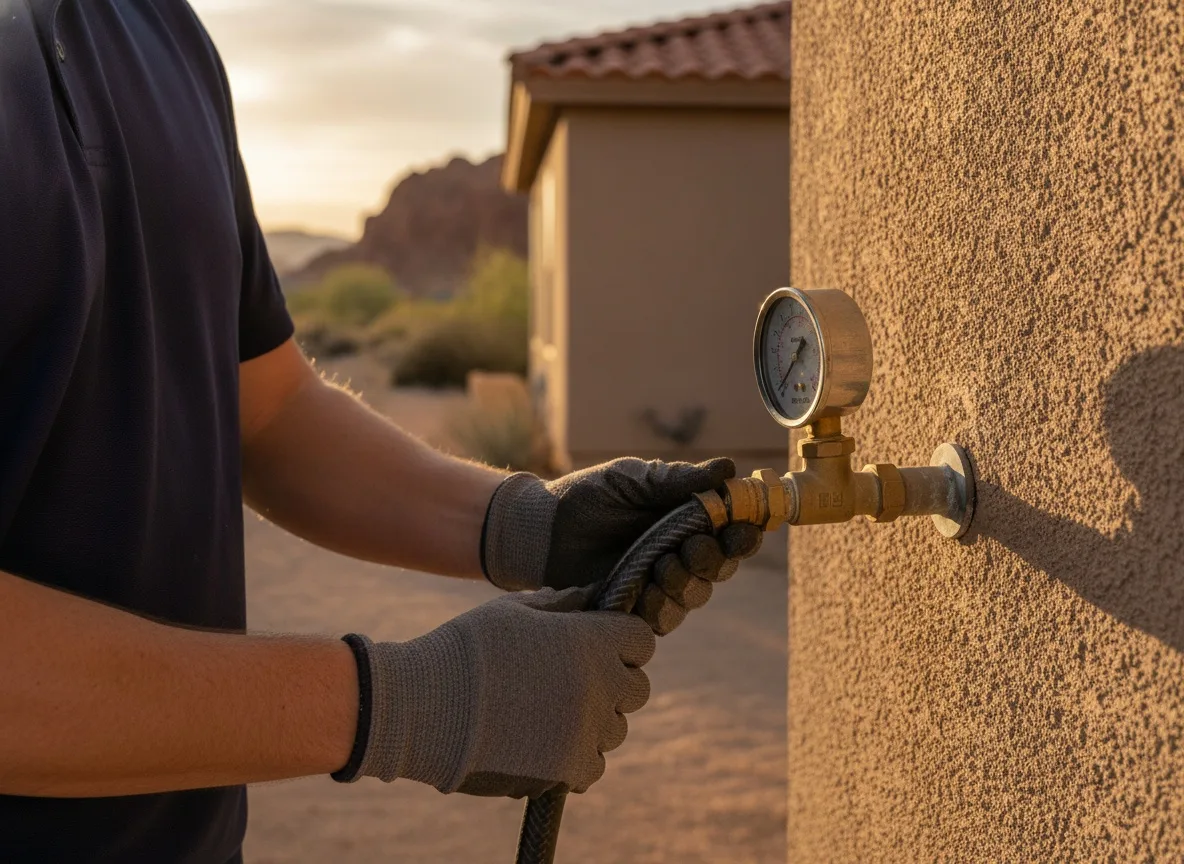
Sometimes the problem is not in your home at all. A water main repair, heavy demand during peak irrigation hours, or a shutoff valve left partly closed at the meter can all drop the pressure coming to your house. A quick way to sense this: check the pressure at the hose bib closest to where the water enters your home, before it passes through your regulator. If it is weak there too, the issue may be on the supply side, and your water provider or a plumber can confirm it. Also make sure the main shutoff valve at your meter is fully open, since a valve left half-closed after past work is a surprisingly common cause.
When to Stop and Call a Plumber
Cleaning an aerator or checking that your shutoff valve is fully open is smart do-it-yourself work. But once the trail leads to the pressure regulator, the main line, or pipes inside your walls, it is time to bring in a pro, because those repairs sit under full pressure and mistakes get expensive fast. That is where our plumbing repair team comes in, tracking the pressure drop back to its real source so we fix the actual problem instead of guessing. We test your pressure, check the regulator, look for hidden leaks, and inspect your lines, then walk you through what we find in plain language.
Kingdom Plumbing is a family-owned Las Vegas plumber with two locations on the northwest side, on W Cheyenne Ave in the 89129 area and Farm Rd in 89131. When you call our 24/7 emergency line, a real person answers, not a machine. Every job starts with an upfront, flat-rate quote you approve before any work begins, and our work is backed by a 100% satisfaction guarantee. We are licensed, bonded, and insured under NV Contractors License #0085422, with a 4.9-star rating across 611 reviews. If your water pressure has dropped and you want it found and fixed for good, call us at (702) 840-5037.
Frequently Asked Questions
How do I know if my low water pressure is a whole-house problem or just one fixture?
Can Las Vegas hard water really cause low water pressure?
Is it safe to clean my own faucet aerator or showerhead?
Why is only my hot water low while the cold runs fine?
When should I stop trying to fix low pressure myself and call a plumber?
Have a plumbing question or a problem right now?
Call (702) 840-5037Burst pipe or flooding that can't wait? Our 24/7 emergency plumbers in Las Vegas dispatch around the clock.