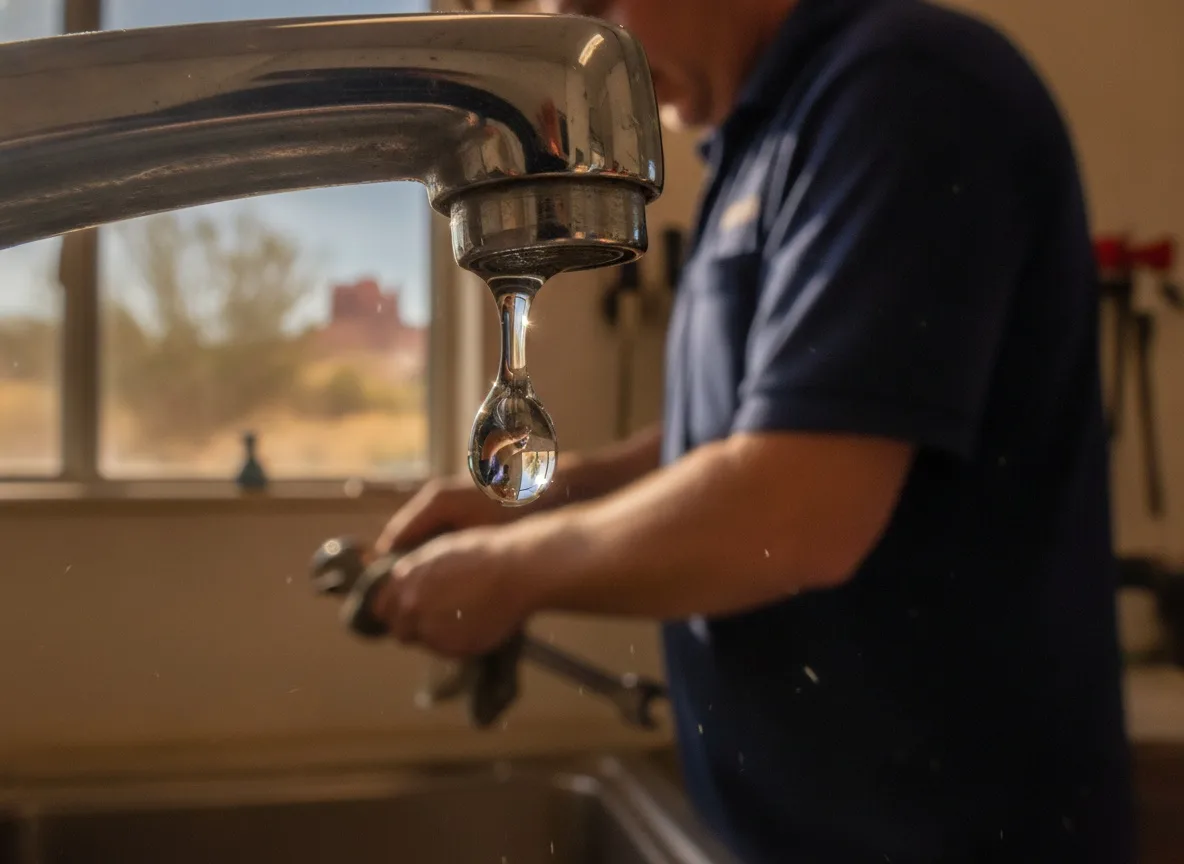
A faucet that drips all night is more than an annoying sound. In a desert city where every gallon costs money, a steady drip wastes water you are paying for and slowly stains the sink underneath it. The good news is that most leaks come from one small, worn part, and many of them you can fix yourself in under an hour with basic tools. This guide covers why faucets leak, why they fail faster here in Las Vegas, how to handle the common fixes on your own, and how to know when the job is not worth chasing.
Key Takeaways
Most faucet drips trace back to a worn washer, a failing cartridge, or a cracked O-ring. Las Vegas hard water builds scale that wears these parts out sooner and can seize them in place. Simple drips are a real do-it-yourself fix once you shut off the water and match the right part. If the parts are corroded, the valve seat is damaged, or the leak keeps coming back, it is time to call a plumber.
What Actually Makes a Faucet Leak
Behind the handle, every faucet uses a few small parts to start and stop the flow of water. When one of them wears out, water sneaks past and you get a drip. Figuring out which part is failing tells you how hard the fix will be.
A Worn Washer or Valve Seat
Older two-handle faucets use a rubber washer that presses against a metal valve seat to shut the water off. Every time you turn the handle, that washer grinds a little. Once it flattens or hardens, the faucet drips from the spout. Swapping the washer is one of the easiest plumbing repairs there is. If the metal seat underneath is also scarred, though, the drip will come right back until that gets fixed too, and that part is a job for a pro.
A Failing Cartridge
Most newer single-handle faucets use a cartridge, a cylinder that controls both temperature and flow. When it wears out or gums up, you get drips, a handle that is hard to turn, or water that will not shut off all the way. Cartridges are made to be replaced, but you have to match the exact model, so bring the old one to the store or snap a photo of the brand and part number first.
A Cracked O-ring or Bad Seal
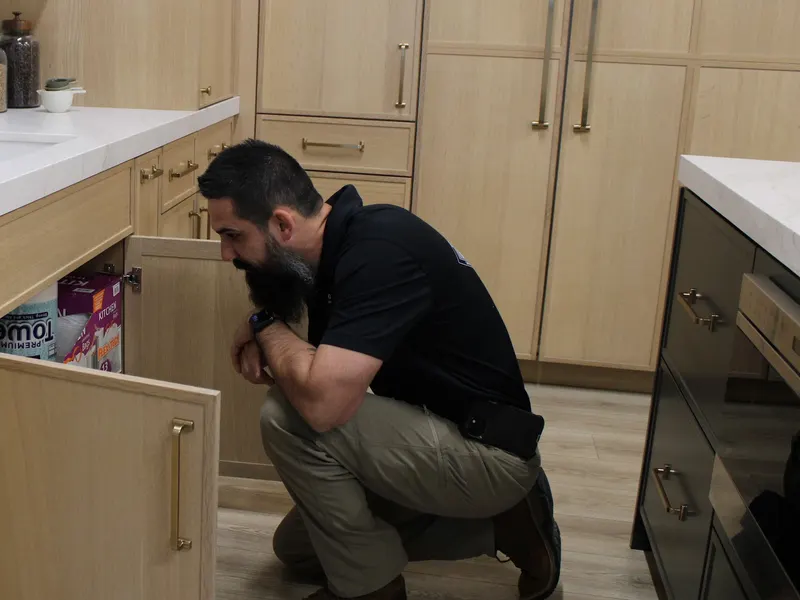
If water leaks from the base of the spout instead of the tip, a small rubber O-ring or seal has usually dried out or split. These cost very little and are a quick swap once the faucet is apart. Leaks here are easy to miss because the water can run down behind the sink, so check underneath now and then for damp spots or crust.
Why Las Vegas Faucets Wear Out Faster
Las Vegas tap water is among the hardest municipal water in the country. It comes from the Colorado River by way of Lake Mead, and it carries a heavy load of dissolved calcium and magnesium. Those minerals are harmless to drink, but they are hard on faucets.
As hard water moves through your faucet, it leaves behind a chalky mineral scale. That scale is gritty, so it wears down soft rubber washers and O-rings faster than they would fail with softer water. It also builds up around the cartridge, the valve seat, and the shutoff valves, which is why a Las Vegas faucet handle can go stiff or a shutoff can seize in place. When you take a local faucet apart, you will often find white or greenish crust caked on the very parts that are supposed to move freely. That buildup is a big reason faucets here need repair sooner than the same fixtures would in a soft-water town.
How to Fix a Leaky Faucet Yourself
For a straightforward drip, here is the safe order to work in. Take it slow, and line up the small parts in the order they come out so putting it back together is easy.
- Shut off the water. Turn the two valves under the sink clockwise until they stop. If there are no shutoffs there, close the main water valve for the house. Then open the faucet to drain the water left in the line.
- Plug the drain. Drop in the stopper or lay a rag over the drain so a dropped screw or small part cannot disappear down it.
- Take the handle apart. Pop off the decorative cap, remove the handle screw, and lift the handle off. You may need to loosen a retaining nut to reach the washer or cartridge underneath.
- Inspect and clean. Pull out the worn washer, O-ring, or cartridge. If you see hard-water scale, soak the metal parts in plain white vinegar for a while and wipe the crust off so the new part can seat cleanly.
- Replace with an exact match. Take the old part to the hardware store and match it exactly. The wrong size or style will just leak again right away.
- Reassemble and test. Put everything back in reverse order, turn the water on slowly, and watch for drips at both the spout and the base. If the drip is gone, you just saved yourself a service call. If it is still there after a clean swap, the problem is deeper than a worn part, so stop before you make it worse.
When the Fix Is Not Worth Chasing
Some faucet leaks look simple but turn into a long, frustrating afternoon. Know when to put the wrench down. Call a plumber instead of fighting it if you run into any of these:
- The shutoff valves under the sink are seized or start leaking when you turn them.
- Nuts and parts are so corroded or scaled that they will not budge.
- The valve seat is pitted or damaged, so a fresh washer still drips.
- You already replaced the cartridge or washer and the leak keeps coming back.
- Water is leaking inside the cabinet or into the wall, not just at the faucet.
- The faucet is old and worn enough that a full replacement makes more sense than another patch.
There is no shame in handing it off, especially when a seized valve or a stripped part can flood the cabinet fast. If the fix runs deeper than a worn washer, Kingdom Plumbing's flat-rate plumbing repair takes it from there, with a real person answering the phone day or night and a price you approve before any work begins.
The Bottom Line
A dripping faucet is usually a small, cheap part worn down before its time, and here in Las Vegas our hard water speeds that wear along. Many drips are a genuine do-it-yourself fix once the water is off and you match the right replacement part. When the parts are seized, the valve seat is damaged, or the leak simply will not quit, that is your signal to call. Kingdom Plumbing is a family-owned Las Vegas plumber, licensed, bonded, and insured, and we answer 24/7 with upfront flat-rate pricing and a 100 percent satisfaction guarantee. Reach us any time at (702) 840-5037.
Frequently Asked Questions
Why does my faucet keep dripping even after I replaced the washer?
Is a leaky faucet an emergency?
Why do faucets seem to fail faster in Las Vegas?
How much does it cost to fix a leaky faucet?
Have a plumbing question or a problem right now?
Call (702) 840-5037Burst pipe or flooding that can't wait? Our 24/7 emergency plumbers in Las Vegas dispatch around the clock.