
If you live in Las Vegas, your water heater is working against some of the hardest water in the country. Every gallon it heats leaves behind minerals that settle at the bottom of the tank as sediment. Flushing the tank clears that buildup out, and how often you do it makes a real difference in how long your heater lasts and how well it works.
The tricky part is that the advice you read online is usually written for cities with soft or average water. In a hard water town like ours, that advice runs behind. This guide covers how often you really should flush a water heater in Las Vegas, the warning signs that it is overdue, a safe overview of doing it yourself, and the point where it is smarter to call a plumber.
Key Takeaways
Las Vegas hard water builds sediment fast, so once a year is the floor and many homes do better flushing every six months. Popping or rumbling sounds, slow heating, and running out of hot water early are signs your tank is overdue. Flushing is a doable DIY job if you follow the safety steps, but stop and call a pro if the drain valve leaks, the water stays rusty, or the heater is old.
Why Las Vegas Hard Water Demands More Frequent Flushing
Water from the Colorado River and Lake Mead is what comes out of most Las Vegas taps, and it is loaded with dissolved calcium and magnesium. That is what makes it hard. When that water gets heated inside your tank, those minerals fall out and drop to the bottom as a gritty layer of sediment. The harder the water, the faster that layer grows.
In a city with soft water, a tank might go a long time before sediment becomes a problem. Here, it stacks up much quicker. That sediment does two bad things. It forms a barrier between the burner and the water, so your heater burns more fuel to get the same hot shower, and it traps heat against the steel tank, which speeds up corrosion. Flushing more often is simply how you keep up with water that is harder than what the manufacturer assumed.
How Often Should You Actually Flush It?
There is no single number that fits every home, but there is a sensible range. Your habits, your water, and whether you treat that water all move the dial.
A Good Baseline
Many water heater manuals suggest flushing at least once a year. Treat that as the floor, not the goal. For a typical Las Vegas home on untreated city water, once a year is the least you should do, and a lot of homeowners here get better results flushing about every six months. If you have never flushed your tank and it is a few years old, start now and see how much sediment comes out.
When to Flush More Often
Some situations call for flushing on the shorter end of that range. Larger households that use a lot of hot water, homes with older tanks, and businesses that run hot water hard all build sediment faster. On the other hand, if you have a water softener protecting the tank, the minerals are pulled out before they ever reach it, so you can usually flush less often. Softened or not, do not skip flushing entirely, because some buildup still happens.
Signs Your Water Heater Is Overdue for a Flush
Your heater will usually tell you when sediment has gotten ahead of you. Watch and listen for these signs, especially if you cannot remember the last time the tank was drained.
- Popping, rumbling, or crackling sounds when the heater runs, caused by water bubbling up through a thick sediment layer.
- Hot water that takes longer to arrive or does not get as hot as it used to.
- Running out of hot water faster than normal, because sediment is taking up space that used to hold water.
- Rusty, cloudy, or gritty hot water coming from the taps.
- A gas or electric bill creeping up with no other explanation, since a sediment-choked heater has to work harder.
A flush clears out the sediment behind most of these symptoms. If a flush does not quiet the popping or bring your hot water back, the buildup may have already done damage, and that is when our water heater repair team should take a look before a small issue turns into a full replacement.
How to Flush a Water Heater (and When to Stop)
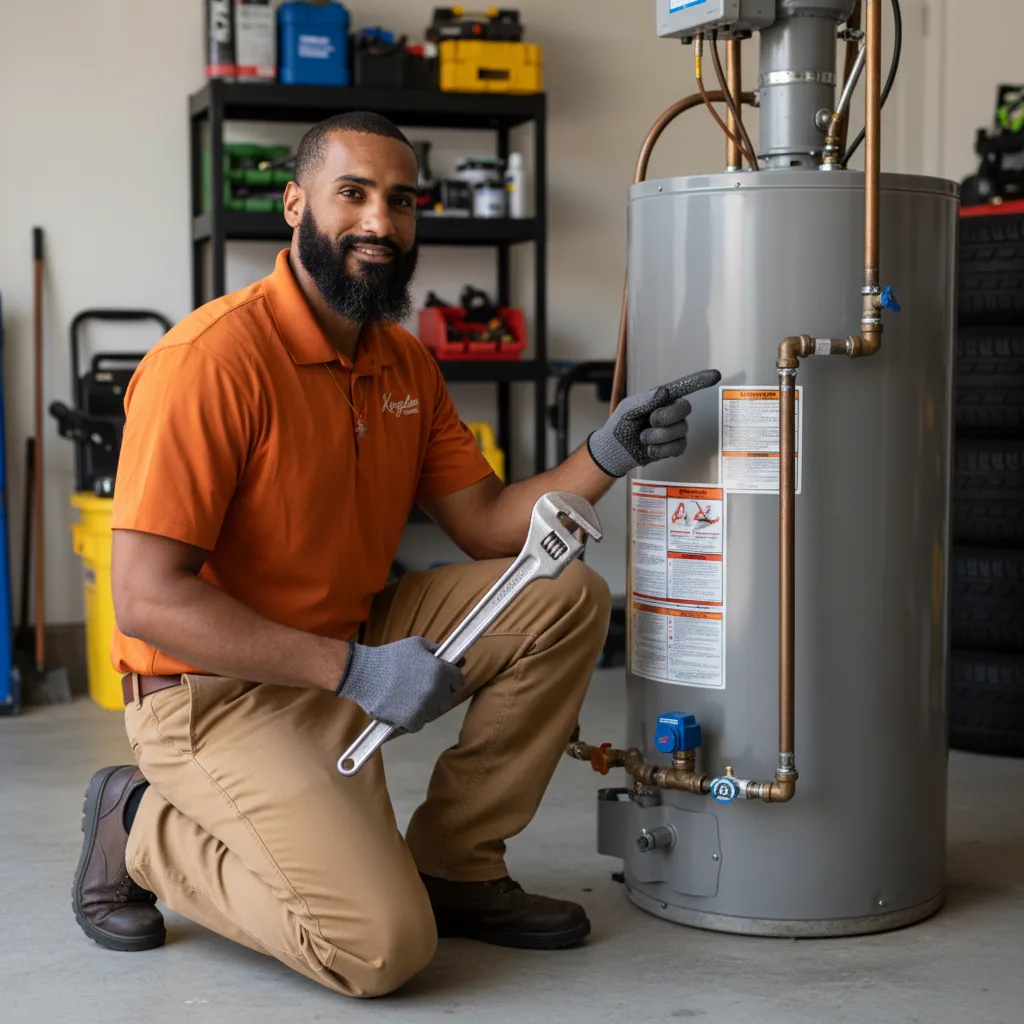
Flushing a tank water heater is within reach for a careful, handy homeowner. The steps below are a safe overview, not a replacement for your unit's manual. Read the manual first, and if any step feels beyond your comfort, that is a perfectly good reason to call a pro.
- Turn off the heater. For an electric unit, switch off the breaker. For a gas unit, turn the gas control to pilot or the vacation setting.
- Shut off the cold water supply valve at the top of the tank.
- Let the water cool for a couple of hours. The water inside is hot enough to scald, so this step matters.
- Connect a garden hose to the drain valve at the bottom and run the other end to a safe drain or outside.
- Open a hot water tap somewhere in the house so air can flow in as the tank empties.
- Open the drain valve and let the tank empty, then briefly turn the cold supply back on to stir up and rinse out the leftover sediment until the water runs clear.
- Close the drain valve, remove the hose, refill the tank fully, and only then restore power or gas.
One safety rule is worth repeating: never restore power to an electric heater until the tank is completely full, or you can burn out the heating element. Stop and call a plumber if the drain valve leaks or will not close, if the water never runs clear, if you see rust flakes, or if the tank is old and you are worried that draining it could cause a leak. There is no shame in handing off a job that is fighting back.
When to Call Kingdom Plumbing
Some homeowners would rather not deal with hoses, breakers, and scalding water at all, and that is completely fair. A professional flush is quick for a plumber who does them every day, and it is a good chance to check the anode rod, the pressure relief valve, and the overall health of the tank at the same time. Kingdom Plumbing is a family-owned Las Vegas plumber with two locations in the northwest valley, upfront flat-rate pricing you approve before any work starts, and a real person answering the phone 24/7. Whether you want a one-time flush, a maintenance visit, or an honest opinion on whether your heater is worth keeping, call (702) 840-5037 and we will keep your hot water flowing.
Frequently Asked Questions
How often should you flush a water heater in Las Vegas?
What happens if I never flush my water heater?
Can I flush my water heater myself?
How do I know if my water heater needs flushing?
Have a plumbing question or a problem right now?
Call (702) 840-5037Burst pipe or flooding that can't wait? Our 24/7 emergency plumbers in Las Vegas dispatch around the clock.