
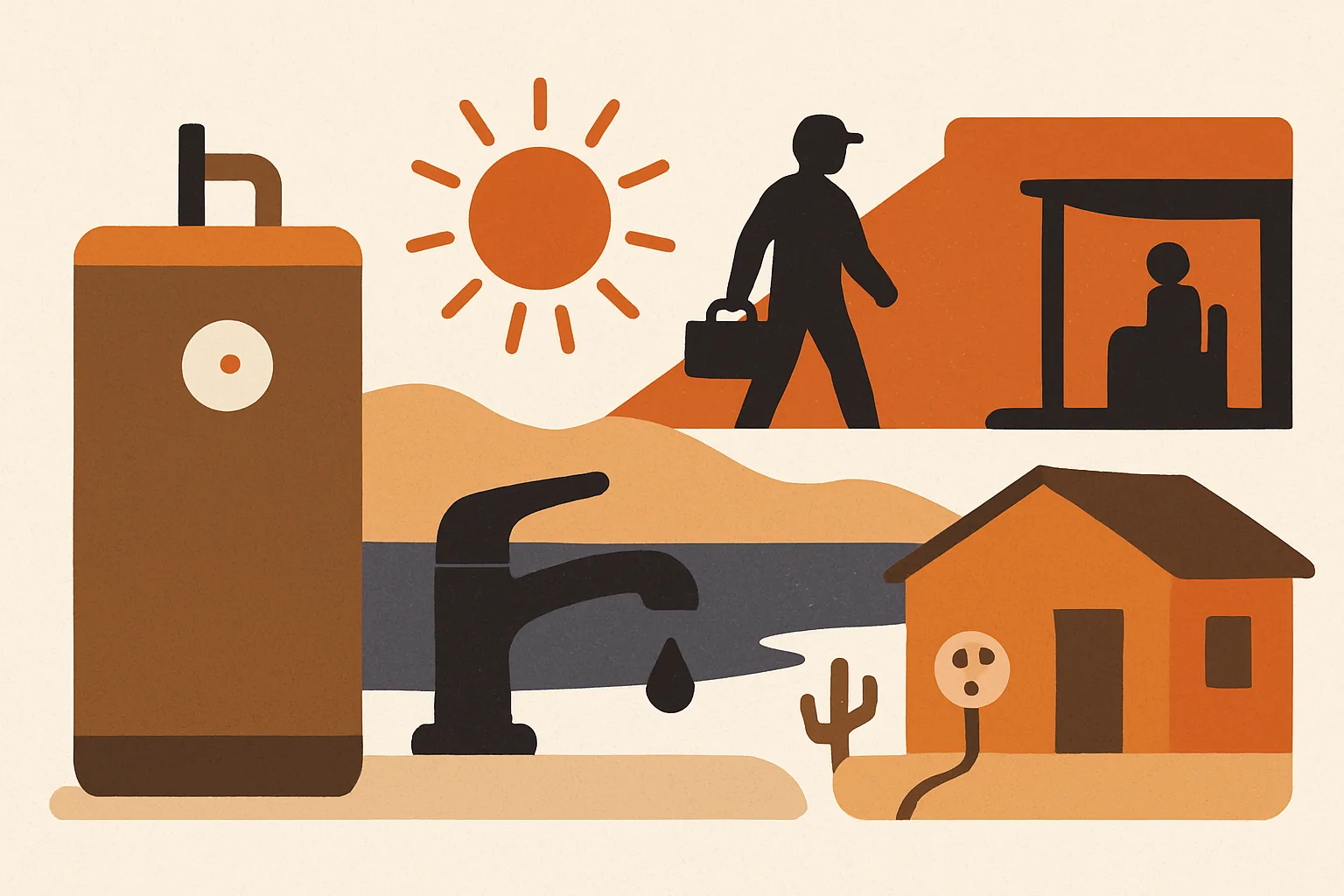
Clark County just opened cooling stations during an extreme heat warning while Lake Mead sits at about 26 percent full. For Las Vegas homeowners, that one-two punch of heat and water stress raises the stakes on emergency plumbing problems and how quickly you deal with them.
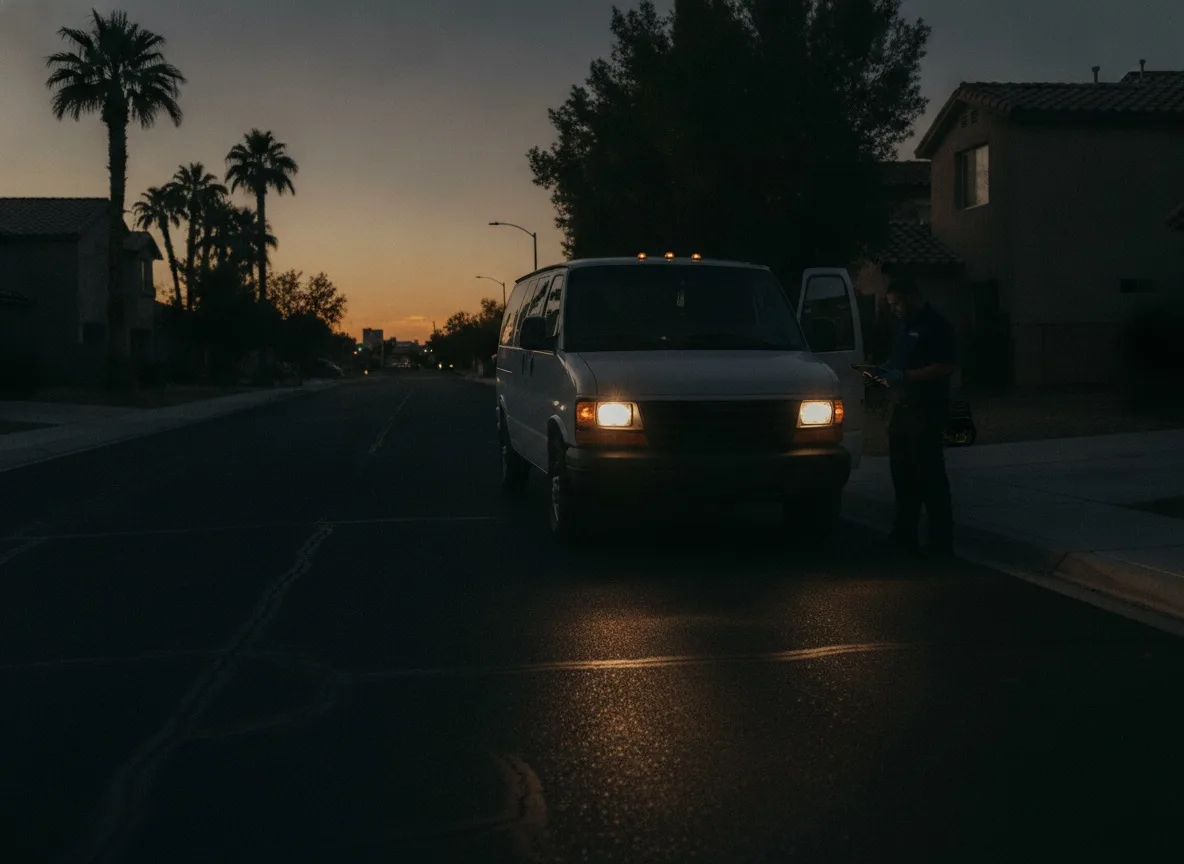
What did the September 2026 heat warning and Lake Mead update actually say?
In early September 2026, the National Weather Service issued an extreme heat warning for the Las Vegas Valley, Moapa Valley, and Pahrump Valley. According to reporting summarized by the Las Vegas Sun, daytime highs were expected to hit about 106 to 108 degrees, then ease only slightly to around 104 degrees. Clark County responded by opening cooling stations across Southern Nevada so people had somewhere safe to go during the hottest part of the day.
At the same time, Lake Mead hit some of its lowest recorded levels. Reservoir tracking cited in recent Colorado River monitoring shows Lake Mead at roughly 26.3 percent of capacity as of September 18, 2026, at about 1,038.38 feet above sea level. Lake Powell is also low, and combined storage along the river system is well below last year. That backdrop is why the federal government has shortage rules in place that reduce how much water states like Nevada can take from the Colorado River. For homeowners, this means water conservation is not just a talking point. It is a daily reality that affects how urgent it is to control leaks or burst pipes when something goes wrong in your home.
How do extreme heat and low Lake Mead levels affect emergency plumbing risk?
High desert heat and stressed water supplies change the risk profile of plumbing problems in a Las Vegas home. When temperatures sit above 105 degrees for days, attic and wall spaces can become far hotter, which is rough on older plastic supply lines, rubber washers, and water heater components. If a fitting has already started to weaken, that extra thermal expansion and contraction can be the last straw that turns a small seep into a sudden break. In a slab-on-grade home, a pinhole leak under concrete can also accelerate in hot conditions and start surfacing as a warm wet spot on the floor.
Low reservoir levels and rising water use add another layer. The Southern Nevada Water Authority reports that Colorado River consumptive use for our region hit about 48 billion gallons in August 2026, which is up from the recent 2023-2025 average of 47 billion gallons. When the community is using more water at the same time Lake Mead is barely over one-quarter full, every gallon wasted from a running toilet, burst line, or failed water heater relief valve matters more. Emergency plumbing issues are never convenient, but in this climate they are also a conservation issue and a potential utility bill shock if you wait too long to address them.
- Hot attic and wall spaces stress aging pipes and fittings.
- Slab leaks can worsen faster in prolonged high heat.
- Every unaddressed leak adds to already high regional water use.
- Water damage repairs typically cost more than timely plumbing fixes.
Why Las Vegas homes are especially vulnerable to heat-driven plumbing emergencies
Most homes in the Las Vegas Valley sit on slab-on-grade foundations poured directly on caliche-heavy soil, so most pressurized water lines either run in or just under that slab. When something fails beneath the concrete, it can be hard to spot until there is visible damage or a major jump on your water bill. Add the valley’s typical 16 grains per gallon hard water, cited by the local water district, and minerals can build up inside pipes, valves, and water heater tanks. That buildup makes systems run hotter internally and can weaken components over time, especially in prolonged summer heat.
Rooflines and exteriors also see intense sun for long stretches, which can age exposed hose bibs, irrigation valves, and flexible connections faster than in milder climates. When extreme heat hits for several days, outdoor plumbing parts that were already borderline can split, flooding side yards or seeping into walls. Inside, air conditioning is running full tilt, which makes people less likely to notice a subtle temperature change near a water heater or a faint sound from a crawl of water in the wall. All of this puts Las Vegas homeowners in a spot where seemingly small plumbing issues can jump straight to emergency plumbing territory during severe heat events.
- Slab-on-grade construction hides many pressurized lines.
- Hard water buildup strains heaters and shutoff valves.
- Intense sun ages exterior fixtures and hoses more quickly.
- Busy AC usage distracts from early leak warning signs.
How do stricter water realities change what “urgent” means for plumbing problems?
With Lake Mead around 26 percent full and Nevada involved in legal fights about future Colorado River cuts, water policy is not just an abstract debate. It shapes what responsible homeownership looks like in Las Vegas. A slow leak that might have been a low priority in a wetter region becomes an urgent fix here, especially in months where SNWA is already signaling higher than average water use. A faucet that drips 20 times a minute can waste hundreds of gallons over a month, and a running toilet can waste far more. Multiply that by thousands of homes and you start to see why local agencies are pushing conservation so hard.
From a homeowner’s perspective, this reality nudges some repairs from the “sometime this season” column into the “handle this week” column. If you have a supply line that occasionally sprays, corrosion on a water heater that is weeping, or a main shutoff that no longer fully closes, the combination of heat and water stress makes those problems more pressing. Choosing emergency plumbing service for issues that threaten significant water loss or damage is not about panic. It is about matching your response time to the real stakes in Las Vegas today: protecting your home, your utility costs, and a limited regional water supply.
What should a Las Vegas homeowner ask an emergency plumber during extreme heat events?
When you call for emergency plumbing during an extreme heat warning, you want more than someone who can just stop the immediate leak. You want a licensed professional who understands how Las Vegas conditions affect your whole system. It is reasonable to ask if they are licensed, bonded, and insured in Nevada and whether they have experience with slab leaks, hard water issues, and heat-related failures like expansion tank problems or failing pressure regulators. You should also ask about their typical response times on weekends and evenings and whether they offer upfront flat-rate pricing so you are not surprised when the work is done.
You can also use the emergency visit to get ahead of future problems. Ask the plumber to walk you through the condition of your main shutoff, water heater, and any older supply lines they can see. If your home was built in the early 2000s, you may want to know if you have any older piping materials that are known to age poorly in hot, hard water conditions. A thoughtful emergency plumber will not only repair the immediate break but will also give you options to reduce your risk, like replacing brittle flex lines or adding a proper expansion tank where needed. This kind of conversation gives you better control over future emergencies and helps you plan repairs on your schedule rather than the weather’s.
- undefined
- undefined
- undefined
- undefined
- undefined
- undefined
- undefined
- undefined
- undefined
- undefined
Frequently asked questions
- How does extreme Las Vegas heat make plumbing emergencies more likely?
- Prolonged heat above 100 degrees raises temperatures in attics, walls, and slabs, which can accelerate wear on plastic pipes, rubber gaskets, and older fittings. Parts that were already near the end of their life can expand and contract until they crack or pull apart. That is why leaks and burst lines often spike during or right after heat waves in the Las Vegas Valley.
- Why should I treat a small leak as an emergency during a drought?
- With Lake Mead around 26 percent full and regional water use up to about 48 billion gallons in August 2026, every continuous leak adds to strain on a limited supply. A small but constant leak can waste thousands of gallons over time and can also undermine your slab or damage walls and flooring. Handling it quickly with a licensed plumber helps protect both your home and the community’s water resources.
- What plumbing problems in Las Vegas truly require emergency service?
- Situations that usually warrant emergency plumbing include active flooding, a burst supply line, a slab leak that is rapidly spreading, a sewage backup, or a water heater that is leaking heavily or showing signs of overheating. A total loss of water to the home can also be urgent, especially in extreme heat when cooling and basic hygiene depend on running water. In each case, fast response reduces damage and water waste.
- How can I prepare my home for plumbing issues before the next heat warning?
- Start by locating and testing your main shutoff, replacing it if it does not operate smoothly. Have a licensed plumber inspect exposed supply lines, hose bibs, and older water heaters, and ask them to point out any components that are likely to fail under heat and hard water. It also helps to keep a basic cleanup kit on hand, such as towels, a wet vac, and a bucket, so you can control minor spills until help arrives.
- Does Clark County’s opening of cooling stations affect water service at my house?
- Cooling stations are a public safety measure to protect residents from heat illness and do not directly change how water flows to individual homes. However, they signal that conditions are severe, which is when plumbing emergencies can cause the most disruption if you suddenly lose water or suffer significant water damage. Seeing those stations in the news is a good reminder to double-check your plumbing readiness at home.
- When should I call an emergency plumber instead of waiting for regular hours?
- If you cannot stop a leak with your shutoff valves, if water is contacting electrical outlets, if sewage is backing up into tubs or sinks, or if your only toilet is out of service, you should call for emergency plumbing help. In Las Vegas heat, a full loss of water or a major leak that could undermine your slab or damage neighboring units in a multifamily building is also urgent. Waiting in those scenarios often increases both repair and restoration costs.
- How does hard water in Las Vegas relate to emergency plumbing during heat waves?
- The valley’s hard water leaves mineral deposits inside water heaters, valves, and pipes, which can clog openings and make systems work hotter and less efficiently. During a heat wave, that extra stress can push worn parts over the edge, causing leaks from relief valves, failed flex lines, or tank cracks. Managing hardness with proper equipment and having aging components inspected can reduce the odds of a sudden failure in the hottest months.
Talk to Kingdom Plumbing about emergency plumbing, or call (702) 840-5037. Family-owned, NV Contractors License #0085422, upfront flat-rate pricing.
Kingdom Plumbing is a family-owned, licensed Las Vegas plumber (NV NV Contractors License #0085422) serving the valley since 2018. Questions about how this affects your home? Call (702) 840-5037. Dealing with a burst pipe or flooding right now? Our emergency plumbers in Las Vegas answer 24/7.