
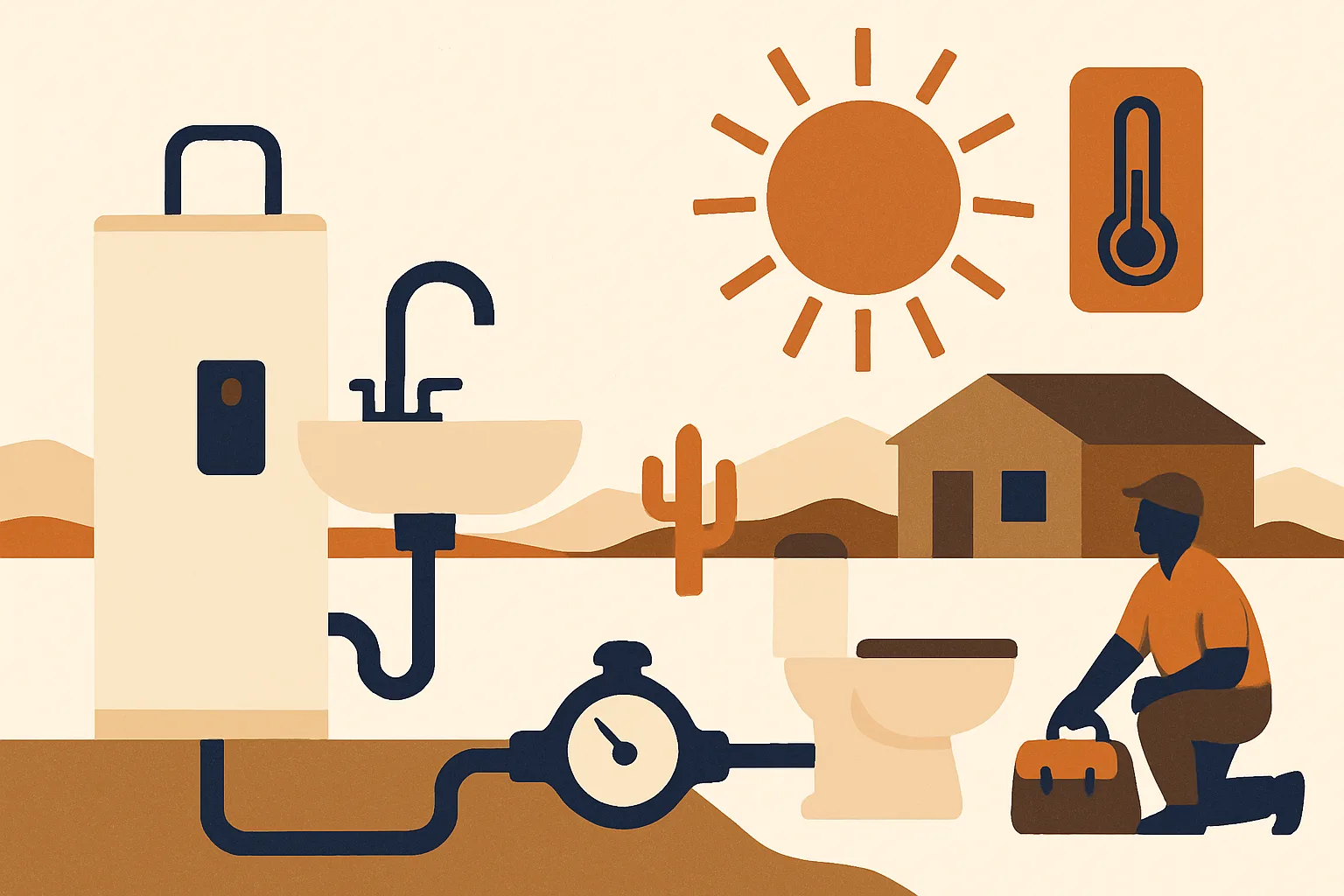
On September 11, 2026, Las Vegas hit 107°F at Harry Reid International Airport and the National Weather Service issued an extreme heat warning for Southern Nevada. For building owners and managers, this kind of heat has real consequences for commercial plumbing performance, repair timing, and long-term costs.
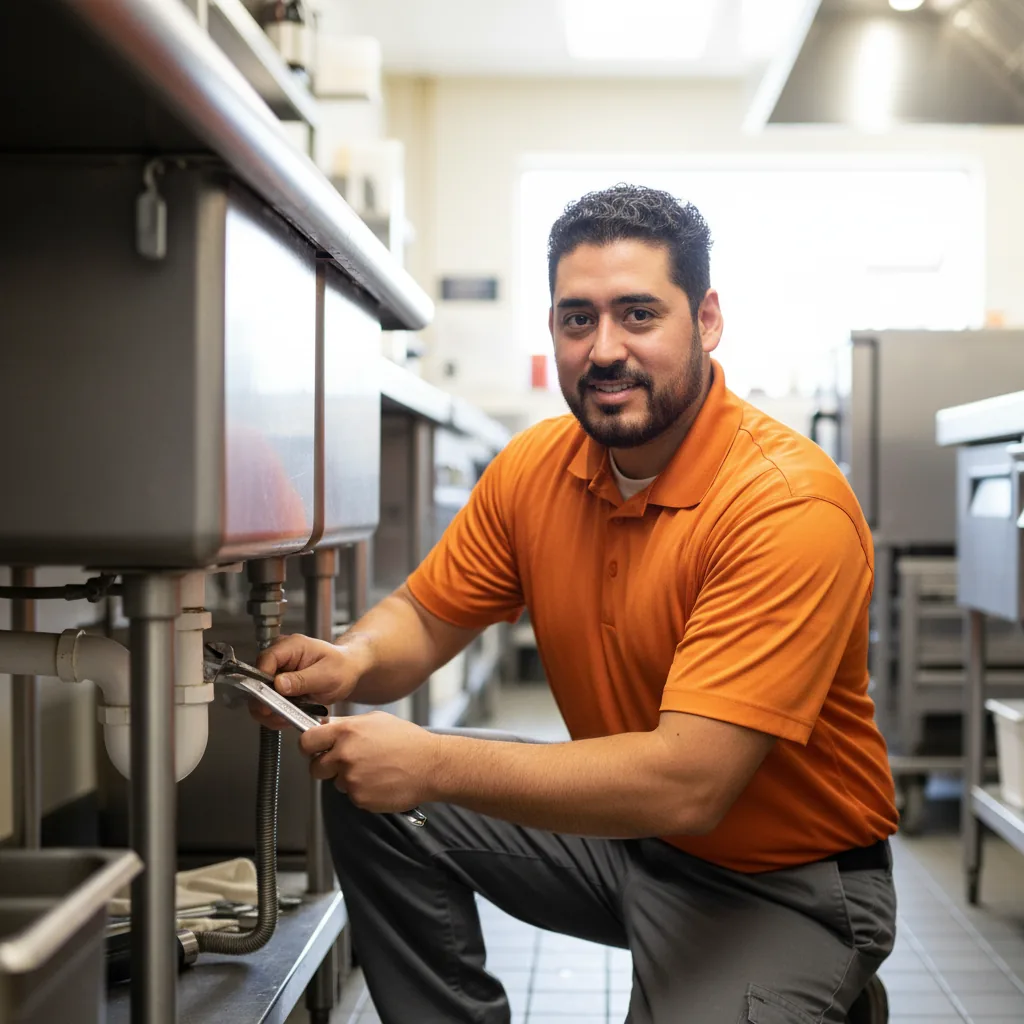
How the September 11, 2026 extreme heat warning puts pressure on commercial plumbing
On September 11, 2026, the Las Vegas Review-Journal reported that an extreme heat warning was in effect and that temperatures hit 107°F at Harry Reid International Airport. Even though the forecast called for a slight cooldown after Friday, that kind of heat is a serious load on every commercial building in the valley. For most property managers, the first concern is HVAC, but plumbing is quietly working just as hard in the background.
When ambient air and surface temperatures climb that high, everything from rooftop water lines to garage-level hose bibbs can see higher than normal water temperatures and pressure changes. Expansion tanks, recirculation pumps, and water heaters are forced to operate at the edges of their design range for longer parts of the day. For restaurants, multifamily buildings, offices, and retail, that can show up as lukewarm “cold” water, fluctuating hot water, and more frequent trips of pressure relief valves.
During an extreme heat warning, Las Vegas buildings also see different occupancy and use patterns. People drink more water, flush more often, and lean on restrooms and kitchens heavily in the hottest hours. That extra demand flows through supply lines, pressure regulators, and drain systems that may already be aging. When you combine that with 16-grains-per-gallon hard water typical of the Las Vegas Valley, the stress on commercial plumbing is real, even if most of the work is hidden behind walls and above ceilings.
- Higher-than-normal cold water temperatures at fixtures
- Longer run times on hot water recirculation pumps
- More frequent expansion and contraction cycles in piping
- Increased use of restrooms, kitchens, and cooling stations
Why Las Vegas heat creates hidden risks before and after a plumbing repair
A very hot week is not just uncomfortable for tenants. It also changes the way plumbing materials behave before, during, and after repairs. Metal lines, PVC, and older plastics all expand more when pipe chases, rooftops, and garages sit in triple-digit heat for most of the afternoon. If a repair or tie-in is made when lines are expanded from the heat, those same connections may be under extra tension when the system cools overnight or later in the season.
In commercial plumbing work, that means a joint that looks dry at the end of a midday repair can sometimes develop a slow drip when temperatures swing. Valves may be more stubborn to operate, and older rubber seals inside PRVs and mixing valves can harden faster. For Las Vegas properties with slab-on-grade construction, thermal expansion and contraction can also stress the connections at risers and buried piping where access is limited and leaks are harder to spot quickly.
Hard water in the valley compounds those temperature effects. Scale builds faster in hot spots like heat exchangers and recirculation lines, especially when equipment is running longer to keep up with tenant demand during a heat wave. If a building is already close to the edge on hot water delivery, the extra scale from prolonged high-temperature operation can make the system feel undersized. That is why the timing of inspections and upgrades around heat events is as important as the parts you choose.
- Materials expand and contract more during heat waves
- Connections made in peak heat can shift as lines cool
- Rubber seals age faster in high-temperature environments
- Hard water scale builds faster when equipment runs hot
What commercial property managers should check after the September extreme heat
Once the forecast shows temperatures easing off a bit, property managers have a good window to walk their buildings with plumbing in mind. According to the Review-Journal report, the worst of the heat should pass after Friday, which is exactly when it becomes safer and more comfortable for technicians to get on roofs and into hot mechanical rooms. That makes the days right after an extreme heat warning a smart time for inspection rather than waiting for a mid-season failure.
Start by thinking about where your commercial plumbing is most exposed. Roof-mounted backflow preventers, recirculation lines, and make-up water lines for cooling towers often sit in full sun. Parking garage piping and exterior hose bibbs handle big temperature swings too. Any of those locations can develop small leaks or insulation damage that go unnoticed until a more serious problem appears inside the building. Having a commercial plumbing inspection target those high-risk areas helps you get the most value out of a service call.
Inside the building, the immediate post-heat-wave period is a good time to pay attention to tenant comments. Complaints about water temperature swings, discolored water, or banging pipes may be more noticeable after the system has been pushed hard. A licensed commercial plumbing contractor can use that feedback to prioritize which risers, mixing stations, or fixtures to test first. Catching an undersized expansion tank or a failing pressure regulator now is much cheaper than dealing with a flooded ceiling or damaged finishes later.
How extreme heat affects commercial plumbing replacement and upgrade decisions
Major heat events do not just test existing systems, they also highlight where a building might need bigger changes. If a hotel, office building, or restaurant constantly runs short on hot water during Las Vegas heat waves, that is a sign the sizing, recirculation design, or pipe insulation may be inadequate for real-world conditions. Upgrades to commercial water heaters, recirculation loops, and mixing valves are often easier to justify when you can point to specific service issues that appeared during an extreme heat warning.
Rooftop and exterior lines are another upgrade opportunity. Some older commercial buildings in the valley still have bare or poorly insulated piping on the roof. In 107°F air with surfaces even hotter, that means near-instant heat gain into what is supposed to be cold water and more stress on any hot water leaving the mechanical room. When you plan a commercial plumbing upgrade, you can combine like-for-like replacements with better insulation, UV-resistant coverings, or rerouting critical lines to cooler paths.
These heat-driven decisions should be made with a full understanding of local water conditions and building codes. Las Vegas Valley water hardness, the age of the building, and typical occupancy patterns all factor into whether it is smarter to repair, retrofit, or fully replace parts of a commercial plumbing system. A contractor experienced with commercial plumbing in Southern Nevada can walk you through the cost, downtime, and long-term benefits of each option so you are not just reacting to this week’s weather.
When to call a commercial plumbing professional during an extreme heat event
Some symptoms in a heat wave can wait for regular hours, but others should push you to call a commercial plumbing professional quickly. Sudden drops in water pressure on multiple floors, repeated trips of water heater safety devices, or evidence of active leaks in ceilings or mechanical rooms are all reasons to act now rather than later. In a prolonged extreme heat warning like the one reported on September 11, 2026, systems are already under extra load, so small issues can escalate faster.
A family-owned, licensed contractor that offers commercial plumbing service in Las Vegas can help you triage issues. They can often talk through whether a symptom is likely a heat-related nuisance or a red flag for a deeper problem with pumps, expansion control, or main supply lines. For example, temporarily warmer cold water at hand sinks might be acceptable for a day or two, while discolored water, strong odors, or consistent hammering in risers signal conditions that should be evaluated promptly.
From a practical standpoint, property managers should think about heat when scheduling non-emergency work as well. Roof access, parking deck work, and hot mechanical room tasks are safer and more comfortable for technicians in the cooler parts of the morning or on days after the worst heat has passed. Working with a commercial plumbing partner that understands Las Vegas weather patterns and can offer 24/7 emergency response and scheduled service lets you plan work around both tenant needs and extreme temperatures.
- undefined
- undefined
- undefined
- undefined
- undefined
- undefined
- undefined
- undefined
- undefined
- undefined
Frequently asked questions
- How does the September 11, 2026 extreme heat warning affect my building’s plumbing?
- The 107°F heat reported at Harry Reid International Airport pushes plumbing materials, seals, and equipment closer to their limits, especially on roofs and in unconditioned spaces. You may see warmer cold water, fluctuating hot water, and more strain on expansion tanks and pumps. After the heat eases, it is a good time to inspect for leaks, insulation damage, and any new noises in the system.
- Should I delay commercial plumbing repairs during a Las Vegas heat wave?
- Emergency issues like active leaks, major pressure drops, or water quality problems should not be delayed, even during an extreme heat warning. For elective work, it can make sense to schedule roof and mechanical room tasks for cooler hours or for days immediately after the worst heat passes. A licensed commercial plumbing contractor can help you decide what needs immediate attention versus what can safely wait.
- Why does my cold water come out warm during Las Vegas extreme heat events?
- During a 107°F day, exposed and roof-level piping absorbs a lot of heat from the sun and surrounding surfaces, which warms the water before it reaches fixtures. This is especially noticeable in commercial buildings with long pipe runs or poorly insulated lines. While some warming is normal in extreme heat, a plumber can check insulation, routing, and recirculation settings if it becomes a persistent complaint.
- What commercial plumbing components are most at risk in extreme Las Vegas heat?
- Rooftop backflow preventers, exposed supply lines, hot water recirculation systems, expansion tanks, and water heaters in hot mechanical rooms face the most stress. Seals, valves, and fittings in those locations expand and contract more, which can lead to drips or failures. An inspection focused on those vulnerable points after an extreme heat warning helps reduce the risk of surprises.
- How often should I schedule commercial plumbing inspections in Las Vegas heat?
- For most commercial properties, an annual comprehensive plumbing inspection is a baseline, with additional checkups after major events like extreme heat warnings or severe storms. Buildings with high occupancy, food service, or aging infrastructure may benefit from semiannual visits. Talk with a commercial plumbing contractor about a schedule that fits your building’s age, usage, and risk tolerance.
- When should I call a commercial plumber instead of my maintenance staff after a heat wave?
- On-site maintenance staff are great for spotting visible leaks, basic valve checks, and tenant communication, but you should bring in a licensed commercial plumber for recurring pressure problems, unexplained hot water shortages, signs of pipe movement or hammering, or any issue involving main supply, backflow, or gas-fired water heaters. Those systems require specialized testing and experience with Las Vegas conditions.
Talk to Kingdom Plumbing about commercial plumbing, or call (702) 840-5037. Family-owned, NV Contractors License #0085422, upfront flat-rate pricing.
Kingdom Plumbing is a family-owned, licensed Las Vegas plumber (NV NV Contractors License #0085422) serving the valley since 2018. Questions about how this affects your home? Call (702) 840-5037. Dealing with a burst pipe or flooding right now? Our emergency plumbers in Las Vegas answer 24/7.