
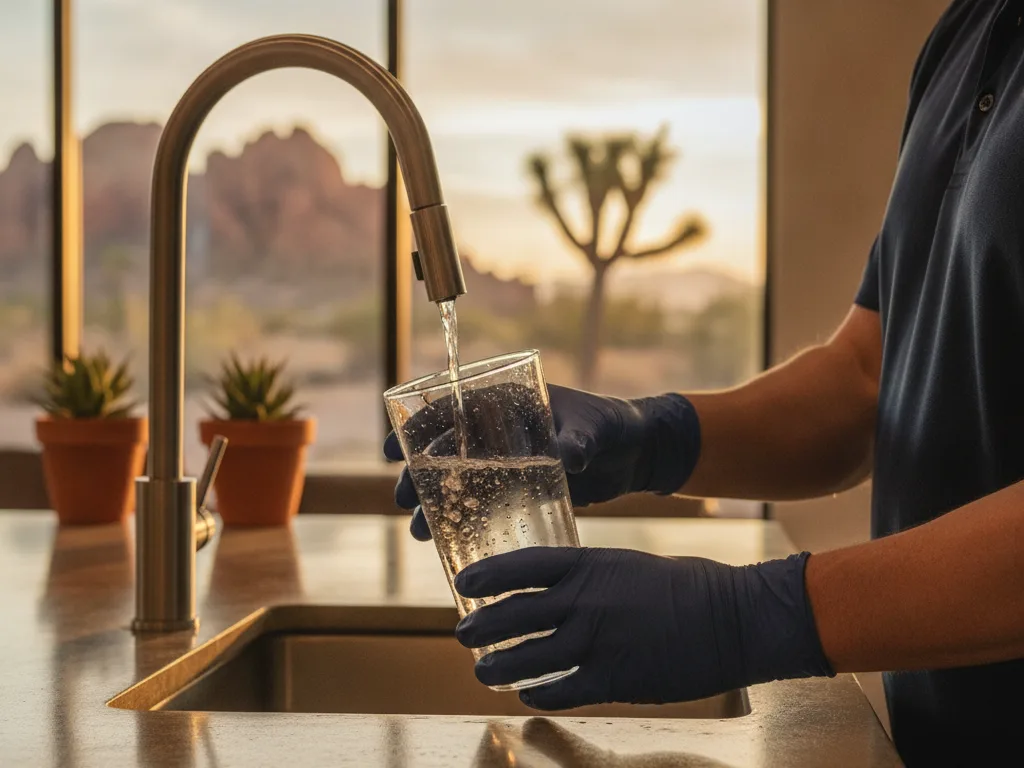
A new bipartisan Senate bill would let water utilities tap federal disaster funding for extreme heat the same way they already can for floods and hurricanes. Here is what that says about the real risk to a Las Vegas home's plumbing this summer, and what to actually do about it.
Why Washington Is Suddenly Talking About Your Water Pipes
In May 2026, Nevada senator Jacky Rosen teamed up with Utah senator John Curtis on Senate Bill 4536, legislation meant to put heat waves and cold snaps on the same footing as floods and hurricanes when it comes to federal water infrastructure funding. Right now, that federal disaster money is reserved mostly for storms, fires, and other classic emergencies. The new proposal would open up an existing EPA resilience grant program to utilities dealing with extreme temperatures, and stretch the life of that program out to 2032.
Then on July 14, 2026, with Southern Nevada in the middle of another run of triple digit days, Rosen pushed further, calling on federal health and emergency agencies to restore staffing and funding tied to heat response. Her office noted that extreme heat is already the deadliest weather category in the country, and that Nevada alone logged more than 500 heat related deaths in 2024.
What Extreme Heat Actually Does Inside a Pipe
None of this means the tap water flowing into a Las Vegas kitchen is unsafe. The concern lawmakers and utility officials are raising is narrower, and it is worth understanding rather than fearing. Ground temperature swings between a scorching afternoon and an overnight low stress buried pipe joints over time, the same way heat cycling stresses a slab foundation. Separately, water that sits still inside a line or hose that has baked in direct sun can pick up trace amounts of plastic or metal, and warm stagnant water is simply a friendlier environment for microbial growth than cool moving water.
That is a real, well documented issue in exposed, low use lines such as garden hoses, hose bibs, and irrigation risers, far more than in the buried municipal mains that deliver water to the house in the first place.
Southern Nevada's Heat Numbers, and Why the System Still Holds Up
Southern Nevada logged 112 days of triple digit heat in 2024 and has already seen its hottest day of 2026 this July. That kind of sustained heat load is exactly what the new Senate bill is trying to get ahead of nationally. Locally, though, the Southern Nevada Water Authority points to a genuinely reassuring number: the region's water main break rate runs about eight times lower than the national average, a track record built on decades of proactive pipe replacement.
That is good news for the buried infrastructure a homeowner never sees. It does not change the advice for the plumbing a homeowner does control, which sits closer to the surface and the sun.
What a Las Vegas Homeowner Should Actually Do This Summer
The practical response to all of this is simple and inexpensive. Treat any exposed hose or hose bib as a summer irrigation tool, not a drinking source, and let it run cool before use. Insulate pipe runs in an attic, garage, or unshaded exterior wall, the same insulation that helps in a hard freeze also blunts extreme summer heat swings. Keep the water heater thermostat around 120 degrees rather than higher, both for scald safety and because an already hot supply line has less thermal cushion to work with.
If a fixture, hose bib, or irrigation line has sat unused for a week or more during a heat wave, run it before drinking from it. And if any of this turns up a slow drip, warm damp patch, or pressure change at the meter, that is worth a licensed plumber's eyes before the next heat wave, not after.
- Flush hose bibs and irrigation risers before drinking from them after a hot week
- Insulate exposed pipe in attics, garages, and unshaded exterior walls
- Keep the water heater thermostat near 120 degrees
- Watch for warm, damp patches near slab edges after extended heat
Figures from the offices of Senator Jacky Rosen and Senator John Curtis, and the Southern Nevada Water Authority.
5 Heat-Season Checks For Your Home's Water
None of these take more than a few minutes, and together they cover the parts of a home's plumbing that actually feel the desert sun.
- Garden hoses: Do not drink from a hose that has been sitting in the sun. Let it run cool first, since heat softened hose material can shed trace plastic into standing water.
- Exposed pipe runs: Foam insulation sleeves on attic, garage, or exterior wall pipe reduce the daily temperature swing on the pipe itself.
- Water heater thermostat: Set it near 120 degrees. It is safer against scalding and gives the unit less extra thermal stress to manage.
- Hose bibs and irrigation lines: After a week of heavy heat, run these briefly before use, especially if a line has sat idle.
- Slab and foundation lines: Watch for warm spots or damp patches near slab edges, a sign heat and soil movement may be working on an old joint.
- An annual plumbing check: A licensed Las Vegas plumber can pressure test the system before the worst of the summer heat arrives.
Frequently asked questions
- Can extreme heat actually make my tap water unsafe?
- Not the municipal supply itself in normal use. The real exposure is in low use, sun exposed sections like hoses and hose bibs, where standing warm water can pick up trace plastic or metal and support more microbial growth than cool moving water.
- What does the new Senate bill actually change right now?
- As of mid-2026 it is introduced legislation, not yet law. What it signals is that federal regulators are starting to treat extreme heat as seriously as floods or hurricanes for water infrastructure funding, which could eventually mean more resources for utilities.
- Is Southern Nevada's water system actually reliable despite the heat?
- The buried municipal system has a strong track record, with a main break rate reported at roughly eight times below the national average. The plumbing most exposed to heat risk is the private side inside and around a home.
- Should I call a plumber just because of a heat wave?
- If you notice a warm damp spot, a pressure drop, or a fixture that has sat unused for a long stretch, yes, it is worth a check. Kingdom Plumbing can be reached at (702) 840-5037 for a straightforward inspection.
Kingdom Plumbing is a family-owned, licensed Las Vegas plumber (NV NV Contractors License #0085422) serving the valley since 2018. Questions about how this affects your home? Call (702) 840-5037. Dealing with a burst pipe or flooding right now? Our emergency plumbers in Las Vegas answer 24/7.
More Updates
- A New Multibillion Dollar Pipeline Is Coming to Southern Nevada: What the Horizon Lateral Means for Henderson Homeowners
- Southern Nevada Just Adopted A New Plumbing Code: What It Means For Your Next Remodel Or Water Heater Swap
- Clark County's Heat Death Count Keeps Climbing in 2026: A Home Water and Cooling Checklist for Las Vegas Families