
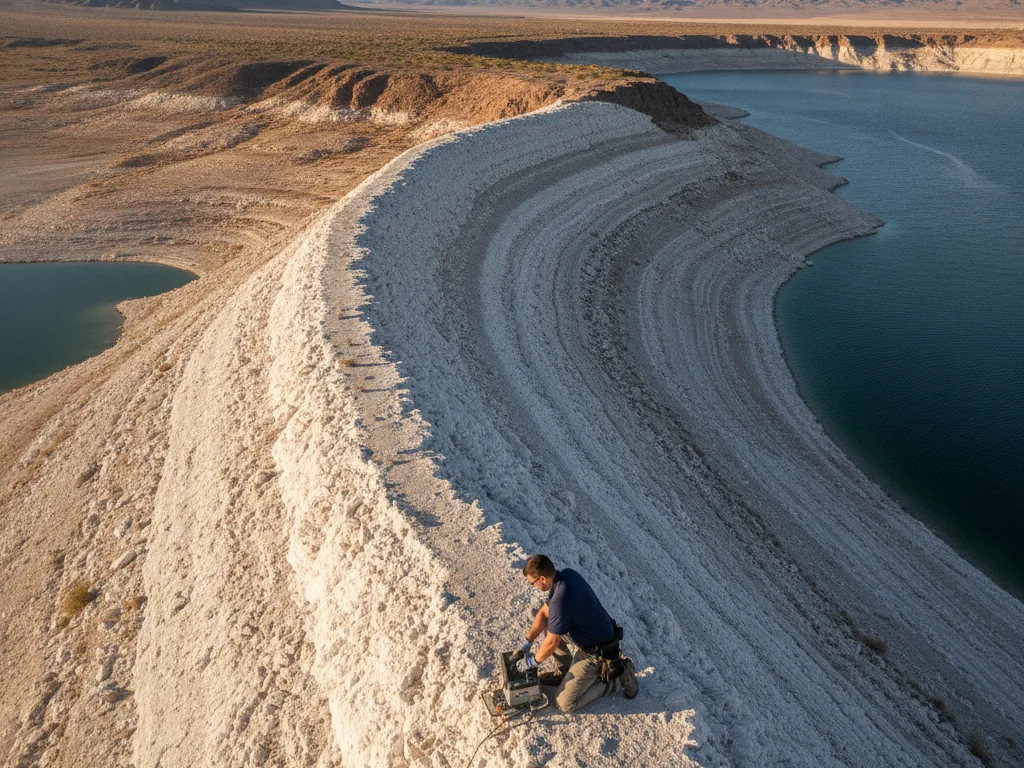
On July 12, 2026, the water held together in Lake Mead and Lake Powell fell below where it stood almost 70 years ago, before Lake Powell existed at all. Here is the real story behind that milestone, and the practical steps a Las Vegas homeowner should take now.
The whole river system, not just one lake, hit a historic low
Most of the headlines this year have tracked one reservoir at a time, Lake Mead's elevation or Lake Powell's elevation. The milestone that landed on July 12, 2026 is different because it looks at both together. Researchers who track the Colorado River system found that the combined water held in Lake Mead and Lake Powell has now dropped below where it sat in the spring of 1957, before Lake Powell had even finished filling behind Glen Canyon Dam.
That comparison matters because it strips away the question of which reservoir is drawing down faster and gets at a simpler point: across the entire system, there is now less stored water cushion than there has been in nearly seven decades. A dry winter snowpack upstream and a long-running drought are the drivers, and researchers who study the basin note that the reservoirs can only keep offsetting heavy water use with stored releases for so long before that cushion runs out.
Lake Mead's own numbers are still sliding too
Lake Mead sat near 1,044.58 feet in June 2026, only a few feet above the record low of 1,040.58 feet set back in 2022. Federal forecasters expect the lake to slip past that old record within weeks, and their longer-range projections put Lake Mead around 1,009.69 feet by June 2028, roughly 31 feet below the 2022 mark.
There is a power angle too. Hoover Dam can only keep all of its turbines spinning down to a certain elevation. Once the lake drops to around 1,035 feet, a level projected for sometime around April 2027, only about a third of the dam's turbines will still be able to generate power. That mostly affects electricity markets rather than anything in a Las Vegas home directly, but it is one more sign of how tight the margin has become.
Why Las Vegas taps are not about to run dry
This is the part that gets lost in the doom-and-gloom headlines. Southern Nevada spent years and real money preparing for exactly this scenario. The Southern Nevada Water Authority built a dedicated low-level intake and pumping station specifically so the valley can keep pulling drinking water even as the lake keeps falling, well past the point where older infrastructure would have stopped working.
On top of that, the region has cut per-person water use by roughly 58 percent since 2002, even while the population grew by hundreds of thousands of residents. Southern Nevada has also banked well over 2 million acre-feet of water in underground storage over the years, a reserve that is many times the valley's annual Colorado River use. None of that means unlimited water forever, but it does mean a falling lake elevation is not the same thing as a Las Vegas home losing water pressure tomorrow.
What this actually means for your home, right now
The practical takeaway for a homeowner is less dramatic than the headline but more useful: treat this as a nudge, not an emergency. Nevada's share of the river is already reduced under the current shortage tier, and stricter watering days or a faster push on the coming nonfunctional turf rules are realistic possibilities if conditions keep worsening through 2027.
The best move is to get ahead of it rather than wait for a new rule to force the issue. Walk your yard for damp spots, check your water bill for unexplained jumps, and make sure your irrigation clock actually matches your assigned watering group and season. If it has been a while since anyone looked at your water heater's expansion tank, your toilet flappers, or your outdoor hose bibs for slow leaks, this is a good week to do it before the desert heat and a stretched water system make small problems bigger ones.
- Confirm your current SNWA watering group and days at snwa.com before the next schedule change.
- Check your water meter with everything off in the house; a moving dial means a hidden leak.
- Have a plumber test your pressure regulator and water heater expansion tank before peak summer demand stresses them further.
Figures drawn from the Getches-Wilkinson Center at the University of Colorado Boulder, the Las Vegas Review-Journal, and SNWA's own published conservation data, current as of mid-July 2026.
6 Things Worth Checking At Home While the River Stays Stretched Thin
None of these require a plumber's license, just a few minutes and a flashlight. Catching a small problem now is a lot cheaper than fixing it after the next rate hike or rule change.
- Irrigation clock and watering days: Confirm your assigned Group A or Group B schedule matches what your controller is actually set to run, especially after any timer reset.
- Outdoor hose bibs and spigots: A slow drip on an exposed spigot bakes in the desert sun and quietly adds up over a billing cycle.
- Toilet flappers: A worn flapper is the most common invisible leak in a home; a few drops of food coloring in the tank that show up in the bowl within 10 minutes means it needs replacing.
- Water heater expansion tank: Summer heat cycles push tank pressure higher than normal, and current code calls for a properly sized expansion tank on new installs to absorb that swing.
- Slab and yard for damp or warm spots: With soil across the valley running unusually dry, a warm patch of flooring or a spike in your water bill is often the first sign of a slab leak.
- Pressure regulator: Valley-wide demand spikes during peak summer can expose an aging regulator; a quick test catches it before it damages fixtures or appliances.
Frequently asked questions
- Does this Lake Mead and Lake Powell milestone mean Las Vegas could run out of water?
- No. This milestone is about how much water is stored across the whole river system, not about what comes out of your tap. Southern Nevada built a dedicated low-level pumping station years ago specifically to keep drawing drinking water even as the lake keeps falling, and the region has also banked a large reserve of water in underground storage.
- Will Las Vegas face stricter watering restrictions because of this?
- It is a real possibility if the lake keeps dropping through 2027, though nothing new has been announced tied specifically to this milestone. Homeowners already operate under a mandatory watering-day schedule, and a commercial and HOA nonfunctional turf removal deadline is coming in 2027. Checking your current schedule at snwa.com is worth doing regardless.
- Does a falling Lake Mead affect my home's water pressure or water quality?
- Not directly. Lake Mead's elevation affects the Colorado River system's storage cushion and, at very low levels, Hoover Dam's power output. Your home's water pressure and quality are managed separately by your local water utility's distribution system, which is a different piece of infrastructure.
- What is the one thing I should actually do about this as a homeowner?
- Check for leaks before you get a rule change or a rate change forcing the issue. Walk the yard, check the meter, and if anything looks off, especially around your water heater or outdoor fixtures, call Kingdom Plumbing at (702) 840-5037 for a straightforward inspection.
Kingdom Plumbing is a family-owned, licensed Las Vegas plumber (NV NV Contractors License #0085422) serving the valley since 2018. Questions about how this affects your home? Call (702) 840-5037. Dealing with a burst pipe or flooding right now? Our emergency plumbers in Las Vegas answer 24/7.
More Updates
- Lake Powell Just Slid Toward a New Low: What a Struggling Upstream Reservoir Means for Your Las Vegas Water and Power
- Nevada's Soil Moisture Just Hit a Record Low for Early July: What Bone-Dry Ground Means for Your Slab and Pipes
- Colorado River Rules Expire at Year's End: What the "Driest Year" Warning Means for Las Vegas Homeowners
- Washington Is Set to Lock In Colorado River Cuts This Week: What a 21 Percent Reduction Could Mean for Las Vegas