
Las Vegas homes run on very hard water, which affects how well a tankless water heater will perform and how long it will last. Here is how to rank the main approaches to going tankless so you get reliable hot water without wasting money.
What are the best overall approaches to going tankless in Las Vegas, ranked by payoff
If you own a home in the Las Vegas valley, you are dealing with very hard water and big swings in incoming water temperature throughout the year. That makes the way you upgrade to a tankless water heater more important than the brand name on the box. You are choosing an approach, not just an appliance, and the right strategy can mean years of reliable hot showers with lower gas bills.
For most Las Vegas homeowners, the top ranked approach is a properly sized, professionally installed gas tankless water heater that includes a plan for dealing with scale. ENERGY STAR guidance points out that certified gas tankless units can save a typical family of four about $95 per year on gas compared to a standard storage heater, or roughly $1,800 over the life of the unit. Those savings only show up if the unit is installed and maintained correctly. When we look at cost, comfort, and lifespan together, some paths clearly perform better than others.
Below, we rank the main ways to move into tankless water heating in a Las Vegas home, from best all around to approaches that only make sense in specific situations. Along the way, we will cover what each option tends to cost in our market, how long the work usually takes, and the mistakes that cause most of the headaches with tankless systems.
- Rank options by overall value, not just the price tag
- Focus on sizing, gas supply, venting, and water quality
- Use cost ranges as a planning tool, not a quote
- Plan maintenance before you install, not after something fails
1. Pro installed gas tankless water heater with scale control is the best all around choice
For a typical Las Vegas single family home, the highest payoff approach is a professionally installed gas tankless water heater that is sized to your family’s peak hot water demand and paired with a hard water maintenance plan. ENERGY STAR notes that certified gas tankless heaters provide continuous hot water, use less space, and usually cost less to run than standard tank units, with that estimated $95 per year gas savings for a four person household. Those benefits matter even more in our area, where many homes have limited mechanical room space and high hot water use for showers and laundry.
The up front cost is higher than replacing your old tank with a new tank. Industry cost guides put a full tank to tankless conversion in Las Vegas in a range of about $2,800 to $7,000, depending on the unit chosen, gas line upgrades, venting, and any electrical work. That broad range reflects how different homes are: a newer property with good gas capacity and an exterior wall nearby might sit at the low end, while an older or larger home that needs new vent runs or panel work will lean higher.
Very hard local water is the other key factor. The Las Vegas Valley Water District reports hardness around 280 parts per million, or about 16 grains per gallon. That falls in the very hard range and is one of the main reasons tankless manufacturers push for yearly descaling. Hard water causes mineral deposits on the heat exchanger, which Heat Handbook identifies as one of the most common causes of tankless failure when it is not controlled. Building a simple annual flush and inlet filter cleaning into your plan helps protect your investment and keep those projected gas savings realistic.
From a time standpoint, TanklessHeaterLab explains that a conversion from a tank style heater to a tankless unit usually takes 6-10 hours in straightforward cases, and can stretch to 2-3 days when multiple upgrades are needed. A professional plumber will plan that window with you, secure the permit, and coordinate gas, venting, and electrical work so you spend as little time as possible without hot water.
- Use a licensed, bonded, insured plumber familiar with tankless systems
- Confirm your gas line and meter can support the new heater’s BTU rating
- Ask for an annual descaling and filter cleaning plan in writing
- Have the installer walk you through basic error codes and maintenance valves
2. Simple tankless to tankless replacement is best when you already have gas and venting in place
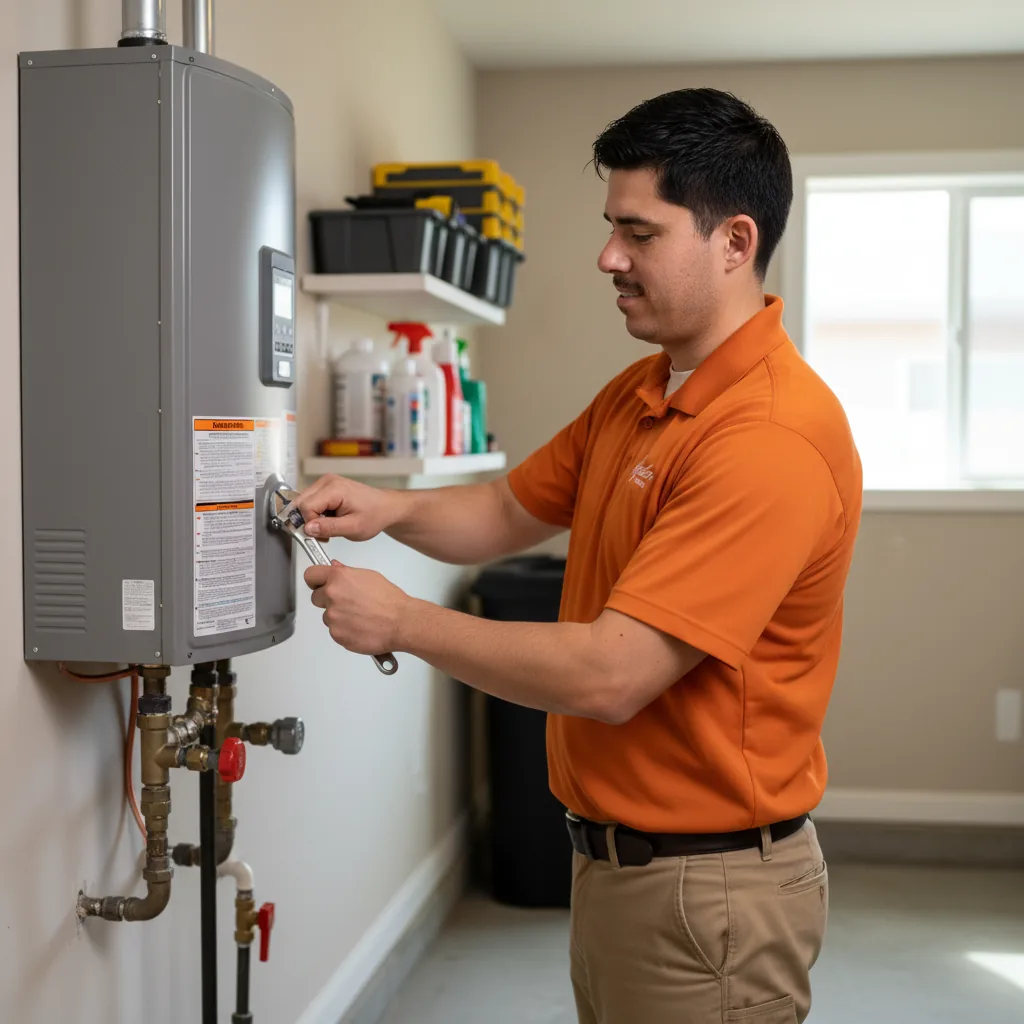
If your home already has a gas tankless water heater and you are replacing it at the end of its life, a like for like tankless swap is usually the most straightforward approach. Since the gas line, venting, and electrical connections are often already sized correctly, the work tends to focus on safely removing the old unit, hanging the new one, tying in the lines, and testing. TanklessHeaterLab notes that this kind of replacement can often be completed in about 2-4 hours if everything is in good shape and the new unit is similar in size and fuel type.
Cost wise, a simple tankless replacement normally falls below the $2,800 to $7,000 range that is typical for full conversions, according to national cost guidance. You are not paying to run new vent or open walls for gas and power upgrades, so more of your budget can go toward a higher efficiency or better featured unit. For many Las Vegas homeowners, this is an opportunity to move up to an ENERGY STAR certified model to capture that lifetime gas savings without taking on major construction.
There are still smart questions to ask before approving the work. A common mistake noted by Heat Handbook is undersizing, where the new unit cannot keep up when multiple fixtures run at once. Even if you are happy with your current capacity, it can be worth having the plumber double check your maximum gallons per minute demand based on real household use and confirm the new model meets or slightly exceeds it. If your family has grown or you added bathrooms since the last heater went in, this may be the time to step up capacity.
Once the new unit is on the wall, Las Vegas hard water comes right back into the picture. Make sure your installer points out the cold and hot service valves and shows you where the inlet screen sits so it can be cleaned. Even if you prefer to have a plumber handle descaling, understanding where those parts are will make any future service visit quicker and smoother.
- Ask for a written scope that confirms gas, venting, and electrical are adequate
- Confirm the new unit’s gallons per minute rating against your real usage
- Consider upgrading to an ENERGY STAR certified model for better efficiency
- Schedule the first annual service at the time of installation
3. High efficiency gas tankless with enhanced maintenance ranks high for long term savings
Some Las Vegas homeowners are focused less on the lowest up front price and more on stretching long term value. In that case, a higher efficiency gas tankless water heater, installed properly and paired with enhanced maintenance, can be one of the best approaches. ENERGY STAR highlights that certified gas tankless models already offer lower operating costs than standard tanks, and that there are further savings when you compare these certified units to non certified tankless options. Over the life of the heater, that adds up, especially with our high cooling and heating loads in the valley.
The catch is that very efficient heat exchangers tend to be even more sensitive to scale. Heat Handbook calls scale buildup one of the most common tankless problems in hard water regions. Las Vegas sits in that zone, with the Valley Water District measuring hardness at about 16 grains per gallon. Without regular descaling, tiny passages inside the heat exchanger clog and restrict flow, which can cause temperature swings, error codes, and early failure.
That is why it makes sense to look at installation and maintenance as a package. When you choose a higher efficiency tankless unit, ask the plumber to include annual flushing, inlet filter cleaning, and a basic inspection of venting and combustion in the proposal. You can also discuss whether your home might benefit from broader water treatment, such as a softening system upstream of the heater, to slow down scale formation. While whole home treatment is a separate project, even basic measures like ensuring the inlet filter is cleaned regularly can significantly reduce service calls.
Time on site is usually similar to other gas tankless installs. The steps that add value are less visible: careful vent layout, gas pressure verification during peak demand, and a proper start up checklist. These details make the efficiency numbers quoted on paper more realistic in real world Las Vegas conditions.
- Compare efficiency ratings and look for ENERGY STAR certification
- Request annual service and descaling as part of your agreement
- Ask how hard Las Vegas water affects your specific model choice
- Have combustion and venting checked at each maintenance visit
4. Budget focused conversions and DIY installs rank lowest for reliability in our water and climate
There is always a temptation to chase the lowest up front cost by choosing a bare bones conversion or even trying to install a tankless water heater yourself. In a mild climate with soft water, that might work more often. In Las Vegas, where the Valley Water District documents very hard water and summer inlet temperatures can swing, cutting corners on tankless installs tends to backfire. The problems that Heat Handbook flags, like improper venting, ignition issues, undersized units, and clogged inlet filters, are all more likely when the design, installation, and maintenance plan are not handled by someone who does this every day.
Budget conversions often skip crucial upgrades, such as increasing gas line size, adding proper combustion air, or installing service valves that make future descaling easier. If a heater is starved for gas, it may not reach its rated output, which shows up as lukewarm water when multiple fixtures run. If venting is not correct, you can see nuisance shutoffs. These issues can end up costing more to troubleshoot and fix after the fact than doing the job correctly at the start.
DIY installations come with those same risks plus permitting and code compliance. TanklessHeaterLab points out that a full tank to tankless conversion usually takes 6-10 hours of work for a professional, and in complicated cases can stretch to 2-3 days. That timeline assumes the installer is familiar with gas piping, vent systems, electrical connections, and local inspection requirements. For a homeowner without that background, it is easy for a weekend project to turn into multiple weeks without reliable hot water.
If budget is your biggest concern, it is better to talk openly with a licensed plumber about priorities. You might delay the project to save up, choose a slightly lower capacity unit that still meets your needs, or phase related upgrades. What rarely pays off here in the valley is installing a tankless system without proper sizing, venting, and scale control just to shave a little off the upfront bill.
- undefined
- undefined
- undefined
- undefined
- undefined
- undefined
- undefined
- undefined
Frequently asked questions
- Is a tankless water heater worth it in Las Vegas with our hard water
- A tankless water heater can be a very good fit in Las Vegas, but only if it is installed correctly and maintained for scale. ENERGY STAR reports that certified gas tankless units can save a typical family about $95 per year on gas compared to a standard tank, which adds up over the life of the unit. Because our water is very hard, you will want a plan for annual descaling and inlet filter cleaning so mineral buildup does not shorten the heater’s life.
- How much does it cost to switch from a tank to a tankless water heater here
- Industry cost guides for the Las Vegas area quote a typical range of about $2,800 to $7,000 for a full tank to tankless conversion. That wide range reflects differences in the price of the unit, gas line upgrades, venting changes, electrical work, and permits. A simple swap where gas and venting are already adequate will sit at the lower end, while complex retrofits land higher.
- How long will I be without hot water during a tankless installation
- For a straightforward tankless to tankless replacement, TanklessHeaterLab reports that installers can often complete the job in about 2-4 hours. A conversion from a tank style heater to a tankless unit usually takes 6-10 hours when the work is simple and can stretch to 2-3 days in complex cases where gas, venting, and electrical upgrades are needed. A good plumber will walk you through the expected timeline and plan to minimize downtime.
- How does Las Vegas hard water affect tankless water heaters
- The Las Vegas Valley Water District measures local water hardness around 280 parts per million, or roughly 16 grains per gallon, which is considered very hard. According to Heat Handbook, hard water causes scale on the tankless heat exchanger if it is not descaled regularly, and that buildup is a top cause of early failures and performance problems. Regular flushing and cleaning of the inlet filter help protect efficiency and lifespan in our conditions.
- What are the most common problems with tankless water heaters in hard water areas
- Heat Handbook highlights several frequent issues: scale buildup on the heat exchanger, clogged inlet water filters, undersized units that cannot handle peak demand, and venting or ignition problems on gas models. In a hard water city like Las Vegas, scale and filter clogs are especially common if annual service is skipped. Proper sizing, correct venting, and routine maintenance go a long way toward preventing these problems.
- Can I install a tankless water heater myself in Nevada
- Most homeowners are better off hiring a licensed plumber for a tankless installation, especially for a gas unit. TanklessHeaterLab notes that even for professionals, a conversion can take 6-10 hours and sometimes 2-3 days when multiple upgrades are required. The work involves gas piping, venting, electrical connections, and permits, and mistakes can lead to safety issues or expensive rework, so DIY is usually not recommended.
- How do I pick the right size tankless water heater for my Las Vegas home
- Sizing a tankless unit is about matching its gallons per minute rating to the peak number of fixtures you plan to use at once. Heat Handbook warns that undersizing is a common mistake that leads to lukewarm water when several showers and faucets run together. A plumber will look at your bathrooms, appliances, and typical usage, then recommend a unit that covers that peak demand with a bit of margin to handle cooler winter inlet temperatures.
- How often should a tankless water heater be serviced in a very hard water area
- In very hard water markets like Las Vegas, annual service is a smart baseline for tankless water heaters. Heat Handbook points out that skipping descaling and inlet filter cleaning is a major cause of performance issues and early failure. A yearly visit lets a plumber flush scale from the heat exchanger, clean filters, and check venting and combustion so the unit keeps running efficiently.
Talk to Kingdom Plumbing about tankless water heaters, or call (702) 840-5037. Family-owned, NV Contractors License #0085422, upfront flat-rate pricing.
Kingdom Plumbing is a family-owned, licensed Las Vegas plumber (NV NV Contractors License #0085422) serving the valley since 2018. Questions about how this affects your home? Call (702) 840-5037. Dealing with a burst pipe or flooding right now? Our emergency plumbers in Las Vegas answer 24/7.
More Updates
- 2027-2028 Colorado River cuts: does a Las Vegas homeowner need to act?
- How Long Does Commercial Plumbing Work Take in Las Vegas, Start to Finish?
- Doing emergency plumbing yourself vs hiring a licensed plumber: where the real line is in Las Vegas
- What Is Actually Included In Garbage Disposal Service, And What Is An Add-On?