TL;DR: Las Vegas has some of the hardest water in the country at 16–22 GPG — nearly double the threshold for “very hard” water. That mineral-heavy water damages your pipes, shortens water heater life by 2–4 years, and reduces appliance efficiency by up to 29%. A whole house water softener removes those minerals before they cause problems. This guide covers how hard water affects your Las Vegas home, how softeners work, which type is right for you, what installation looks like, and how to maintain your system in the desert climate.
If you’ve lived in Las Vegas for more than a few months, you’ve probably noticed it: stubborn soap scum on your shower doors, buildup around your faucets, or that sticky feeling on your skin after a shower. These aren’t signs of poor cleaning habits. They’re telltale signs of one of the biggest water quality issues facing Southern Nevada homeowners: extremely hard water.
At Kingdom Plumbing, we work with Las Vegas hard water problems every single day. In fact, we’ve learned that nearly every home in the valley could benefit from a water softener in Las Vegas. But before you invest in a system, let’s talk about what hard water really means for your home and why a water softener installation is often the smartest long-term investment you can make.
How Hard Is Las Vegas Water, Really?
Las Vegas doesn’t just have hard water. We have some of the hardest water in the entire United States.
According to data from the Southern Nevada Water Authority (SNWA), which serves approximately 2.2 million people across the region, Las Vegas water hardness typically ranges from 16 to 22 GPG (grains per gallon), or about 278 to 375 PPM (parts per million). To put that in perspective, the U.S. Geological Survey classifies anything over 180 PPM as “very hard” water. Our valley is well into the extreme range.
Why is our water so hard? Most of Southern Nevada’s water—approximately 90%—comes from Lake Mead and the Colorado River, managed by SNWA. As this water flows through limestone and mineral-rich rock formations across the desert, it picks up dissolved calcium and magnesium ions. These minerals are what make water “hard.”
You can check your own water hardness by requesting a free water quality report from SNWA or by using a home testing kit available at most hardware stores. Hardness can vary slightly by neighborhood depending on your local distribution zone.
The hard truth? Without treatment, the hard minerals in your tap water are slowly causing damage to your entire home—your pipes, your appliances, and even your family’s comfort. That’s exactly why a water softener in Las Vegas isn’t a luxury; it’s a necessity.
What Hard Water Does to Your Las Vegas Home
Hard water might seem like a minor inconvenience. It’s not. Over months and years, those dissolved minerals accumulate and cause serious, expensive problems.
Plumbing and Pipe Damage
Hard water deposits scale buildup inside your pipes. Over time, this mineral scale narrows the interior diameter of your plumbing, restricting water flow. You’ll notice lower water pressure throughout your home. In severe cases, the buildup can block pipes entirely, requiring expensive repairs or replacement.
Copper pipes, common in Las Vegas homes built in the 1990s and 2000s, are particularly vulnerable. The hard minerals can corrode copper over time, leading to leaks, water stains, and eventual pipe failure.
Water Heater and Appliance Wear
Your water heater is ground zero for hard water damage. When hard water is heated, calcium and magnesium minerals form a thick, crusty sediment layer at the bottom of the tank.
According to the U.S. Department of Energy, this scale buildup reduces water heater efficiency by up to 29%. That means your water heater works harder and uses more energy to heat your water—directly increasing your utility bills. Additionally, hard water can reduce your water heater’s lifespan by 2 to 4 years. If you’d normally expect 10-12 years of service, hard water could mean replacing it at 8 years or earlier.
Your dishwasher, washing machine, and ice maker face similar challenges. Mineral deposits cloud your dishes, reduce the effectiveness of detergents, fade clothes, and cause appliance failures.
Skin, Hair, and Daily Comfort
Hard water affects your family’s health and comfort too. When soap combines with hard water minerals, it creates a sticky residue instead of true lather. This buildup traps bacteria and oil on your skin and scalp, leading to:
- Dry, irritated skin and persistent eczema-like symptoms
- Dull, brittle hair that tangles easily
- Difficulty getting shampoo and soap to rinse away completely
- Increased acne breakouts
Many Las Vegas residents report that their skin feels better and their hair looks healthier within days of installing a water softener.
Left untreated, these problems compound over time. What starts as minor scale buildup can eventually lead to burst pipes, failed water heaters, and thousands of dollars in preventable repairs.
How a Water Softener Works
Understanding how a water softener works helps explain why it’s such an effective solution.
Most residential water softeners use ion exchange technology. Here’s the process:
Hard water enters the softener and flows through a resin tank filled with tiny plastic beads coated with sodium ions. As the hard water passes through, calcium and magnesium ions (which are positively charged) attract to the resin beads. At the same time, sodium ions from the resin swap places with the hard minerals. The result? Soft water exits the system, while hard minerals remain trapped in the tank.
Eventually, the resin becomes saturated with calcium and magnesium and needs to be “regenerated.” The softener automatically cycles into regeneration mode, using salt (or a salt substitute) to flush the trapped minerals down the drain and recharge the resin with fresh sodium ions. A typical cycle takes a few hours and happens automatically, usually overnight.
The process is simple, reliable, and proven effective for over 60 years in American homes.
Types of Water Softeners for Las Vegas Homes
When it comes to choosing a water softener in Las Vegas, not all systems are the same. Here are the main options:
Salt-Based Ion Exchange Systems
This is the most common and effective type of water softener. Salt-based systems remove 95-98% of hardness minerals and are highly efficient. They require periodic salt refills (typically every 4-6 weeks for a family of four) and regular maintenance, but the trade-off is superior performance and lower long-term costs per gallon of soft water produced.
Salt-Free Water Conditioners
These systems don’t remove hard minerals; instead, they alter their crystalline structure so they don’t stick to pipes and surfaces. Salt-free conditioners require no salt and produce no wastewater, making them environmentally friendly. However, they’re less effective than salt-based systems and don’t provide the same protection for water heaters.
Whole House vs Point-of-Use Systems
A whole house water softener treats all water entering your home, protecting your entire plumbing system, water heater, and every appliance. Point-of-use systems (like faucet-mounted filters or under-sink units) only treat water at one location. For comprehensive protection, whole house systems are almost always the better choice.
Not sure which type is right for you? Contact Kingdom Plumbing and we’ll assess your home’s water hardness, usage patterns, and budget to recommend the best system for your situation.
Water Softener Installation: What to Expect
Ready to protect your home from Las Vegas hard water? If you’ve decided on a water softener in Las Vegas, many homeowners worry that installation is complicated or disruptive. It’s not.
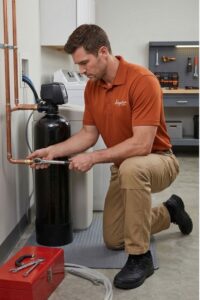
A professional water softener installation typically takes 2 to 4 hours. Here’s what the process looks like:
First, we assess your home’s water hardness, flow rate, and usage to recommend the right system size. Then, we identify the best location for the softener (usually near your water meter or in a garage or basement). We shut off the main water supply and carefully disconnect the incoming water line.
Next, we install the softener’s bypass valve and connect the incoming and outgoing water lines. We ensure the drain line is properly positioned to outlet to your sewer or drainage system. Finally, we reconnect your main water line, test the system thoroughly, and run it through a regeneration cycle to ensure everything works properly.
You’ll have soft water flowing through your entire home by the end of the day.
Don’t wait for scale damage to get worse. Contact Kingdom Plumbing today to schedule a free water hardness test and get a custom installation quote.
Maintaining Your Water Softener in the Las Vegas Climate
Once you’ve installed a water softener in Las Vegas, ongoing maintenance is key. Las Vegas’s intense heat, low humidity, and mineral-heavy water create unique maintenance challenges. The good news? Proper maintenance is straightforward and extends your system’s lifespan significantly.
Salt Management: Check your salt levels monthly and refill when the tank is about one-quarter full. In Las Vegas’s heat, salt can bridge or cake up, so use high-quality salt pellets and keep an eye on the tank’s interior.
Tank Cleaning: Every 12-18 months, we recommend a professional tank cleaning to remove accumulated sediment and hardened mineral deposits that normal regeneration cycles might miss. Las Vegas’s particularly hard water makes this especially important.
System Inspection: Have your softener professionally serviced annually. We’ll check the resin for degradation, test water hardness before and after the system, verify that regeneration cycles are occurring correctly, and replace any worn seals or valves.
Drain Line Maintenance: Ensure your softener’s drain line isn’t blocked. In desert climates where minerals concentrate, drain lines can sometimes become congested. A simple cleanout prevents backups.
If you’re unsure whether your system needs servicing, give us a call. We offer maintenance plans designed specifically for Las Vegas water conditions.