
Water Heater Maintenance Las Vegas: How to Extend the Life of Your System

TL;DR:** Las Vegas hard water at 16–22 GPG destroys water heaters faster than almost anywhere in the country. Without regular maintenance, mineral sediment reduces efficiency by up to 29% and can shorten your water heater’s lifespan by 2–4 years. The fix is straightforward: flush the tank annually, test the T&P valve every 6 months, inspect the anode rod every 2–3 years, and get a full professional inspection every 5 years. This guide covers the complete water heater maintenance Las Vegas homeowners need to follow.

Your water heater is probably the hardest-working appliance in your home — and in Las Vegas, it’s also the one that takes the most abuse. Every gallon of water it heats carries a heavy load of dissolved calcium and magnesium, and every heating cycle deposits more mineral sediment at the bottom of the tank. That’s why water heater maintenance Las Vegas homeowners prioritize can mean the difference between a system that lasts a decade and one that fails in half that time.

Most Las Vegas homeowners never think about their water heater until the morning it fails. By then, you’re looking at a $1,500–$3,000+ emergency replacement instead of a $150–$200 maintenance visit that could have prevented it. Consistent water heater maintenance Las Vegas homeowners commit to is the single most cost-effective thing you can do to protect your plumbing investment.

Why Water Heaters Fail Faster in Las Vegas

A water heater in Seattle, where water hardness is 20–30 PPM (soft), operates in fundamentally different conditions than one in Las Vegas at 278–375 PPM (very hard). That difference matters enormously.

When hard water is heated, dissolved calcium and magnesium minerals precipitate out of the water and settle as sediment at the bottom of the tank. According to the U.S. Department of Energy, this sediment layer can reduce water heater efficiency by up to 29%. The heating element or gas burner sits at the bottom — when a thick crust of mineral scale sits between the heat source and the water, the system has to work harder and run longer to reach the set temperature. That means higher energy bills every month.

The sediment also accelerates corrosion of the tank’s interior lining and causes premature failure of the anode rod — the sacrificial metal rod designed to attract corrosive elements and protect the tank. In soft-water cities, an anode rod might last 5–6 years. In Las Vegas, it can be depleted in 2–3 years.

The result: a standard tank water heater rated for 10–12 years of service may only last 6–8 years in Las Vegas without proper maintenance. That’s a significant financial hit — and it’s entirely preventable with the right water heater maintenance Las Vegas schedule.

For a full explanation of what hard water does to your entire plumbing system, read our guide on hard water damage in Las Vegas.

H2: The Essential Water Heater Maintenance Schedule

Here’s the water heater maintenance Las Vegas homeowners should follow. This schedule accounts for our extreme water hardness and hot climate.

Every 6 Months: Temperature and Pressure Relief Valve Test

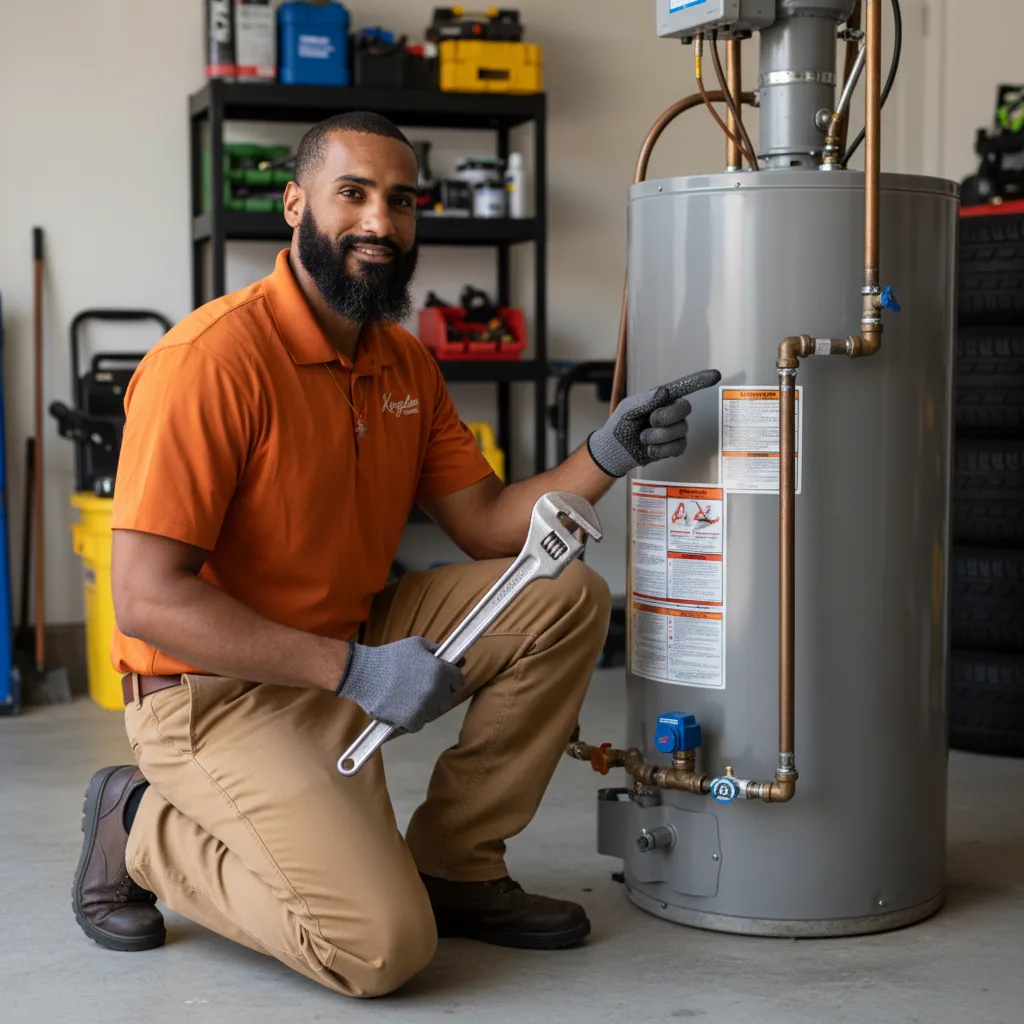
The temperature and pressure (T&P) relief valve is a critical safety device on every tank water heater. It releases water if the temperature or pressure inside the tank exceeds safe limits, preventing a potential tank rupture.

To test it:
1. Place a bucket under the discharge pipe connected to the T&P valve
2. Lift the lever on the valve for 2–3 seconds
3. Hot water should flow freely through the discharge pipe
4. Release the lever — the flow should stop completely

If no water comes out, if the valve drips continuously after testing, or if the lever is stuck and won’t lift, the valve needs replacement. A failed T&P valve is a safety hazard — don’t ignore it.

Annually: Full Tank Flush

This is the most important water heater maintenance Las Vegas homeowners can perform. Flushing removes the accumulated mineral sediment from the bottom of the tank.

In Las Vegas, where sediment accumulates faster due to our 16–22 GPG hard water, an annual flush is the minimum. Homes without a water softener may benefit from flushing every 6 months. We’ll cover the full step-by-step process in the next section.

Every 2–3 Years: Anode Rod Inspection and Replacement

The anode rod is a metal rod (typically magnesium or aluminum) that hangs inside your water heater tank. Its job is to corrode instead of the tank walls — that’s why it’s called a “sacrificial” rod. As long as the anode rod is intact, it attracts the corrosive elements in the water and protects the tank lining.

In Las Vegas, the heavy mineral content in our water depletes anode rods faster than in softer-water cities. We recommend inspecting the anode rod every 2–3 years and replacing it when more than 50% of the rod has corroded away. A replacement anode rod costs $20–$50 for the part — a fraction of the cost of a new water heater.

If you’re not comfortable inspecting the anode rod yourself (it requires loosening a hex fitting at the top of the tank), this is a quick and inexpensive service call for a plumber.

Every 5 Years: Full Professional Inspection

Every 5 years, schedule a comprehensive professional water heater inspection. A licensed plumber will:

– Flush the tank and assess sediment volume
– Inspect and potentially replace the anode rod
– Test the T&P valve
– Check all water and gas connections for leaks
– Inspect the flue and venting (gas units)
– Evaluate the expansion tank
– Test water temperature output
– Assess the overall condition and remaining lifespan of the unit

For water heaters over 8 years old in Las Vegas, we recommend upgrading this to an annual professional inspection, since units in our hard water environment are approaching end-of-life faster than the manufacturer’s rating suggests.

How to Flush Your Water Heater (Step by Step)

Flushing your water heater is the most impactful maintenance task you can do. Here’s how:

What you’ll need: A garden hose, a bucket, and about 30 minutes.

Step 1: Turn off the heat source. For gas water heaters, turn the gas valve to “pilot” or “off.” For electric water heaters, switch off the breaker at the electrical panel.

Step 2: Connect a garden hose to the drain valve. The drain valve is located near the bottom of the tank. It looks like a standard hose bib. Run the other end of the hose to a floor drain, outside, or into a large bucket.

Step 3: Turn off the cold water supply. Close the cold water shut-off valve at the top of the water heater. This stops new water from entering the tank while you drain it.

Step 4: Open the T&P valve or a hot water faucet. This breaks the vacuum inside the tank and allows water to flow out through the drain valve. Opening a hot water faucet at a nearby sink works just as well.

Step 5: Open the drain valve and let the tank drain. The water will be hot — use caution. The first few gallons will likely be discolored or cloudy with sediment. Let the tank drain completely, which takes 15–30 minutes depending on tank size.

Step 6: Flush with fresh water. With the drain valve still open, briefly turn the cold water supply back on for 30–60 seconds. This stirs up remaining sediment and flushes it out. Repeat until the water runs clear.

Step 7: Close everything up. Close the drain valve, remove the hose, close the T&P valve (if you opened it), turn the cold water supply back on, and let the tank refill. Once full, turn the heat source back on. It takes 30–60 minutes for the water to reach temperature.

Important safety note: If your water heater is a gas unit and you’re not comfortable working around gas connections, or if you haven’t flushed your tank in several years (heavily calcified drain valves can break), call a professional. A water heater flush from a plumber typically costs $100–$200 and avoids any risk of damaging an aging drain valve.

Tank vs Tankless: Maintenance Differences in Las Vegas

Both tank and tankless water heaters require maintenance in Las Vegas, but the tasks are different.

Tank Water Heater Maintenance

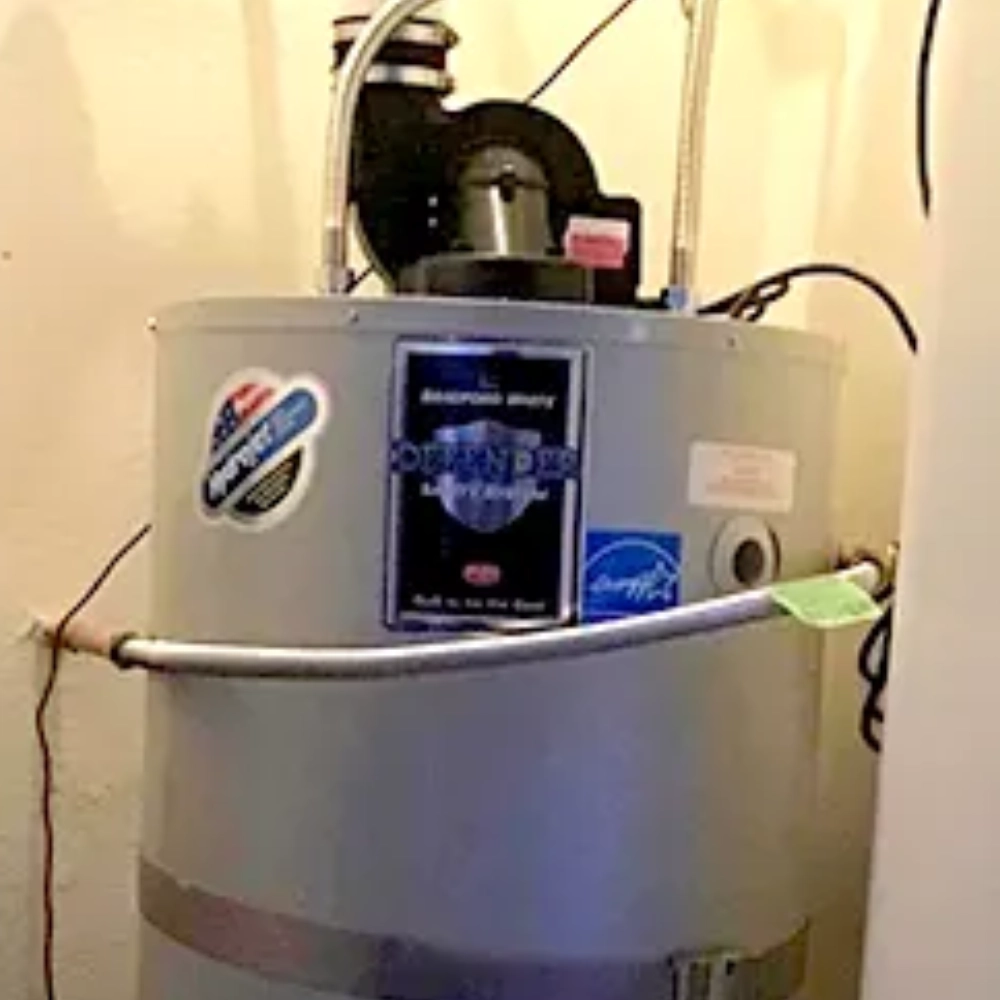
Tank water heaters are the most common type in Las Vegas homes. Maintenance revolves around sediment management:

– Annual flush to remove mineral sediment
– Anode rod inspection every 2–3 years
– T&P valve testing every 6 months
– Expansion tank check annually

The primary enemy is sediment accumulation. In Las Vegas, a tank water heater without maintenance will accumulate a thick mineral crust within 2–3 years that significantly reduces efficiency and accelerates corrosion.

Tankless Water Heater Maintenance

Tankless (on-demand) water heaters don’t store water, so they don’t accumulate sediment the same way. However, they are not maintenance-free — especially in Las Vegas.

Annual vinegar flush: Tankless units should be flushed annually with white vinegar to dissolve mineral scale that builds up on the heat exchanger. This process requires a small recirculating pump, two hoses, and a bucket of food-grade white vinegar. The vinegar circulates through the unit for 45–60 minutes, dissolving calcium deposits. Many homeowners hire a plumber for this service ($150–$250), though kits for DIY flushing are available for $60–$100.

Inlet filter cleaning: Tankless units have a small mesh filter on the cold water inlet. In Las Vegas, this filter can clog with mineral particles. Check and clean it every 6 months — it takes 2 minutes.

Ignition and venting inspection: Gas tankless units should have their ignition system and venting inspected annually by a professional.

If mineral scale is allowed to build up on a tankless water heater’s heat exchanger, it can cause error codes, reduced output, and eventually system failure. In Las Vegas, skipping annual maintenance on a tankless unit can lead to costly repairs within 3–5 years.

For a broader overview of all the plumbing maintenance your Las Vegas home needs — not just the water heater — see our complete guide: Plumbing Maintenance Las Vegas: The Complete Homeowner’s Guide.

Warning Signs Your Water Heater Needs Service Now

Don’t wait for your scheduled maintenance if you notice any of these warning signs:

Popping, rumbling, or banging sounds. This is mineral sediment shifting and hardening at the bottom of the tank during heating cycles. It means there’s a significant buildup that needs to be flushed out.

Hot water that runs out faster than usual. If your showers are getting cold sooner, sediment may be displacing water volume inside the tank, or the heating element may be coated with scale and struggling to heat effectively.

Discolored or rusty hot water. Brown, yellow, or rusty hot water coming from your faucets can indicate a corroded anode rod, a failing tank lining, or deteriorating internal components. This needs professional evaluation.

Higher energy bills without changes in usage. If your gas or electric bill has crept up without a change in habits, a sediment-laden water heater working at reduced efficiency is a likely culprit.

Water pooling around the base. Any water around your water heater — even a small amount — warrants immediate attention. It could be a failing T&P valve, a loose connection, or early signs of a tank crack.

The unit is over 8 years old in Las Vegas. Due to our extreme water hardness, water heaters over 8 years old should be inspected annually regardless of symptoms. At this age, internal corrosion and sediment damage may be well advanced even if the unit appears to be functioning normally.

If you’re noticing any of these signs, contact Kingdom Plumbing for a water heater inspection before a minor issue becomes an emergency replacement.

How Much Does Water Heater Maintenance Cost in Las Vegas?

Water heater maintenance Las Vegas homeowners invest in is affordable — especially compared to the cost of doing nothing.

DIY tank flush: $0 (your time + a garden hose you already own)

Professional tank flush: $100–$200

Anode rod inspection and replacement: $100–$250 (including the rod)

T&P valve replacement: $75–$150

Tankless vinegar flush (professional): $150–$250

Full professional inspection: $150–$300

Annual maintenance package: Many plumbing companies, including Kingdom Plumbing, offer annual maintenance plans that bundle a flush, inspection, and anode rod check at a reduced rate compared to scheduling each service individually.

Compare that to replacement costs:
– Standard 40-50 gallon tank water heater: $1,200–$2,500 installed
– High-efficiency tank water heater: $2,000–$3,500 installed
– Tankless water heater: $3,000–$5,000 installed

A $150–$200 annual maintenance visit that extends your water heater’s life by even 2 years saves you $600–$1,200 in avoided early replacement costs — plus the monthly energy savings from a clean, efficient system.

Ready to extend the life of your water heater? Contact Kingdom Plumbing to schedule a water heater flush and inspection.

Frequently Asked Questions About Water Heater Maintenance in Las Vegas

How often should you flush a water heater in Las Vegas?2026-04-27T17:31:13+00:00

At minimum, once per year. Las Vegas water at 16–22 GPG is among the hardest in the country, and mineral sediment accumulates faster here than in most cities. Homes without a water softener may benefit from flushing every 6 months. If you hear rumbling or popping sounds from your water heater, that’s accumulated sediment — flush it as soon as possible regardless of the schedule.

Can I flush my own water heater or do I need a plumber?2026-04-27T17:31:52+00:00

You can do a basic flush yourself — the process takes about 30 minutes with a garden hose. However, if you haven’t flushed your tank in several years, the drain valve may be calcified and difficult to open without breaking it. Gas water heaters also involve working near gas connections. If you’re not comfortable or if your unit is older, a professional flush ($100–$200) is a safer option.

How long do water heaters last in Las Vegas?2026-04-27T17:32:08+00:00

Standard tank water heaters are rated for 10–12 years by manufacturers. In Las Vegas, without regular maintenance, that lifespan drops to 6–8 years due to our extreme water hardness. With consistent annual maintenance (flushing, anode rod replacement, professional inspections), you can often get 10+ years from a tank unit. Tankless water heaters are rated for 15–20 years but require annual descaling in Las Vegas to maintain performance.

What’s the best water heater temperature setting for Las Vegas?2026-04-27T17:32:25+00:00

The U.S. Department of Energy recommends 120°F for most households. This balances safety (reducing scald risk), energy efficiency, and comfort. Some homeowners set it to 130°F for dishwasher performance, but this increases energy costs and accelerates mineral precipitation from hard water. We recommend 120°F for Las Vegas homes.

Does a water softener help my water heater last longer?2026-04-27T21:41:56+00:00

Yes, significantly. A water softener removes 95–98% of the calcium and magnesium that cause sediment buildup in your water heater. Homes with water softeners experience dramatically less mineral accumulation, meaning better efficiency, lower energy bills, and a longer water heater lifespan. If you don’t have a softener yet, read our guide: Water Softener Las Vegas: Why Every Valley Home Needs One.

Why Kingdom Plumbing for Water Heater Maintenance

At Kingdom Plumbing, water heater maintenance Las Vegas homeowners rely on is one of our most requested services. We flush tanks, replace anode rods, inspect T&P valves, and descale tankless units across the valley every week. We know how Las Vegas hard water affects every brand and model, and we’ll tell you honestly whether your unit needs maintenance, repair, or replacement.

Don’t wait for the cold shower.

To schedule your water heater maintenance and keep your system running efficiently.

By |2026-04-27T21:51:39+00:00April 21, 2026|Blogs|Comments Off on Water Heater Maintenance Las Vegas: How to Extend the Life of Your System
Go to Top